

- Published on
AI and DeFi: How Artificial Intelligence Could Transform Finance
Listen to the full article:
- Authors

- Name
- Jagadish V Gaikwad

Stop pretending this is just another fintech trend
Your finance stack is already changing. AI is creeping into everything from trading signals to fraud detection, and DeFi is still trying to prove it can be more than a casino with nicer branding.
Put them together and you get something bigger than a buzzword. You get AI and DeFi creating financial systems that can react faster, personalize better, and run with way less hand-holding than old-school finance.
What AI and DeFi actually mean when the hype dies down
Look, the definitions matter, but only so much. DeFi is financial services built on blockchains without traditional middlemen, and AI is the part that spots patterns, predicts behavior, and automates decisions.
The real story is what happens when they stop sitting in separate boxes. AI can help DeFi make faster calls on lending, trading, fraud detection, credit scoring, and portfolio management.
Why this combo is suddenly hard to ignore
Here's the thing: traditional finance is full of friction. It moves slowly, asks for too much paperwork, and still somehow manages to be both expensive and confusing.
AI and DeFi attack that mess from both sides. DeFi removes a chunk of the middlemen, while AI makes the systems smarter, more adaptive, and a lot less annoying to use.
That matters because DeFi has always had a usability problem. The tech works for power users, but regular people often bounce off it fast.
Where AI can actually change the game
Real talk: most people focus on trading bots because they're flashy. That's the least interesting part.
The bigger shift is in the boring stuff that eats teams alive. Research on AI and DeFi points to fraud detection, smart contract security, market prediction, credit risk assessment, governance, automated market making, and AI-assisted portfolio management as the main use cases.
The highest-value use cases
- Fraud detection that flags weird onchain behavior before it turns into a loss.
- Credit scoring that uses more than a thin wallet history and guesses less than human underwriting usually does.
- Yield optimization that adjusts strategies without waiting for a human to wake up and check charts at 2 AM.
- Risk management that reacts to volatility, liquidity shifts, and protocol weirdness faster than manual ops.
- User support through AI agents that reduce the mess of navigating DeFi apps.
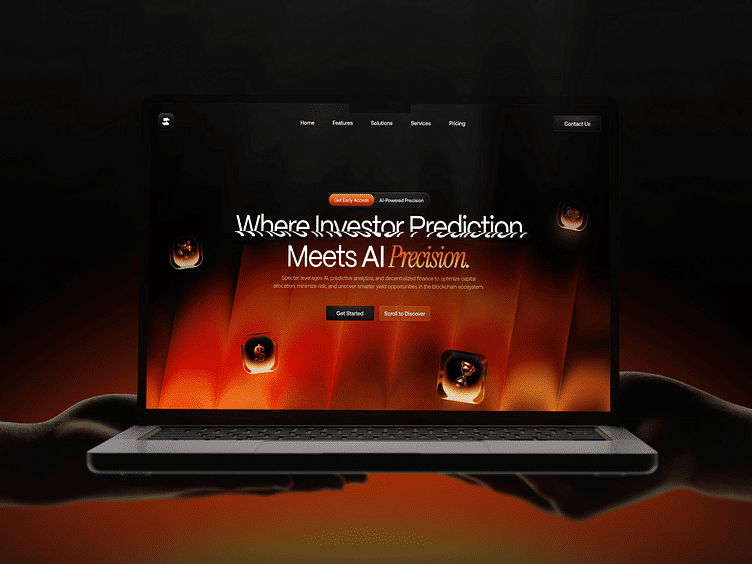
This is why people keep talking about DeFAI, the mashup of AI and DeFi. It’s basically the idea that agents can handle intent, strategy, and execution instead of forcing users to click through ten ugly screens.
The part nobody wants to say out loud
Honestly? AI and DeFi are not automatically safer just because they're smarter. A bad model can make bad decisions faster, and that’s not progress.
The systemic risk is real. If too many protocols rely on similar AI models, you can get correlated mistakes, weird feedback loops, and automated behavior that moves markets in dumb ways at machine speed.
There’s also the trust problem. Blockchain gives you transparency onchain, but AI models can still be hard to explain, especially when they’re driving decisions people are going to lose money on.
What changes for lending, trading, and investing
Here's what nobody talks about enough: finance is mostly a decision engine. Who gets credit, who gets exposure, who gets capital, and who gets cut off when things go sideways.
AI and DeFi can rewrite that engine. AI-driven lending can assess risk more dynamically, intelligent trading systems can adapt to market shifts, and portfolio tools can tailor strategies to individual behavior instead of handing everyone the same generic setup.
That sounds great until you remember this: personalized finance only works if the data is good and the model isn't hallucinating confidence. If the inputs are garbage, the outputs just look expensive.
| Area | Traditional DeFi | AI-Powered DeFi |
|---|---|---|
| Lending | Mostly rule-based, with users doing the manual work | AI can score risk faster and adjust terms more dynamically |
| Trading | Users and bots react to markets after the fact | AI can monitor patterns and shift strategies in real time |
| Fraud detection | Basic alerts, often too late | Anomaly detection can catch suspicious behavior faster |
| User experience | Clunky, technical, intimidating | AI agents can simplify actions and reduce the learning curve |
| Real talk | Powerful, but still rough for normal people | Better for users, but only if governance doesn't get sloppy |
Why the user experience angle matters more than the token nerds think
Look, most DeFi apps still feel like they were designed by someone who forgot humans exist. That’s a problem.
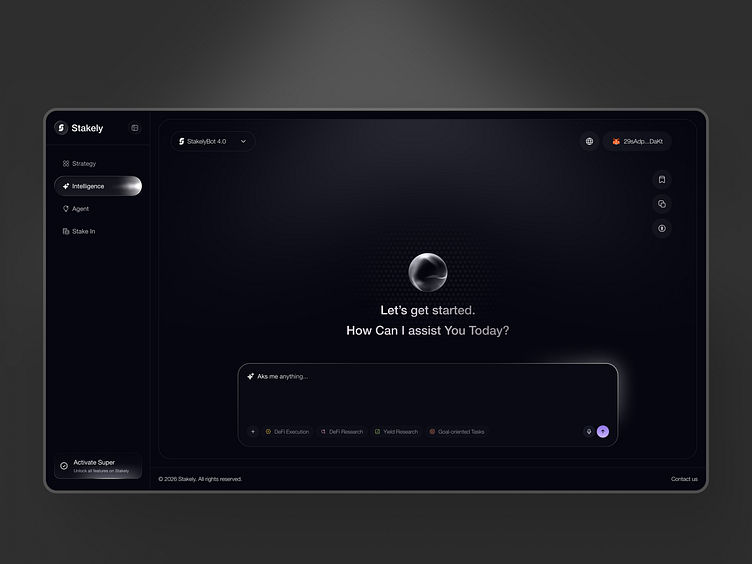
AI can help by turning raw intent into actions. A user could say what they want, and an AI agent could search rates, compare options, manage execution, and keep adjusting without making the user babysit every move.
That’s a huge deal for accessibility. Some sources even frame DeFAI as a way to make decentralized finance less painful for people who aren’t already fluent in crypto-native workflows.
Where finance teams should actually pay attention
The annoying part is that this isn't just a crypto story. Banks, fintechs, and asset managers are watching the same shift because the underlying playbook is useful even outside DeFi.
If you're running a finance team, you should care about three things. First, AI can cut down manual review. Second, it can personalize products at scale. Third, it can surface risk earlier than humans usually do.
But don't get carried away. If your team can't already explain its risk controls, AI won't save you. It'll just make the mistakes more efficient.
The big problems still sitting on the table
Here's the thing: every shiny AI and DeFi pitch hits the same wall eventually. Data quality, model drift, governance, and regulation don't disappear because the product deck looks cool.
This space is still early, and even DeFAI coverage admits there isn't a clear market leader yet. That means the standards, guardrails, and winner-take-most dynamics are still being written in real time.
You should also expect regulatory pressure to grow. If AI is making financial decisions inside decentralized systems, someone is going to ask who is accountable when it blows up.
Who wins if this actually works
Real talk: the winners probably won't be the loudest builders. They'll be the teams that make finance simpler without making it dumber.
That means protocols that can automate routine actions, protect users from obvious mistakes, and explain themselves well enough that normal people trust them. It also means teams that treat governance like a core product feature, not a compliance afterthought.
If AI and DeFi mature together, finance gets less manual, less opaque, and a lot more responsive. That’s the promise, anyway.
The catch is that the first wave will be messy. Some products will be genuinely useful, and others will be flashy demos wrapped around weak economics.
What to watch next
Stop looking only at prices and token narratives. Watch for AI agents that can actually execute useful tasks onchain, not just generate clever text about them.
Watch for better fraud detection, smarter lending, and interfaces that let people use DeFi without memorizing a dozen steps. And watch whether teams can keep these systems explainable enough to survive real-world scrutiny.
Real talk: AI and DeFi could absolutely change finance, but not by magic. They’ll do it by removing dumb friction, automating repetitive decisions, and making financial systems faster than the old ones.
What part do you think is the real bottleneck right now: model quality, regulation, or the fact that most people still don't trust DeFi?
You may also like
- AI-Powered Document Intelligence Platforms: The Ultimate Guide for Modern Businesses in 2026
- AI Trading Software: Key Features, Costs, and Limitations
- Best MLOps Tools for Managing AI Models in Production in 2025
- AI vs Traditional Crypto Research: Which Is More Effective in 2026?
- Open-Source AI Models Challenging Proprietary LLMs in 2026: The Gap Has Closed