

- Published on
AI-Native Startups Disrupting Traditional Enterprise Software Markets in 2026
Listen to the full article:
- Authors

- Name
- Jagadish V Gaikwad
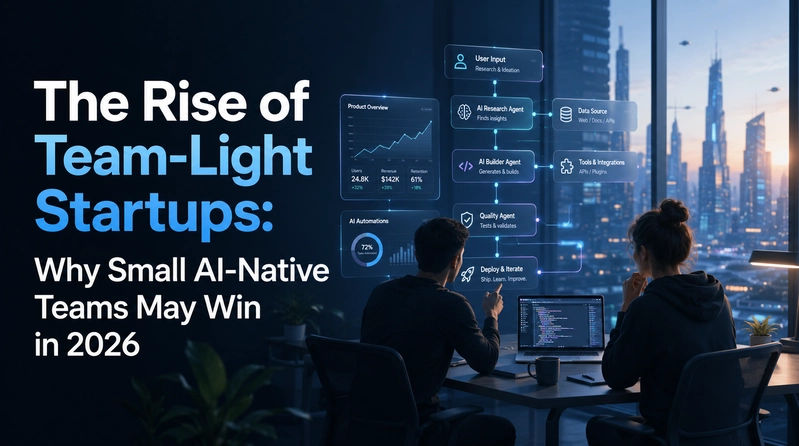
The enterprise software world is undergoing a seismic shift, and AI-native startups are the ones driving it. For decades, the market was dominated by standardized SaaS platforms that required human operators to bridge the gap between business intent and system behavior. Today, a new cohort of upstarts is proving that software doesn’t need to be "built once and maintained"—it can be continuously created, refactored, and retired based on real-time outcomes. These companies aren’t just adding AI as a feature; they are embedding intelligence into the very architecture of their products, creating learning systems that improve as they grow.
This isn’t a slow evolution; it’s a revolution. As value shifts from headcount to outcomes, legacy structures built around billable hours and scale are losing their grip. AI-native models, by contrast, are naturally positioned to win because they eliminate translation layers between business goals and system execution. The result is faster deployment, lower upfront investment, and a marginal cost of change that approaches zero. Let’s dive into how these startups are breaking the old rules and what it means for the future of enterprise software.
The Death of Standardized SaaS and the Rise of Outcome-Driven Systems
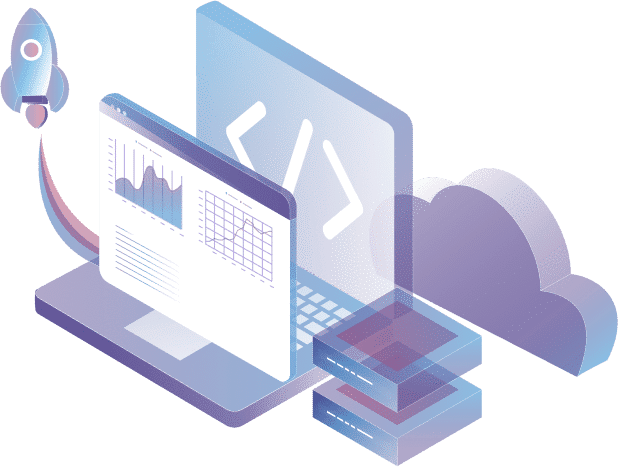
The traditional SaaS model is facing its biggest threat yet. For years, enterprise software companies sold standardized platforms that required customers to adapt their workflows to fit the software’s rigid structure. This created a massive inefficiency gap: businesses had to hire teams to manage the software, interpret its outputs, and manually execute tasks that the system couldn’t handle autonomously. AI-native startups are dismantling this model by building systems designed for outcomes rather than licenses.
According to a recent study by Bessemer Venture Partners, three kinds of AI-native players are leading this charge: pure software platforms that remove humans from the loop, hybrid services that mix automation with expert oversight, and infrastructure startups powering the backend data ops and model deployment . These players aren’t competing with legacy giants on the same terms—they’re winning by redefining what software is supposed to do.
The defining characteristic of AI-native software is that AI participates continuously in design, coding, testing, and optimization. It’s not a downstream add-on; it’s a first-class builder . This means agentic AI systems can translate intent into executable logic, refactor continuously as conditions change, and validate behavior in real time. The result is a living system that adapts alongside the business, rather than a static tool that requires constant human intervention.
This shift is already visible in the market. GenAI is projected to reach 10% of related spending by 2028, growing three times faster than SaaS . McKinsey estimates GenAI will reach $175 billion to $250 billion by 2027, up from just $15 billion in 2023 . The economic center of gravity is shifting because software is no longer "built once and maintained"—it’s continuously created and retired, with logic spun up, tested, and discarded without traditional engineering overhead .
How AI-Native Startups Are Winning Against Legacy Giants
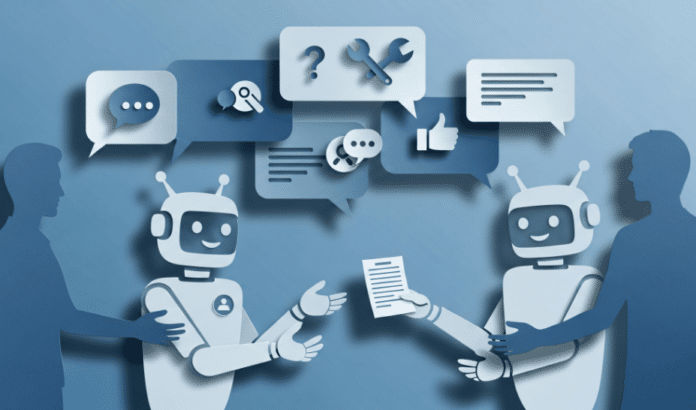
Legacy enterprise software giants are caught in a "big squeeze," pressured on one side by AI-native players driving innovation at lower costs and on the other by big tech companies pouring billions into the AI arms race . The pace of AI advancement enables these new competitors to quickly replicate and enhance AI features, leading to intense price competition that legacy players can’t match.
AI-native startups are winning because they don’t have legacy infrastructure or deeply entrenched workflows to hold them back . They can leap directly into AI-native architectures, designing products and operations around intelligent systems from day one. Without the burden of maintaining old codebases or training teams on outdated systems, they can structure their systems so that learning loops and data flows are embedded from the start .
The efficiency gap between AI-native software and traditional SaaS is a defining factor in this disruption. AI-native software is built to adapt on its own, so changes happen faster and updates cost less compared to traditional SaaS . This isn’t just about speed—it’s about a fundamental change in how software is conceived, built, and evolved. AI doesn’t accelerate development; it reshapes the entire process .
Here’s a comparison of how AI-native startups differ from traditional SaaS providers:
| Feature | Traditional SaaS | AI-Native Startups |
|---|---|---|
| Deployment Speed | Weeks to months | Days to weeks |
| Human Intervention | High (manual workflows) | Low (autonomous execution) |
| Cost of Change | High (engineering overhead) | Near zero (continuous refactoring) |
| Adaptability | Static (fixed rules) | Dynamic (learns from outcomes) |
| Business Model | License-based | Outcome-driven |
The economic advantage is clear. AI-native software can be aligned directly to enterprise-specific reality, eliminating translation layers between business intent and system behavior . This means codified best practices with guardrails, faster initial deployment, and lower upfront investment . As enterprises adapt, a new stack pattern is emerging—one that places intelligence above platforms rather than inside them .
The Three Pillars of AI-Native Disruption
To understand how AI-native startups are disrupting traditional markets, we need to look at the three pillars that define their approach: autonomous execution, continuous learning, and outcome-driven architecture.
1. Autonomous Execution: Removing Humans from the Loop
The first pillar is autonomous execution. Pure software platforms like Leena AI are removing humans from the loop entirely . These systems don’t just automate tasks—they execute entire workflows based on business intent. Agentic AI systems can translate intent into executable logic, refactor continuously as conditions change, and validate behavior in real time .
This is a massive shift from traditional enterprise software, which has focused on executing tasks and storing information for decades . AI-native systems are designed to learn from the organization itself while it operates, surfacing insights that would otherwise remain hidden . Decision-making begins to evolve, with leaders relying on systems capable of analyzing operational patterns and surfacing insights that would otherwise remain hidden .
2. Continuous Learning: Systems That Improve as They Grow
The second pillar is continuous learning. AI-native systems introduce a different paradigm: instead of simply executing instructions, systems begin observing patterns, learning from outcomes, and improving how decisions are supported over time . This means founders today face an early architectural decision: whether to build a traditional software product and add AI later, or to design the product so that intelligence is embedded in the system from the beginning .
Many of the most successful new products emerging today are AI-native from day one . Instead of relying on static workflows and fixed rules, they are built to learn from usage, improve decisions over time, and adapt as more data flows through the system . In that sense, modern startups are not only building software—they are building learning systems that improve as they grow .
3. Outcome-Driven Architecture: Software That Compounds Value
The third pillar is outcome-driven architecture. AI is neither just a new product in the SaaS portfolio nor an add-on to existing services; it is the industry’s next evolution, requiring fundamental business model changes . Enterprise software companies need to focus on three value-creation levers when integrating AI: thoughtful GenAI and AI agent product roadmaps, streamlined business operations, and personalized, data-driven insights .
The economic center of gravity shifts when software is no longer "built once and maintained," but continuously created and retired . AI for custom software drives generation, refactoring, and validation, reducing the marginal cost of change to near zero . Logic can be spun up, tested, and discarded without the traditional engineering overhead .
To support AI-native software, enterprises are converging on core infrastructure (cloud, data platforms, security), using SaaS as modular capabilities rather than end-to-end systems, and deploying custom services and micro-apps aligned to business decisions . AI agents act as the orchestration layer across the stack, pushing enterprises to evolve beyond standardization toward software that learns, adapts, and compounds value over time .
The Future of Enterprise Software: Beyond SaaS
The future of enterprise software is beyond SaaS. AI is replacing SaaS by guiding the way enterprises grow beyond it . The pace of AI advancement enables AI-native competitors to quickly replicate and enhance AI features, leading to intense price competition that legacy players can’t match .
Enterprise software companies that embrace this evolution by taking thoughtful approaches will position themselves to leap ahead of the competition . If implemented strategically, GenAI products and AI agents will propel the next significant leap in valuation multiples . The industry’s next major revolution is driven by GenAI and AI agents, transforming the ways enterprise software companies deliver value to customers and investors .
AI-native startups are redefining the nature of entrepreneurship through accelerated scaling . With leaner teams, evolving funding dynamics, and intense competition for talent, the global startup ecosystem has reached an inflexion point . AI startups will continue reshaping enterprise solutions, requiring a shift in partnership strategies, procurement models, and AI adoption .
The disruption is coming for the enterprise software sector—a conclusion confirmed by a recent survey of 250 chief information officers (CIOs) and technology buyers . A cohort of upstarts, familiar with the technology and emboldened by the lower costs of data migration, integration development, and user training, will be in position to challenge existing suppliers .
What This Means for Enterprise Leaders
For enterprise leaders, the message is clear: the old rules no longer apply. The shift from headcount to outcomes means that legacy structures built around billable hours are losing their grip . AI-native models are naturally better positioned than legacy structures because they eliminate translation layers between business intent and system behavior .
Leaders need to assess their AI maturity, develop an AI strategy, build an AI talent pool, create a data-driven culture, invest in AI infrastructure, pilot AI projects, and measure and iterate . The goal is no longer just to ship features, but to create systems that continuously learn from users, operations, and outcomes .
The future of enterprise software is one where intelligence is above platforms rather than inside them . AI agents act as the orchestration layer across the stack, pushing enterprises to evolve beyond standardization toward software that learns, adapts, and compounds value over time .
Final Thoughts: The AI-Native Era Has Arrived
The AI-native era has arrived, and it’s not slowing down. AI-native startups are disrupting traditional enterprise software markets by replacing SaaS licenses with outcome-driven, adaptive systems that learn and evolve alongside businesses. The efficiency gap between AI-native software and traditional SaaS is a defining factor in this disruption, with faster deployment, lower upfront investment, and a marginal cost of change that approaches zero.
Legacy giants are caught in a squeeze, pressured by AI-native players driving innovation at lower costs and big tech pouring billions into the AI arms race. The pace of AI advancement enables new competitors to quickly replicate and enhance AI features, leading to intense price competition that legacy players can’t match.
For enterprise leaders, the message is clear: the old rules no longer apply. The shift from headcount to outcomes means that legacy structures built around billable hours are losing their grip. AI-native models are naturally better positioned because they eliminate translation layers between business intent and system behavior.
The future of enterprise software is beyond SaaS. AI is replacing SaaS by guiding the way enterprises grow beyond it. The industry’s next major revolution is driven by GenAI and AI agents, transforming the ways enterprise software companies deliver value to customers and investors.
How is your organization preparing for the AI-native era? Are you building traditional software and adding AI later, or designing products so that intelligence is embedded from the beginning? Share your thoughts in the comments below.
You may also like
- Best Cloud Platforms for Hosting SaaS Applications in 2025
- How AI is Used in Cloud Cost Management: Smarter Spending in 2025
- Top PaaS Platforms for Building AI SaaS Products in 2025: Your Ultimate Guide
- Best Cloud Platforms for Hosting SaaS Applications in 2025: A Complete Guide
- AI SaaS Solutions for Logistics: Transforming Supply Chains in 2026