

- Published on
AI-Powered SaaS for Healthcare Data Analytics: Transforming Patient Care and Operations in 2025
Listen to the full article:
- Authors

- Name
- Jagadish V Gaikwad

Artificial intelligence (AI) embedded into SaaS platforms is reshaping healthcare data analytics with unprecedented speed, accuracy, and scale. In 2025, AI-powered SaaS solutions are unlocking transformative capabilities—from Diagnostics-as-a-Service driving real-time disease detection to predictive analytics optimizing financial and clinical workflows. These innovations are not just improving patient outcomes but also delivering measurable ROI and operational agility to healthcare providers and payers.
In this blog, we’ll explore how AI-powered SaaS is revolutionizing healthcare data analytics, highlight leading tools and frameworks, examine real-world impacts, and reveal why this technology is a must-have for healthcare organizations aiming to thrive in a data-driven future.
Why AI-Powered SaaS is a Game-Changer for Healthcare Analytics
Healthcare generates massive volumes of complex data daily—electronic health records (EHRs), medical imaging, claims, operational metrics, and social determinants of health (SDoH). Traditional analytics approaches struggle with this scale and heterogeneity. AI-powered SaaS platforms address these challenges by combining cloud scalability with advanced AI models to deliver:
Real-time data processing and insights directly within workflows via embedded analytics, enabling faster, smarter clinical and operational decisions without manual data wrangling.
Predictive modeling that anticipates patient risks, optimizes resource allocation, and forecasts financial performance, helping healthcare systems become more proactive and efficient.
Democratized analytics, making complex data accessible to non-technical users through intuitive interfaces and automated insights, fostering data-driven cultures across care teams and administrators.
Cost-effective scalability via subscription-based models such as Diagnostics-as-a-Service, allowing organizations to deploy AI-driven tools without heavy upfront investments in infrastructure.
Together, these capabilities are driving a profound business transformation in healthcare.
Key AI-Powered SaaS Solutions Leading Healthcare Analytics Innovation
Several AI-powered SaaS platforms are pioneering healthcare analytics advancements in 2025. Here are some standout examples:
| Platform | Core Strength | Deployment Use Case | Unique Value |
|---|---|---|---|
| Innovaccer | Healthcare data unification and risk modeling | Population health management across health systems | Unifies disparate clinical, claims & operational data into one platform to enable risk stratification and care workflows |
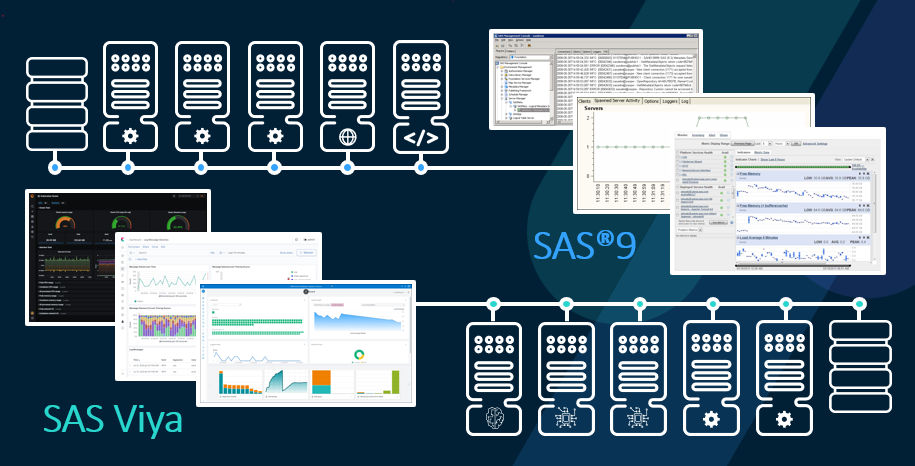
| SAS Viya (SAS Health) | Low-code predictive modeling with compliance features | Systems needing governance in analytics | Bias detection, decision auditing, built-in health data models ensure trustworthy AI-powered predictions |
| Health Catalyst + Microsoft Azure | Cloud-scale AI and analytics pipeline integration | Large health systems with SaaS-ready infrastructure | Combines clinical, financial & operational data to deliver enterprise-grade AI insights |
| Enlitic | AI-powered medical imaging data standardization | Radiology workflows and real-world evidence | Standardizes and deidentifies imaging data, enhancing radiology AI tools orchestration |
| Pieces Health | Clinical decision support and workflow automation | Hospitals seeking to reduce length of stay and readmissions | Integrates with EHRs like Epic to identify social determinants and automate discharge planning |
These solutions reflect the growing synergy between AI and SaaS architectures, enabling healthcare organizations to scale advanced analytics seamlessly.
Transformative Use Cases of AI-Powered Healthcare SaaS
1. Diagnostics-as-a-Service (DaaS)
One of the most revolutionary applications is Diagnostics-as-a-Service, where AI-powered diagnostic tools, especially in imaging analysis and pattern recognition, are offered via cloud subscription models. This approach:
Reduces diagnostic cycles from days to minutes with up to 40% accuracy improvements.
Enables multi-facility deployments without the need for heavy infrastructure investments.
Generates predictable recurring revenue streams for providers.
For example, AI platforms leveraging nanotechnology and real-time imaging analytics allow instant detection of critical diseases like cancer or cardiovascular conditions, leading to faster patient interventions.
2. Predictive Analytics for Population Health and Risk Stratification
AI-powered SaaS platforms aggregate and analyze vast datasets, including EHRs, claims, and social determinants, to predict patient risks and outcomes. This enables:
Proactive care management by identifying high-risk patients before adverse events occur.
Optimization of healthcare resources and personalized care pathways.
Improved outcomes through continuous monitoring and timely interventions.
Innovaccer’s Healthcare Intelligence Cloud exemplifies this by unifying siloed data into actionable patient risk models, helping health systems manage population health effectively.
3. Financial and Operational Forecasting
Healthcare organizations are increasingly using AI-driven SaaS dashboards for real-time revenue forecasting and operational optimization. These dashboards integrate clinical and financial data, providing executives with:
Visibility into organizational performance.
Identification of emerging revenue opportunities.
Streamlined operations that reduce costs and inefficiencies.
McKinsey estimates that AI applications could generate up to $360 billion in annual net savings in US healthcare alone, representing 5-10% of spending.
4. Workflow Automation and Clinical Decision Support
AI-powered SaaS tools also automate repetitive administrative tasks such as documentation, billing, and discharge planning, reducing human errors and freeing clinicians to focus on patient care. Platforms like Pieces Health integrate with EHRs to provide actionable insights and automate workflows, improving length-of-stay metrics and readmission rates.
5. Enhanced Data Governance and Compliance
With increasing regulatory scrutiny, AI SaaS platforms like SAS Viya incorporate bias detection, decision auditing, and compliance frameworks directly into predictive modeling processes, ensuring that AI applications in healthcare are ethical, transparent, and trustworthy.

Why Healthcare Organizations Are Investing in AI-Powered SaaS Now
Healthcare has historically lagged in adopting new enterprise technologies, but 2025 marks a turning point:
Accelerated digital transformation driven by pandemic lessons and the urgent need for cost containment.
Growing recognition that AI-powered SaaS delivers measurable ROI, including faster diagnostics, reduced readmissions, and improved revenue cycle management.
Rising availability of specialized healthcare AI companies offering niche SaaS solutions that integrate smoothly with existing systems.
Increasing partnership between tech giants and healthcare SaaS firms combining cloud scale and domain expertise, e.g., Health Catalyst and Microsoft Azure collaboration.
Ethical AI frameworks and data privacy measures easing concerns around AI adoption in sensitive healthcare environments.
Challenges and Considerations in Deploying AI SaaS for Healthcare Analytics
Despite the promise, healthcare organizations must address several factors to maximize AI SaaS benefits:
Data quality and interoperability: Effective AI analytics depend on clean, standardized data drawn from diverse sources like EHRs, claims, and social determinants.
Integration with existing workflows: AI insights must be embedded seamlessly without disrupting clinical and operational processes.
Regulatory compliance: Platforms must comply with HIPAA, SOC 2, and other healthcare data regulations to ensure patient privacy and data security.
Bias and transparency: AI models must be audited continuously to detect and mitigate bias, ensuring fairness across patient populations.
Change management: Adoption requires training and cultural shifts within healthcare teams to trust and effectively use AI-driven insights.
Providers who plan strategically and adopt proven frameworks such as Strativera’s DDEO™ can achieve up to 3.2X ROI and 40% faster diagnostics.
The Future Outlook: AI SaaS in Healthcare Analytics Beyond 2025
Looking ahead, the integration of large language models (LLMs), generative AI, and more sophisticated predictive analytics will deepen AI SaaS’s impact in healthcare. Expect advances such as:
AI-powered clinical decision support with conversational interfaces to assist clinicians.
Expansion of Diagnostics-as-a-Service to new disease areas and care settings.
Greater use of AI for social determinant identification and personalized care plans.
Broader application of predictive RevOps dashboards for healthcare financial sustainability.
With continued innovation and responsible deployment, AI-powered SaaS will remain central to healthcare organizations’ efforts to improve patient care quality while controlling costs.

AI-powered SaaS for healthcare data analytics is no longer a futuristic concept—it's a transformative reality enabling faster diagnostics, smarter decision-making, and streamlined operations in 2025. Organizations that embrace these tools gain a competitive edge by unlocking actionable insights from complex data and driving better patient and financial outcomes.
What AI-powered SaaS tools are you most excited about for healthcare innovation? Share your thoughts or experiences in the comments below!
You may also like
- Case Study: How a SaaS Startup Scaled Rapidly Using AI Tools
- Best AI SaaS Tools for Small Businesses in 2025: Boost Growth and Efficiency
- Top Affiliate Programs for SaaS Bloggers in 2025: Maximize Your Earnings with These High-Paying Picks
- AI-Driven Email Marketing SaaS Tools Compared: Which One Wins in 2025?
- AI Integration Strategies for SaaS Businesses: A Practical Guide to Next-Level Growth