

- Published on
AI-Powered Smart Contract Auditing: How It Works in 2026
Listen to the full article:
- Authors

- Name
- Jagadish V Gaikwad
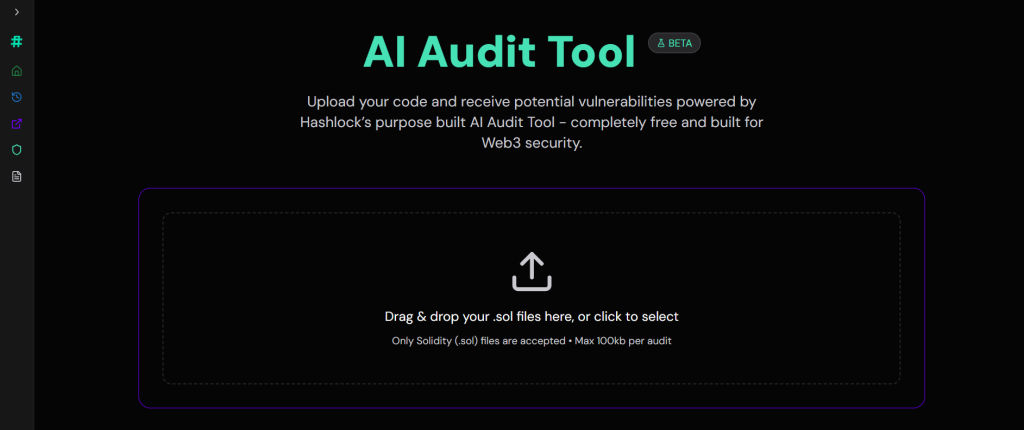
Your smart contract can hold millions of dollars and still contain one stupid line of code that destroys everything. That’s the brutal reality of Web3 security.
AI-powered smart contract auditing helps find those problems faster. It scans code, traces execution paths, generates tests, spots suspicious patterns, and explains likely attack routes before your contract goes live.
But don’t buy the hype. AI won’t magically understand your protocol’s business model. It can miss economic exploits, misunderstand assumptions, and confidently report nonsense.
The winning setup is simple: let AI do the exhausting first pass. Let experienced auditors make the final call.
Why Smart Contract Auditing Needed an Upgrade
Look, traditional audits are valuable. They’re also slow, expensive, and often treated like a one-time ceremony before launch.
A human auditor may spend weeks reading Solidity, tracing dependencies, reviewing tests, and checking privileged functions. That work matters. But code changes constantly, and a single post-audit update can invalidate the original review.
That’s where AI-powered smart contract auditing changes the workflow. Instead of waiting for a final audit, teams can scan every pull request, deployment candidate, and meaningful code change.
The timing matters because smart contracts are unusually unforgiving. Once deployed, code may be immutable, funds may move automatically, and attackers only need one exploitable path.
Security researchers increasingly use AI to identify reentrancy, access-control failures, unsafe external calls, flawed validation, and suspicious state transitions. Those are common issues, but they’re still expensive to catch manually across large codebases.
The annoying part? Faster code generation makes the problem worse. Your team can ship more functionality, but it can also create more attack surface in less time.
What AI-Powered Smart Contract Auditing Actually Means
Real talk: this isn’t one magic model staring at Solidity and yelling “secure” or “unsafe.”
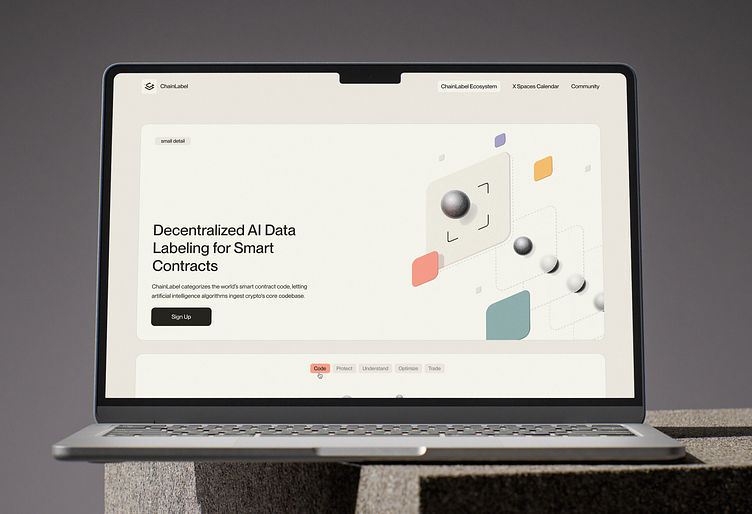
AI-powered smart contract auditing combines several techniques. Static analysis checks code without executing it. Symbolic execution explores possible paths. Fuzzing throws unexpected inputs at functions. Machine learning identifies patterns from previous vulnerabilities. Large language models explain logic and connect scattered clues.
The best systems use these methods together because each one catches different problems.
| Approach | What it catches | Real-world trade-off | Verdict |
|---|---|---|---|
| Static analysis | Known patterns, unsafe calls, access-control mistakes | Fast, but can produce noisy alerts | Essential first pass |
| Symbolic execution | Reachable paths and tricky state conditions | Powerful, but computationally heavy | Great for critical functions |
| Fuzzing | Unexpected inputs and broken assumptions | Needs useful properties and test setup | Excellent when configured well |
| Large language models | Logic summaries, dependency tracing, suspicious behavior | Can hallucinate or miss deep economics | Useful assistant, not judge |
| Human review | Business logic, incentives, governance, operational risk | Expensive and slower | Still mandatory |
If you’re building a lending protocol, the system needs more than a reentrancy checklist. It needs to understand collateral rules, liquidation thresholds, oracle behavior, interest calculations, and admin powers.
That’s why the strongest workflow is layered. AI handles scale and repetition. Humans handle context, judgment, and consequences.
How the AI Audit Pipeline Works
Here’s the thing: the process looks complicated from the outside, but the core pipeline is pretty logical.
1. The system ingests your code
First, the tool collects Solidity files, imported dependencies, interfaces, libraries, deployment scripts, and test files.
It doesn’t just read raw text. Modern systems may convert code into abstract syntax trees, control-flow graphs, call graphs, and data-flow representations.
That gives the scanner a map of how your contract behaves. It can see which functions write to storage, which functions call external contracts, and which permissions control sensitive actions.
This step matters more than people think. If you scan only one contract while ignoring its dependencies, you’re auditing a fragment of the actual system.
2. It identifies the attack surface
Next, AI ranks the parts of the code that deserve attention.
Functions handling funds usually come first. So do upgrade mechanisms, token transfers, oracle reads, administrative roles, external calls, and withdrawal logic.
Some current audit pipelines prioritize contracts by funds handled, permissions, external calls, and overall attack surface before running deeper analysis.
That’s a smart move. You don’t need to spend equal time on a getter function and a vault withdrawal function.
3. It searches for known vulnerability patterns
Now the scanner looks for familiar failure modes.
It may flag reentrancy, unchecked return values, missing access control, integer issues, price manipulation risks, unsafe delegate calls, signature replay, and denial-of-service conditions.
Machine learning models can compare code structures against large datasets of secure code, vulnerable code, exploit samples, and historical audit findings.
This is where AI is fast. It can scan thousands of lines in minutes and surface patterns that would take a human reviewer hours to locate.
But pattern matching isn’t the same as proving an exploit exists. A suspicious external call may be safe because another modifier or state update prevents abuse.
4. It traces data and control flow
This is the part that makes AI auditing more useful than a basic checklist.
The system follows how user input moves through the contract. It checks whether an attacker-controlled value reaches a sensitive operation. It also traces which functions can change balances, permissions, prices, or protocol state.
Call-graph isolation and recursive dependency crawling help auditors focus on connected functions instead of reading every file linearly.
For example, a deposit function may look harmless by itself. The real problem could sit in a separate withdrawal path that trusts a stale accounting value.
AI can connect those dots quickly. Humans still need to verify whether the path is reachable and economically meaningful.
5. It generates tests and attack scenarios
Okay so the catch is this: finding suspicious code isn’t enough.
Good auditing tools generate fuzz tests, invariant tests, edge cases, and sometimes proof-of-concept scaffolds. These tests try to break the contract under many inputs and state conditions.
An invariant might say that total user balances must never exceed the token balance held by the contract. Another might require that only authorized roles can change an oracle address.
Fuzzing then throws thousands of randomized sequences at those rules. If the invariant breaks, the system has a concrete lead instead of a vague warning.
The better workflow uses your existing test structure. It doesn’t blindly create random tests from scratch, because those tests may not reflect how your protocol actually operates.
What AI Finds Well
Your AI auditor is especially useful when the problem has a recognizable shape.
It can inspect repetitive code quickly. It can compare patterns across contracts. It can summarize unfamiliar repositories and highlight functions with high privilege or high financial impact.
It’s also good at generating questions humans should ask:
- Can an attacker call this function before initialization?
- Can a user manipulate the price between two state updates?
- Does this role have more power than the documentation claims?
- Can a failed external call leave accounting in an inconsistent state?
- Does this signature prevent replay across chains?
AI can also reduce the time spent on low-value review work. A human auditor doesn’t need to manually catalog every external call before thinking about the real exploit path.
That’s the productivity win. Not “AI replaces security experts.” More like “AI stops experts from wasting half their week building a map.”
AI-powered smart contract auditing is particularly valuable during development. Teams can get feedback before a formal audit, fix obvious findings, and give external auditors a cleaner codebase.
That can reduce audit friction. It can also make the final review more focused and less expensive.
Where AI Still Falls Apart
Stop pretending AI understands your protocol just because it can summarize your code.
The biggest weakness is business logic. A contract may behave exactly as programmed and still violate the economic rules your users expect.
Imagine a staking protocol that calculates rewards correctly but allows users to withdraw immediately after claiming. The code may pass common vulnerability checks. The incentive design could still let sophisticated users drain rewards from everyone else.
AI may identify pieces of that problem. It may not understand the full economic attack without protocol context, historical behavior, and careful modeling.
Oracle manipulation is another ugly example. The vulnerability may involve timing, liquidity, market depth, cross-protocol dependencies, and attacker capital. That’s not just a code pattern.
False positives create friction too. If every scan produces 300 warnings, your developers will stop caring. The tool becomes background noise, and critical findings get buried with everything else.
False negatives are worse. A clean report doesn’t mean your contract is safe. It only means the system didn’t find a problem within its models, rules, inputs, and assumptions.
That’s why every serious finding needs reproduction. Trace the state changes. Confirm the attacker’s permissions. Build a deterministic test. Then decide whether the impact is real.
AI Auditing Compared With Human Audits
Here’s what nobody talks about: AI and human audits don’t compete in the same lane.
AI is tireless. It can scan continuously, compare patterns, summarize code, and generate test ideas. Humans are better at ambiguity, incentives, weird assumptions, and asking why the system exists in the first place.
A strong team uses both.
| Audit method | Best use | Where it breaks | Who should pick it |
|---|---|---|---|
| AI scanner only | Early checks and routine pull requests | Misses context and deep economic flaws | Almost nobody |
| Human audit only | Final review of critical systems | Slow, costly, and hard to repeat after changes | Small stable codebases |
| AI plus human review | Continuous checks plus final judgment | Requires process and skilled reviewers | Serious protocols |
| AI plus monitoring | Pre-launch review and post-launch detection | Cannot undo every exploit | DeFi teams with live funds |
Your choice should depend on risk, not fashion.
A small internal tool with no user funds may start with automated scanning and focused manual review. A protocol holding significant assets needs layered testing, independent review, access controls, monitoring, and a response plan.
No tool earns trust by producing a pretty PDF. Trust comes from verified findings, clear assumptions, reproducible tests, and transparent limitations.
How to Add AI Auditing to Your Workflow
The trap most teams fall into is buying a tool before fixing their process.
Start by defining what the system should check. Do you want vulnerability detection, test generation, code explanation, continuous pull-request scanning, post-deployment monitoring, or all of it?
Then connect the scanner to your development workflow. Run checks when code changes, not just the night before launch. A serious setup can block merges for critical findings while allowing lower-risk warnings to continue for review.
Next, create severity rules. Don’t treat a documentation issue like an unrestricted admin upgrade path. Your team needs clear categories tied to real consequences.
You’ll also want a finding review process. Someone must decide whether an alert is valid, exploitable, duplicate, accepted risk, or irrelevant.
That person shouldn’t blindly click “dismiss.” Every accepted risk needs a reason, an owner, and a review date.
Finally, feed lessons back into the system. Add confirmed bugs, fixed examples, project-specific rules, and new tests to your security knowledge base.
This feedback loop makes the process more useful over time. It also prevents your team from rediscovering the same bug every three months.
The Post-Deployment Piece Everyone Ignores
Yeah, launch day isn’t the finish line.
A pre-launch audit checks the code under known conditions. Live contracts face new tokens, new integrations, governance changes, market volatility, and attackers actively probing for weaknesses.
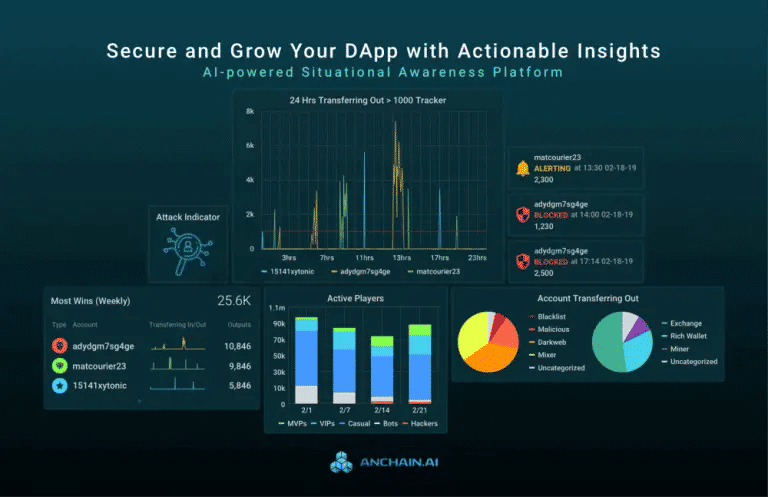
AI monitoring tools can watch for unusual function calls, gas behavior, permission changes, transaction patterns, and suspicious fund movement.
That doesn’t guarantee prevention. It gives your team a chance to detect strange behavior before a small incident becomes a catastrophic one.
You should monitor privileged actions especially closely. An unexpected upgrade, oracle replacement, pause change, or treasury transfer deserves immediate attention.
Your response plan matters too. If nobody knows who can pause the system, investigate the alert, or communicate with users, detection won’t save you.
Security isn’t just code review. It’s code review, monitoring, permissions, incident response, and honest communication.
The Future Isn’t Fully Autonomous Auditing
Your competitors may be using AI to ship faster. That doesn’t mean you should hand the keys to a chatbot.
The realistic future is continuous, hybrid auditing. AI scans every meaningful change, maps attack paths, generates tests, and prioritizes risk. Human specialists review economic logic, governance, deployment assumptions, and the findings that actually matter.
That setup is already becoming the practical direction of the industry. AI tools are moving into CI/CD pipelines, while auditors use them to focus attention instead of replacing judgment.
The hype says autonomous agents will secure everything. The useful version is less dramatic.
AI becomes a tireless junior security analyst. It reads the boring stuff, checks the obvious stuff, suggests experiments, and keeps watch after deployment.
You still need someone senior enough to say, “This looks fine technically, but the incentive design is broken.”
Final Take
Real talk: AI-powered smart contract auditing is worth using now. It can find common vulnerabilities faster, support continuous security checks, and help your team test more aggressively.
But it isn’t a security certificate. Your protocol still needs human judgment, economic analysis, verified exploit paths, and post-launch monitoring.
Are you using AI to make your security team sharper, or are you hoping it’ll let you skip having one?
You may also like
- AI vs Traditional Crypto Research: Which Is More Effective in 2026?
- Argentina vs Cabo Verde FIFA World Cup 2026: Preview, Predictions & Match Details
- Club World Cup to Expand to 48 Teams by 2029: FIFA’s Global Football Revolution
- AI SaaS Tools for International Business Expansion: The 2025 Guide
- AI Infrastructure Trends Every Developer Should Know in 2026