

- Published on
How AI Analyzes DAO Governance Risks
Listen to the full article:
- Authors

- Name
- Jagadish V Gaikwad
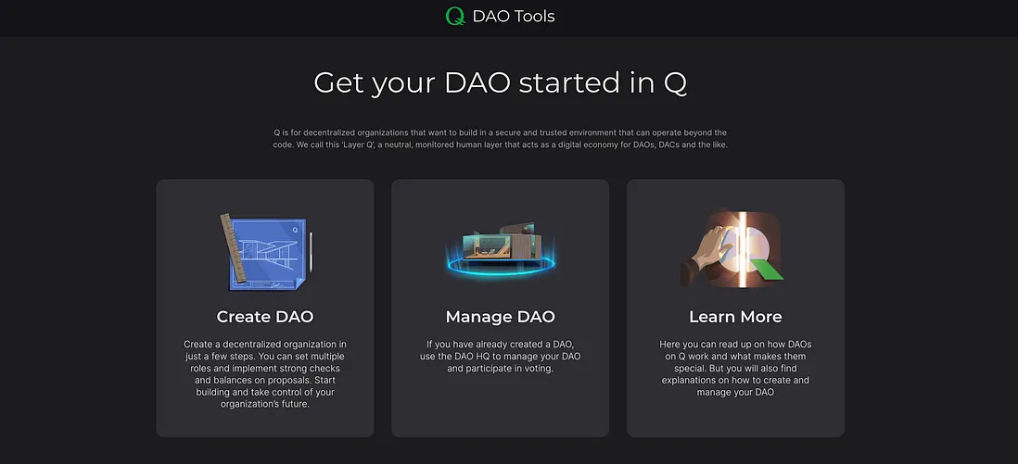
Decentralized autonomous organizations, or DAOs, use smart contracts, governance tokens, proposals, and community voting to coordinate decisions. That architecture creates a large and changing risk surface: voting power can become concentrated, proposals can hide dangerous execution logic, and low participation can allow a small group to determine an outcome.
How AI analyzes DAO governance risks is best understood as a layered monitoring process. AI systems can organize governance data, detect unusual voting behavior, compare proposal code with previous versions, identify suspicious relationships, and summarize complex technical changes. They do not replace smart-contract audits, governance review, legal analysis, or accountable decision-making.
The most reliable approach combines machine-assisted detection with human verification. AI identifies signals; reviewers determine whether those signals represent a genuine attack, an unusual but legitimate event, or a false alarm.
What counts as a DAO governance risk?
DAO governance risk is the possibility that a decision-making process produces an unsafe, manipulated, unauthorized, or harmful result. The risk may come from code, people, incentives, information gaps, or the interaction between several systems.
A useful starting point is the attack taxonomy described in the research paper SoK: Attacks on DAOs, which groups DAO attacks into bribing, token control, human-computer interaction, and code or protocol vulnerabilities.
- Token-control risk: An attacker accumulates, borrows, or otherwise controls enough voting power to influence a proposal.
- Bribery risk: Participants are paid or incentivized to vote in a particular way, potentially without transferring ownership of the underlying tokens.
- Proposal risk: A proposal appears routine but contains malicious execution logic, unsafe parameter changes, or an unexpected recipient.
- Code and protocol risk: Smart-contract bugs, access-control errors, oracle failures, bridge weaknesses, or inconsistent governance rules make an approved action dangerous.
- Participation risk: Low turnout, rushed voting, unclear documentation, or voter fatigue reduces effective scrutiny.
- Centralization risk: A small number of wallets, delegates, insiders, or entities hold disproportionate influence.
- Coordination risk: Governance information is fragmented across forums, voting platforms, block explorers, repositories, and chat channels, making it difficult to form an accurate picture.
These risks overlap. For example, a low-turnout vote may make token concentration more consequential, while unclear proposal documentation may conceal a code-level threat.
The data AI uses to assess governance
AI cannot analyze risks that it cannot observe. A monitoring system therefore begins by collecting and normalizing several types of data.
On-chain activity
On-chain data includes token balances, delegation relationships, proposal creation, voting transactions, quorum changes, execution calls, treasury transfers, and contract upgrades. Because these events are recorded on a blockchain, an analytics system can reconstruct who voted, when they voted, how voting power changed, and what an approved proposal attempted to execute.
The important limitation is that wallet addresses are not automatically real-world identities. One person may control several addresses, and several people may use one delegate or custody service. AI can identify behavioral relationships without necessarily knowing the legal or personal identity behind them.
Proposal text and discussion
Proposals often contain natural-language descriptions, links to code, parameter changes, and execution payloads. AI language models can classify topics, summarize long discussions, detect missing explanations, and compare a proposal with previous governance decisions.
This is useful because poor documentation can prevent participants from recognizing a dangerous change. A 2025 study of DAO governance security reported substantial inconsistencies in proposal descriptions and code among the DAOs it examined. Such findings support using automated documentation checks, but they do not prove that every poorly documented proposal is malicious.
Smart-contract code and execution data
A proposal can be safe in its description but dangerous in its transaction payload. AI-assisted code analysis can inspect Solidity or other smart-contract code, trace function calls, flag suspicious permissions, and compare proposed bytecode or source changes with an earlier version.
Research on large language models used for smart-contract auditing has found potential for vulnerability detection while also reporting high false-positive rates and the continuing need for manual auditors. AI-generated code presents an additional concern: a separate study found that contracts generated by leading language models can contain serious security flaws and should not be deployed without extensive review.
Governance history
Historical data helps a system learn what is normal for a particular DAO. Relevant signals include typical voting duration, average participation, delegation patterns, proposal categories, treasury recipients, and the time between approval and execution.
A sudden change may deserve attention, but unusual does not mean malicious. A major upgrade, market event, or emergency vote can legitimately produce behavior unlike the historical baseline.
How AI analyzes DAO governance risks
AI analysis usually combines rules, statistical methods, graph analysis, natural-language processing, and code-security tools. No single model can reliably evaluate every governance layer.
1. It detects voting anomalies
Anomaly detection compares current voting behavior with historical patterns. A system might flag:
- A rapid increase in voting power shortly before a vote
- Multiple wallets funding or delegating to one another in a coordinated pattern
- Large voting positions that appear briefly and disappear after execution
- A group of wallets voting together unusually often
- A proposal receiving decisive support from a small number of newly active addresses
- A last-minute voting surge that changes the result
These signals may indicate borrowing, coordination, bribery, or an attempt at governance capture. The system should present them as investigative leads rather than conclusions.
An AI model can also calculate how sensitive the outcome is to a few voters. If removing one wallet or delegate changes the result, the proposal may have a concentration risk even when the vote formally satisfies quorum.
2. It maps influence as a graph
Graph analysis represents wallets, delegates, proposals, votes, funding transfers, and contracts as connected entities. AI can then search for clusters and relationships that are difficult to see in a simple voting table.
For example, several wallets may appear independent but share funding sources, move tokens through the same addresses, or delegate to the same representative. A graph does not prove common control, but it can reveal relationships that deserve review.
This matters because token-based governance can develop whale influence. A recent review of DAO governance literature identifies concentrated ownership and the power of large token holders as recurring governance concerns.
3. It screens proposal content
Natural-language models can review whether a proposal clearly explains:
- What is changing
- Which contracts or parameters are affected
- Who receives funds
- Whether permissions are added or removed
- What risks and rollback options exist
- Whether tests, simulations, and independent reviews are linked
The model can compare the proposal with documentation requirements and highlight omissions. It may also classify emotional pressure, artificial urgency, or inconsistent claims across the forum post, voting page, and code repository.
This screening is most useful as a checklist. A language model may misunderstand a technical dependency, accept a misleading explanation, or produce a confident but inaccurate summary. Every material conclusion should be checked against the actual transaction payload and source code.
4. It compares code and execution paths
A governance proposal frequently executes one or more transactions. AI-assisted tools can trace the calls and identify whether the execution path:
- Transfers treasury assets
- Changes an administrator
- Grants a privileged role
- Upgrades an implementation contract
- Changes an oracle, fee, limit, or collateral parameter
- Interacts with an unfamiliar external contract
- Uses delegate calls or other powerful execution mechanisms
The system can compare the proposed action with the natural-language description. A mismatch is a high-value alert. If a proposal says it updates a fee but also grants a new upgrade role, the discrepancy should be escalated before voting or execution.
Code analysis still has limits. Complex contracts may depend on external state, proxy architecture, cross-chain messaging, or assumptions that are not visible in one file. AI output should therefore complement, not replace, deterministic tests, formal methods where appropriate, and independent security review.
5. It models economic attack paths
Some governance threats depend on incentives rather than obvious coding errors. AI can simulate scenarios such as:
- A borrower acquiring temporary voting power
- A whale changing a parameter that benefits its position
- A delegate coordinating votes across related proposals
- A treasury transfer creating a conflict of interest
- A proposal passing during a period of unusually low participation
The model can vary assumptions about token prices, liquidity, voting thresholds, delegation, quorum, timelocks, and execution delays. The output is a scenario analysis, not a prediction.
Economic models are especially sensitive to incomplete data. A simulation may underestimate off-chain agreements, private negotiations, exchange liquidity constraints, or legal consequences. Results should be expressed as conditional statements: if the attacker can obtain a specified amount of voting power and if the vote remains open for a specified period, then the proposal may become feasible.

Comparing AI methods for DAO risk analysis
| AI method | Best use | Main signal | Key limitation |
|---|---|---|---|
| Rules and thresholds | Fast detection of known conditions | Large transfers, privileged calls, quorum changes, short voting windows | Misses new or context-dependent attacks |
| Statistical anomaly detection | Finding behavior that differs from a DAO’s baseline | Sudden voting, funding, delegation, or participation changes | Normal emergencies can look suspicious |
| Graph analysis | Examining coordination and influence | Shared funding, wallet clusters, delegate concentration | Relationships do not prove common ownership |
| Language-model review | Summarizing proposals and finding missing explanations | Inconsistent text, unclear risks, documentation gaps | Can hallucinate or misunderstand technical details |
| Code and transaction analysis | Checking execution risk | Privilege changes, asset transfers, contract differences | Complex dependencies may evade automated review |
| Scenario simulation | Exploring economic and governance outcomes | Feasibility of capture, bribery, or parameter attacks | Results depend heavily on assumptions and data quality |
A mature monitoring program uses several methods together. Rules provide fast alerts, graph models reveal relationships, language models improve readability, and code analysis examines what the proposal will actually execute.
A practical AI-assisted review workflow
A DAO can use the following process without treating an AI model as the final authority.
Before a proposal reaches a vote
First, collect the proposal text, source code, transaction payload, target contracts, requested permissions, and supporting discussion. Normalize addresses and identify whether the contracts are verified and whether the proposal changes an upgradeable component.
Next, run automated checks for privileged actions, treasury transfers, unfamiliar recipients, parameter changes, and code differences. Compare the requested action with the written description. Flag missing tests, missing simulations, unclear ownership, and unexplained urgency.
Then, analyze the current governance context. Measure voting concentration, recent delegation changes, quorum history, and whether the proposal depends on a narrow group of voters.
During the voting period
Monitor changes in voting power, new delegations, wallet funding, vote timing, and coordinated activity. Recalculate the outcome as participation changes. An alert should show the underlying evidence, not merely a risk score.
A useful alert might state that five newly active addresses received funds from a common source, delegated to one representative, and now account for a material share of the supporting votes. Reviewers can then investigate the addresses, transaction timing, and proposal context.
Before execution
Repeat the transaction simulation using the current chain state. Confirm that the payload has not changed, the timelock is functioning, and the target contracts match the reviewed versions.
Require explicit human sign-off for high-impact actions such as treasury transfers, ownership changes, upgrades, oracle changes, and cross-chain messages. Cross-chain governance deserves additional scrutiny because a weakness on one chain or in a messaging layer can affect another.
After execution
Compare actual state changes with the approved proposal. Monitor transferred assets, new permissions, emitted events, and unexpected contract interactions. Store alerts and reviewer decisions so the system can improve its baseline without silently learning from unverified labels.
The risks of using AI itself
AI introduces another layer of governance risk.
False positives can overwhelm reviewers. If every unusual vote triggers an urgent alert, participants may learn to ignore the monitoring system.
False negatives are more dangerous. A model may miss a novel attack, a subtle proxy interaction, a coordinated off-chain agreement, or a malicious proposal written in familiar language.
Data poisoning can occur when attackers manipulate the data used for analysis. They may create artificial activity, flood discussion channels, or exploit unreliable labels to make malicious behavior appear normal.
Model bias can affect which wallets, languages, communities, or proposal styles receive scrutiny. A system trained on a narrow history may treat legitimate changes as suspicious or fail to understand local governance conventions.
Confidentiality risks arise when private discussions, security reports, or unpublished code are sent to an external AI service. DAOs should define what data may leave controlled infrastructure and retain an audit trail of model inputs and outputs.
Automation risk is the most serious concern. An AI-generated risk score should not automatically block a vote, transfer funds, or authorize a contract upgrade unless the DAO has deliberately designed, tested, and governed that automation.
How to judge an AI governance tool
Before adopting a tool, ask:
- Does it show evidence behind each alert?
- Can reviewers reproduce its result from on-chain data?
- Does it distinguish facts, estimates, and model inferences?
- Can it inspect transaction payloads rather than only proposal text?
- Does it support proxy contracts, delegates, timelocks, and cross-chain messages?
- How are false positives and false negatives measured?
- Can the DAO run simulations before execution?
- Does it preserve sensitive data appropriately?
- Is there a manual escalation process?
- Can the DAO disable or override the tool through a documented governance procedure?
Avoid evaluating a product solely by a single accuracy percentage. Performance depends on the chain, contract architecture, attack types, historical data, and alert threshold. A tool that detects known access-control patterns may still be weak at identifying social engineering or bribery.
Conclusion
AI analyzes DAO governance risks by combining on-chain monitoring, wallet-relationship graphs, proposal-language review, code inspection, execution tracing, anomaly detection, and economic scenario analysis. Its strongest role is to reduce the time required to find inconsistencies and prioritize human investigation.
The decisive safeguard remains accountable review. DAO participants should verify what a proposal executes, who can influence its outcome, whether the voting process is unusually concentrated, and what happens if the proposal behaves differently from its description. AI can make those questions easier to answer, but it cannot make uncertain data certain or transfer responsibility away from the people who govern the protocol.
You may also like
- AI in Financial Risk Management: A Complete Guide for Modern Teams
- Multi-Cloud Hosting: Benefits and Challenges for SaaS Startups in 2025
- Best AI Writing Tools for Bloggers and YouTubers in 2025: Ultimate Guide to Boost Your Content Creation
- AI Tools for DeFi Investors: What They Can and Cannot Do
- Snapdragon 8 Elite Gen 5: Everything You Need to Know About Qualcomm’s Fastest Mobile Chip