

- Published on
How AI Analyzes Ethereum Staking Data
Listen to the full article:
- Authors

- Name
- Jagadish V Gaikwad
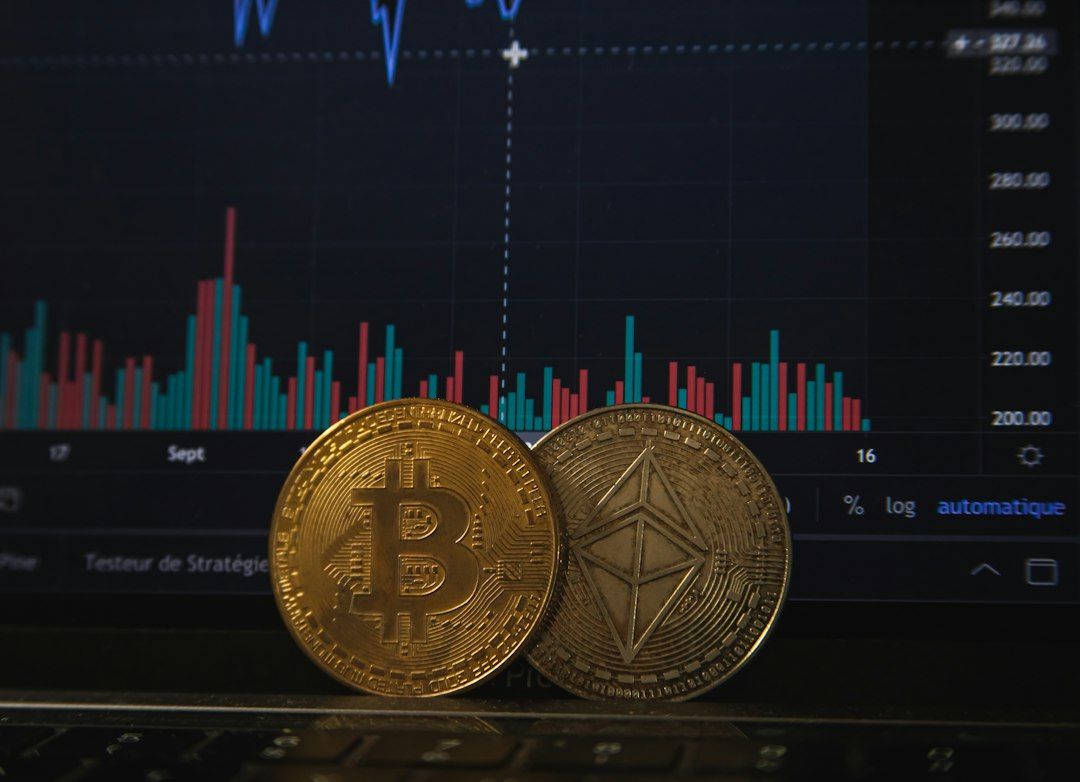
Ethereum staking data is a large, changing record of validator activity, rewards, penalties, withdrawals, exits, and network participation. AI analyzes Ethereum staking data by turning these raw observations into time-series features, detecting unusual behavior, comparing validator performance, and estimating possible outcomes.
That does not make AI a crystal ball. A model can identify patterns in historical validator data, but it cannot guarantee rewards, predict ETH prices, or remove the technical and market risks of staking.
What Ethereum staking data contains
Ethereum uses proof of stake, a consensus system in which validators help propose and verify blocks. A validator must remain operational, submit attestations, and follow protocol rules to receive rewards. Offline behavior can reduce earnings, while certain forms of malicious behavior can result in penalties.
The Ethereum documentation on proof-of-stake rewards and penalties distinguishes rewards from penalties and explains that penalties reduce a validator’s balance rather than simply delaying a payment.
AI systems can work with several categories of staking data:
- Validator identity data: validator index, public key, activation epoch, exit epoch, and withdrawal credentials.
- Balance data: current balance, effective balance, and changes over time.
- Performance data: attestations, proposals, sync committee participation, missed duties, and inclusion delays.
- Reward data: consensus-layer rewards, execution-layer tips, and other validator income where the dataset includes them.
- Penalty data: missed duties, inactivity penalties, and slashing-related events.
- Withdrawal data: partial withdrawals, full withdrawals, withdrawal addresses, and timing.
- Network-level data: active validator count, participation rate, queued activations, queued exits, and changes in staked ETH.
The Beacon API specification provides standardized endpoints for querying beacon-chain information, including validator data and reward-related endpoints. That matters because AI analysis is only as reliable as the data pipeline feeding it.
How AI analyzes Ethereum staking data
AI analysis usually follows a sequence rather than a single magic algorithm.
1. Collecting and normalizing records
The first task is gathering data from beacon nodes, indexers, analytics platforms, or exported validator records. Different sources may describe the same event using different identifiers, time intervals, or units.
A useful pipeline standardizes:
- Validator identifiers
- Epoch and slot timestamps
- ETH denominations
- Reward and penalty categories
- Active, pending, exited, and withdrawn states
- Missing or delayed observations
Ethereum’s consensus layer measures activity in epochs and slots, while many dashboards display daily or weekly summaries. AI models need these time scales aligned before they can compare one validator with another.
Normalization also prevents a common error: treating a balance change as a reward without checking whether it came from a withdrawal, penalty, deposit, or other event.
2. Creating features
A feature is a measurable input that helps a model identify a pattern. For Ethereum staking, features might include:
- Attestation success rate
- Average inclusion delay
- Consecutive missed duties
- Balance change per epoch
- Reward volatility
- Penalties per month
- Uptime measured over several windows
- Time since activation
- Time since a withdrawal credential change
- Validator client or infrastructure category, when available
- Network participation during the same period
A model can compare short-term and long-term behavior. For example, a validator that missed one attestation may not be unusual. A validator whose performance has deteriorated across several consecutive periods deserves closer review.
Feature design should preserve context. A validator participating in a sync committee may receive a different reward pattern from one that is not selected. A proposed block can also create an income spike that does not represent ordinary daily performance.
3. Detecting anomalies
Anomaly detection looks for observations that differ materially from an expected pattern. It can be useful for monitoring:
- Sudden drops in attestation performance
- Repeated missed duties
- Unexpected balance decreases
- Unusual withdrawal activity
- Abrupt changes across many validators operated by the same service
- Performance that diverges from comparable validators
The model does not need to know the exact cause to raise an alert. A sudden change might result from a client outage, network connectivity problem, infrastructure migration, a data-indexing issue, or a protocol event.
This is one of AI’s most practical uses: prioritizing investigation. Instead of reviewing every validator manually, an operator can inspect the records with the largest or most persistent deviations.
4. Forecasting rewards and performance
Time-series models can estimate future validator performance from past observations. A forecast may use recent uptime, historical rewards, network participation, and validator status.
However, projected rewards are not fixed interest payments. Ethereum rewards depend on validator behavior and network conditions. The Ethereum solo-staking documentation states that rewards are related to remaining online and properly attesting, while exits stop a validator from earning further rewards.
A forecast should therefore be expressed as a range or scenario, not a promise. It should also separate:
- Expected consensus-layer rewards
- Possible execution-layer income
- Operating costs
- Penalties and downtime
- Withdrawal timing
- ETH price exposure
Estimated net return means gross rewards minus fees, expected losses, operating costs, and execution costs. AI can estimate some of those inputs, but it cannot know every future event.
What AI can reveal about validator behavior
The most useful outputs are usually comparative rather than absolute.
Performance benchmarking
AI can compare a validator with its own historical baseline and with a carefully selected peer group. Useful comparisons might include validators with similar age, infrastructure, client configuration, or operating model.
A simple average can hide important differences. Two validators may earn similar rewards, while one experiences frequent small interruptions and the other performs consistently. A model that examines volatility and sequences of missed duties can reveal that distinction.
Early-warning signals
A monitoring model can identify conditions that often deserve attention:
- Performance declining gradually over several days
- Repeated missed attestations at similar times
- A cluster of validators failing together
- Balance changes inconsistent with normal reward patterns
- A growing gap between expected and observed duties
These signals are not proof of a failure. They are prompts to check logs, node health, network connectivity, client status, and the data source itself.
Withdrawal and exit analysis
Withdrawals provide information about how staked ETH moves from the consensus layer to the execution layer. Ethereum documentation explains that withdrawals transfer ETH from a validator account on the Beacon Chain to the execution layer, where it can be transacted with.
AI can classify withdrawal patterns, estimate the pace of partial withdrawals, and distinguish withdrawal activity from full validator exits when the underlying records support that distinction.
Withdrawal credentials matter. Regular validators have effective balances capped at 32 ETH, and rewards above that amount are periodically swept to the withdrawal address. Compounding validators can add rewards to their effective balance up to 2048 ETH, subject to the protocol rules described in the official withdrawal documentation.
That distinction prevents a model from labeling every increase or decrease as a user decision. Some balance movements are automatic protocol behavior.

AI approaches and their trade-offs
Different analytical methods answer different questions.
| Approach | Useful for | Main limitation |
|---|---|---|
| Rules and thresholds | Alerting on missed duties, balance changes, or exit states | Can produce too many alerts and may miss gradual changes |
| Statistical baselines | Comparing current behavior with historical performance | Sensitive to poor baselines and unusual network conditions |
| Clustering | Grouping validators with similar performance or behavior | Groups can be difficult to interpret without domain knowledge |
| Supervised machine learning | Classifying known events when labeled examples exist | Requires reliable labels and may fail on new event types |
| Time-series forecasting | Estimating future rewards or performance ranges | Forecasts can break when protocol, infrastructure, or market conditions change |
| Anomaly detection | Finding unusual validator or network activity | An anomaly is not automatically a fault or security incident |
A strong monitoring system often combines these methods. Rules provide transparent safeguards, statistical models show deviations, and machine-learning models help rank the most important cases for review.
How AI analyzes network-level staking conditions
AI can also analyze Ethereum staking at the network level rather than focusing on one validator.
A model might track:
- Growth or decline in active validators
- Activation and exit queues
- Participation-rate changes
- Concentration among large operators
- Reward changes as the validator population changes
- Timing and volume of withdrawals
- Correlations between client, infrastructure, or operator groups
This can help researchers study network resilience and operators evaluate changing conditions. But network-level analysis has an important limitation: public blockchain data may show what happened without fully explaining why it happened.
For example, a withdrawal may reflect routine reward management, a change in custody, a portfolio decision, or an operational transition. Additional evidence is needed before assigning intent.
The biggest data and modeling risks
AI-generated staking analysis can look precise while still being wrong.
Data quality problems
Blockchain data is transparent, but transparency does not guarantee perfect datasets. Indexers can lag, APIs can fail, and dashboards may use different definitions for rewards, balances, or validator status.
A model should record source timestamps, refresh intervals, missing records, and the exact definition of each metric.
Leakage and hindsight bias
Data leakage occurs when a model uses information that would not have been available at the moment a forecast was supposed to be made. For example, using a later withdrawal or exit event to predict earlier validator behavior can make historical accuracy look better than real-world performance.
Testing should use chronological splits. Training on the past and evaluating on a later period better reflects how a monitoring system will operate.
Changing protocol conditions
Ethereum’s validator rules and reward mechanisms can change. Withdrawal behavior can also differ by credential type. A model trained on one protocol period may become less reliable after a major network update.
The Ethereum staking documentation notes different behavior for regular and compounding withdrawal credentials, including different effective-balance limits and withdrawal mechanics. A model that ignores those categories can produce misleading comparisons.
Correlation is not causation
If several validators underperform at the same time, the cause might be shared infrastructure, network congestion, a client issue, or an indexing problem. Correlation helps identify a pattern, but it does not establish which factor caused it.
Human review remains necessary for operational decisions, security investigations, and financial choices.

A practical workflow for analyzing staking data with AI
A cautious workflow can be organized into seven steps:
- Define the question. Decide whether the goal is uptime monitoring, reward estimation, withdrawal classification, or network research.
- Choose a source. Prefer documented beacon-node APIs or transparent datasets, and record the collection time.
- Define each metric. Specify how rewards, penalties, uptime, and withdrawals are calculated.
- Separate validator types. Account for status, withdrawal credentials, activation age, and other relevant categories.
- Build a historical baseline. Use enough data to capture ordinary variation rather than treating a short period as normal.
- Test chronologically. Evaluate forecasts and alerts on later data that was not available during training.
- Review alerts manually. Check node logs, infrastructure, protocol events, and source integrity before acting.
For a small staking operation, a rules-based monitoring system may be more transparent and easier to maintain than a complex model. AI becomes more valuable when the dataset is large, the alert volume is high, or the relationships between variables are difficult to inspect manually.
What AI cannot predict reliably
AI should not be treated as a guaranteed predictor of:
- ETH market price
- Exact future staking rewards
- The timing of protocol changes
- Unexpected client or infrastructure failures
- Security incidents not represented in historical data
- The motives behind withdrawals or exits
- Whether a staking service will remain solvent or operational
A reward forecast can be useful for scenario planning, but it is not the same as a guaranteed APY. A network anomaly can justify investigation, but it is not proof of a crisis.
Financial decisions should also account for liquidity, custody, smart-contract exposure, operator risk, taxes, and the possibility that ETH’s market value changes more than the staking income.
Conclusion
AI analyzes Ethereum staking data by combining validator records, reward and penalty histories, withdrawal events, performance metrics, and network conditions. Its strongest use is turning a large stream of technical data into comparisons, alerts, classifications, and carefully bounded forecasts.
The quality of the result depends on definitions and context. A credible system distinguishes regular and compounding validators, separates withdrawals from rewards, tests models against future data, and exposes uncertainty instead of hiding it behind a single score.
The practical takeaway is straightforward: use AI to monitor and investigate Ethereum staking data, not to replace protocol knowledge or risk judgment. The best analysis explains what changed, identifies plausible causes, shows how confident the model is, and leaves the final decision to an informed operator.
You may also like
- Best AI Cybersecurity Tools for Financial Services in 2026
- Why Is the iPhone 17 Series So Costly in India Compared to Other Countries?
- Are RTX 3000 Series Powered Laptops Worth Buying in 2025? A Comprehensive Guide
- Top AI Integrations for eCommerce Platforms in 2025: Boost Sales, Personalization & Efficiency
- How AI Can Help Track Cryptocurrency Capital Gains in 2026