

- Published on
How AI Is Automating Cryptocurrency Tax Reporting in 2026
Listen to the full article:
- Authors

- Name
- Jagadish V Gaikwad

Stop Pretending Crypto Taxes Are Normal
Your crypto activity is a mess. That’s not an insult, it’s just the truth.
You’ve got wallets, exchanges, DeFi swaps, staking rewards, NFTs, and random transfers scattered everywhere. AI is stepping in because humans are terrible at stitching that all together at tax time.
How AI is automating cryptocurrency tax reporting is simple on the surface and brutal underneath. It pulls transaction data, classifies events, applies tax rules, and spits out reports your accountant can actually use.
Why Manual Crypto Tax Work Keeps Breaking
Real talk: spreadsheets were never built for this.
Crypto tax reporting gets ugly because the data doesn’t live in one place. It comes from APIs, CSV files, wallets, on-chain activity, and exchange histories that never quite match up cleanly.
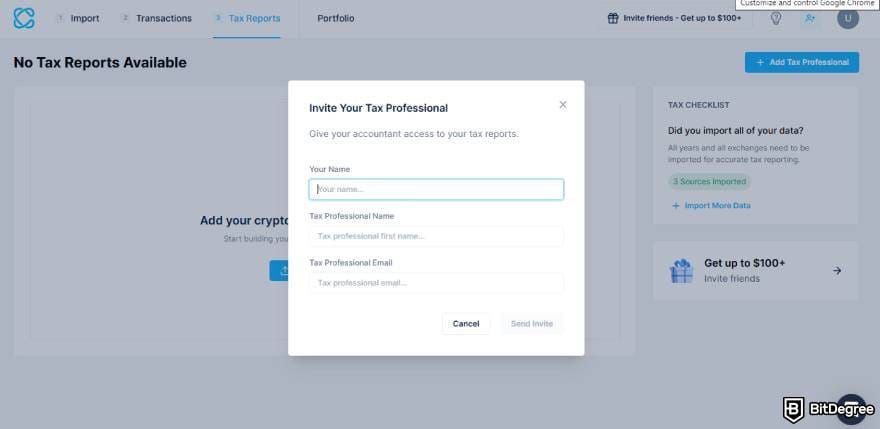
That’s why manual reconciliation eats so much time. Tools like Koinly were built to automate importing, calculating gains and losses, and generating jurisdiction-specific reports, which is exactly the kind of work that makes humans want to disappear for a weekend.
What AI Actually Does Behind the Curtain
Here’s the thing, AI isn’t “thinking” about your taxes like a CPA with caffeine problems.
It’s doing pattern recognition at scale. It identifies transfers, trades, staking rewards, and other taxable events, then tags them based on the rules of the platform and country you’re filing in.
Some systems now act like digital asset subledgers, sitting between chaotic blockchain activity and your tax or accounting software. That matters because clean classification is the difference between a usable report and a panic attack in April.
AI is also getting better at spotting weird edge cases. That includes cross-chain transfers, duplicated entries, missing cost basis data, and transactions that need manual review before filing.
The Main Ways AI Is Automating Cryptocurrency Tax Reporting
Honestly? This is where people mess up. They think automation means “click one button and pray.”
It’s more like a chain of smaller jobs that AI handles together. The best tools do four things well:
- Ingest data from exchanges, wallets, and CSV uploads
- Normalize transactions so every trade, swap, and transfer follows the same structure
- Classify taxable events using rules for capital gains, staking, airdrops, and more
- Generate reports ready for tax filing in the right jurisdiction
That workflow is why AI is useful here. It doesn’t just save time. It reduces the number of places where dumb mistakes can sneak in.
The Cost Basis Problem Is Where AI Starts Winning
Look, cost basis is where crypto tax software either earns its keep or completely faceplants.
Different jurisdictions allow different methods, like FIFO, LIFO, HIFO, or ACB, and tools like Koinly let users pick the method that fits their filing setup. AI helps by matching transaction history to the chosen method and filling in missing pieces faster than a human can do it by hand.
That’s a big deal for active traders. The more you trade, the more impossible it gets to track every lot manually without burning hours on cleanup.
AI Is Also Handling the Weird Stuff
The annoying part is that crypto doesn’t stay politely inside one category.
You’ve got staking rewards, yield farming, NFTs, airdrops, bridge transactions, and cross-chain moves that don’t always map cleanly to old-school tax logic. AI tools are built to catch those weird events and flag them for review instead of leaving them buried in a pile of generic “other” entries.
That doesn’t mean AI is perfect. It means it’s better at triage than you are at midnight with six exchanges open and no coffee left.

AI vs. Manual Reporting: What Changes
Here’s a blunt comparison, because this is where the decision gets real.
| Approach | What it feels like | Where it breaks | Real Talk |
|---|---|---|---|
| Manual reporting | Endless CSVs and spreadsheet surgery | Missing transfers, bad cost basis, human error | Fine if you made <20 trades all year |
| Basic rule-based software | Faster imports, still lots of cleanup | Weird DeFi activity and edge cases | Good for simple portfolios, not chaos |
| AI crypto tax software | Automation plus classification plus reporting | Still needs review on unusual transactions | Worth it if you trade across multiple wallets and platforms |
The catch is obvious. Manual work feels cheap until your time has a price.
AI tools don’t remove judgment. They just remove a lot of the garbage work that steals your day.
Why 2026 Is a Big Deal for Crypto Tax Automation
Your competitors are already doing this.
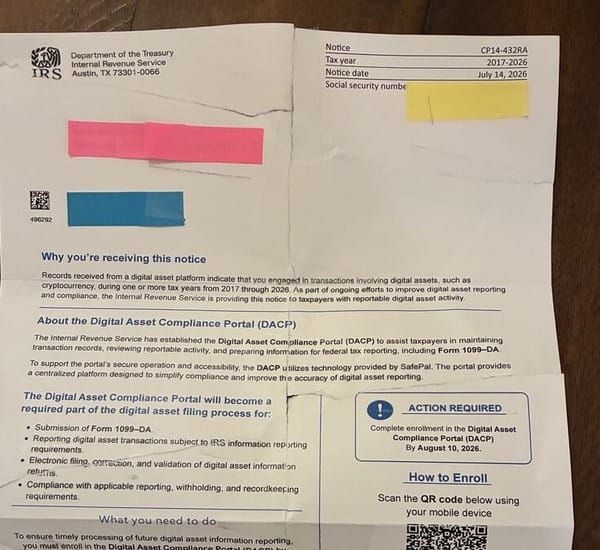
The regulatory pressure is getting heavier, especially in the U.S., where final digital asset reporting rules under Section 6045 require broker reporting for digital asset transactions starting with 2025 activity. That means automation isn’t a nice-to-have anymore. It’s becoming the only way to keep the reporting load from crushing teams.
This is exactly why AI crypto tax software keeps showing up in 2026 tool lists and workflow guides. The market is moving toward systems that ingest, normalize, audit, and report without a human retyping the same wallet history for the fifth time.
Where AI Still Needs a Human in the Loop
Yeah, I know, the marketing says it’s automatic. That’s not fully true.
You still need to review imported transactions, reconcile odd transfers, and verify how the tool interpreted non-standard events. If your wallet history is messy, AI can speed things up, but it can’t magically invent missing context.
That said, the best setups make human review much lighter. You’re not checking every row anymore. You’re checking exceptions, which is a much saner use of your brain.
What Good AI Crypto Tax Software Actually Looks Like
Here’s the thing nobody says out loud: a flashy UI means nothing if the data is garbage.
Good tools connect via API or CSV, pull in exchange and wallet activity, categorize common transaction types, and let you choose a tax method that matches your filing needs. Better ones also support evidence capture, rule-based logic, and audit-ready outputs that your accountant won’t hate.
If you’re evaluating software, care about these things:
- Data import breadth across exchanges, wallets, and blockchains
- Accuracy on transfers, swaps, staking, and NFTs
- Jurisdiction support for the country you actually file in
- Export quality for tax forms and accountant workflows
If a tool can’t handle those, it’s just a pretty dashboard with a tax problem.
The Real Business Value Is Less Chaos
Look, the point isn’t just speed.
AI reduces manual reconciliation, which means fewer errors and less time spent chasing down garbage records. Enterprise-focused vendors claim major cuts in reconciliation time and compliance effort, and the reason is pretty obvious: machines don’t get tired of matching wallet histories line by line.
That’s why crypto tax automation matters for founders, finance teams, and solo traders alike. It gives you cleaner records, less stress, and a better shot at filing without late-night scrambling.
Who Actually Benefits Most
Honestly? Not everyone needs the full AI stack.
If you made a few trades and held BTC in one wallet, you probably don’t need heavy automation. But if you’re active across centralized exchanges, DeFi protocols, staking, NFTs, and multiple wallets, AI is doing work you shouldn’t be doing by hand.
The people who benefit most are:
- Active traders with high transaction volume
- DeFi users with messy cross-chain history
- Founders and operators managing treasury activity across wallets
- Accountants who need clean reports without babysitting every entry
If that sounds like you, the old workflow is already broken.
What I’d Watch Before You Trust the Output
Real talk: don’t blindly trust any automation tool.
You should check how it handles imported data, whether it explains why something was classified a certain way, and whether it lets you correct mistakes without wrecking the rest of the report. If the software hides the logic, that’s a problem.
You also want jurisdiction-aware reporting, not generic “crypto tax” nonsense. Country-specific rules matter, and the whole point of these tools is to map raw blockchain activity into something tax authorities can actually accept.
The Bottom Line for Crypto Teams
Here’s the thing: AI is turning crypto tax reporting from a manual nightmare into a managed workflow.
It’s not magic. It’s just very good at importing data, spotting patterns, cleaning up transaction history, and generating reports faster than humans can do it alone. That’s enough to change how you file, how you audit, and how much time your team wastes on cleanup.
Real talk: if your crypto activity has gotten complicated, the old process is already costing you more than you think. What’s the one part of your tax workflow that’s still eating the most time right now?
You may also like
- How AI SaaS Tools Improve Contract Management: Speed, Accuracy, and Insights
- Using AI to Understand and Manage Impermanent Loss
- DeFi Risk Management With Artificial Intelligence: How to Stop Blindly Shipping on Chain
- Club World Cup to Expand to 48 Teams by 2029: FIFA’s Global Football Revolution
- New GST Reform India 2025: What You Need to Know About GST 2.0 and Its Impact