

- Published on
How AI Is Changing DeFi Yield Optimization in 2026
Listen to the full article:
- Authors

- Name
- Jagadish V Gaikwad
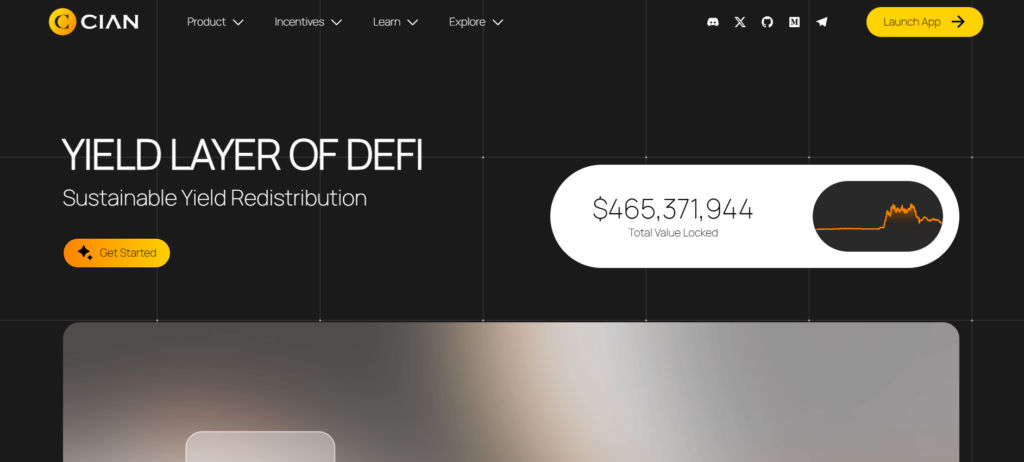
Your yield strategy is probably too slow
Look, DeFi yield optimization used to be a grind. You chased APYs, refreshed dashboards, and prayed you didn’t miss a pool shift by six hours.
That game is over. In 2026, AI is changing DeFi yield optimization by turning static strategies into autonomous systems that react in real time across chains, protocols, and risk conditions.
The annoying part is that most people still talk about yield like it’s a spreadsheet problem. It isn’t.
What AI is actually doing inside DeFi
Here’s the thing: AI isn’t “creating yield” out of thin air. It’s making capital allocation less stupid.
Current systems use machine learning to scan transaction histories, volatility, oracle data, liquidity depth, gas costs, audit signals, and bridge risk before they move a dollar. That means the agent can decide whether a rebalance is worth it after costs, not just because a shiny APY number looks good.
Some protocols are already showing real gains. One report says AI-managed DeFi strategies delivered 12.3% higher annualized returns than manual strategies, and AIUSD launched multi-chain yield optimization agents in January 2026 that bridge assets only when the rate gap justifies the gas bill.

Why manual yield farming got wrecked
Real talk: manual yield farming was always a mess.
You were competing against bots, watching fees eat your edge, and trying to make sense of a market that changes while you’re asleep. By 2026, sustainable active DeFi yields for many users are often in the 3% to 8% range once gas, fees, and real risk are counted.
That’s why AI matters. It doesn’t just search for yield. It hunts for net yield, which is the only number that matters when the chain gets crowded and spreads vanish.
The core shift: from passive APY chasing to active capital routing
The trap most teams fall into is chasing the highest APY and calling it a strategy. That’s how you end up in bad pools, bad timing, and bad exits.
AI-driven yield optimization flips the model. Instead of parking capital and hoping, the system watches conditions continuously and reallocates when the math works. In plain English, your capital stops sitting still and starts moving like it actually has a job.
That’s a huge deal for stablecoin yields, vault strategies, and cross-chain liquidity. It’s also why people are talking about yield optimization, AI vaults, predictive APY, and cross-chain routing in the same breath now.
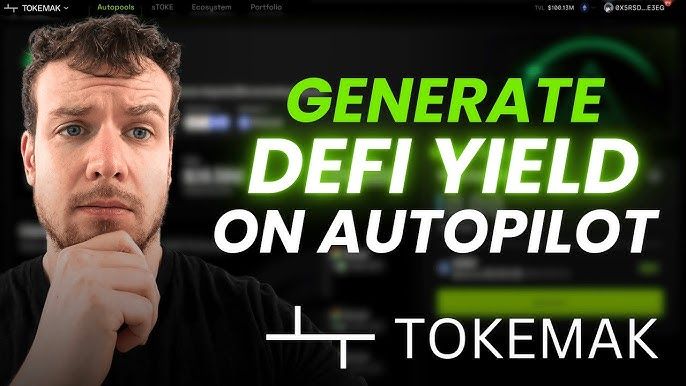
What AI is optimizing for
Honestly? This is where people mess up. They think AI is just chasing the highest return.
It’s not. Good systems are balancing return, slippage, gas, bridge risk, liquidity depth, protocol health, and volatility at the same time. That’s the difference between a smart vault and a fancy way to lose money faster.
A useful way to think about it is this: AI is ranking opportunities by risk-adjusted yield, not headline yield. That’s why some systems will pass on a tempting pool if the net upside disappears after fees or if smart contract risk looks ugly.
| Approach | How it feels in practice | What usually happens | Real talk |
|---|---|---|---|
| Manual farming | You chase APYs, rebalance late, and babysit dashboards | You win occasionally, then get clipped by fees or bad timing | Only works if you’ve got time, discipline, and low expectations |
| Rule-based automation | You set fixed thresholds and let scripts move capital | Better than manual, but it still misses fast market changes | Fine for simple setups, mediocre in fast-moving markets |
| AI yield optimization | The system watches markets and rebalances when the net edge is real | Better routing, less delay, stronger risk control | Worth it if you care about consistency, not just screenshots |
Where AI is already winning
Stop pretending this is hypothetical. AI is already showing up where speed matters.
In arbitrage, liquidation prevention, and 24/7 monitoring, autonomous agents have measurable advantages, including 30% lower slippage in some cases and better annualized returns than manual approaches. Another report says AI-based systems can outperform humans in DeFi yield optimization, with one ARMA strategy reportedly exceeding 9.75% annualized yield on USDC.
That doesn’t mean every AI vault is magic. It means the market has started rewarding systems that react faster than humans can.
Why stablecoin yield is getting smarter
Here’s what nobody talks about enough: stablecoin yield used to be boring, and boring was good.
Now it’s competitive. AI-managed treasuries, yield-bearing stablecoins, and automated routing systems are pushing stablecoin strategies into a new phase where the software decides where idle capital should sit next. Some AI-managed treasury products are advertising 8% to 12% stablecoin yields for crypto projects and DAOs, while certain yield-bearing stablecoin systems claim even higher ranges in specific setups.
That sounds great, but don’t get drunk on the number. The real value is consistency, not the one-week APY screenshot everyone reposts like they discovered finance.
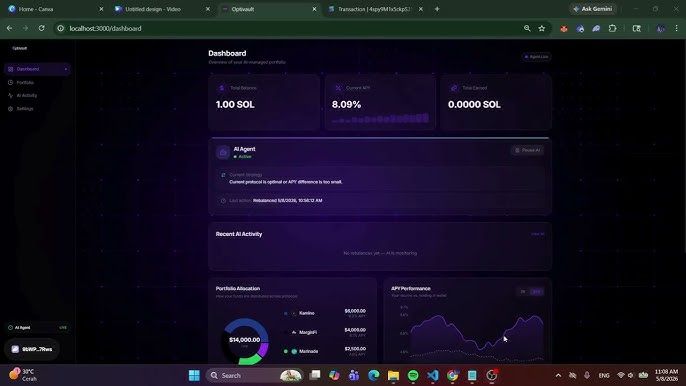
The hidden cost: complexity never disappeared
Yeah, I know, another AI tool.
The catch is that AI doesn’t remove complexity. It just moves it from the user to the system designer.
Now you need to care about model logic, data quality, execution timing, governance controls, and whether the agent can be trusted not to overtrade your stack. If you’re a DAO or treasury operator, that means you’re not just picking a yield strategy. You’re picking a risk engine.
That’s why the best AI systems in DeFi are not “fully autonomous” in the childish sense. They’re agentic, but with guardrails, circuit breakers, and human oversight where it actually matters.
AI vs traditional yield farming: the real trade-offs
Look, here’s the simplest way to think about it.
Traditional yield farming gives you control, but it asks for your time. AI gives you speed, but it asks for trust in the model and the execution layer.
AI wins when the market is fragmented, volatile, and constantly shifting. Traditional methods can still work if you’re small, patient, and not trying to optimize every basis point like your treasury depends on it.
What changes everything is that AI can operate across 7+ blockchains, factor in bridge risk and liquidity depth, and only move funds when the post-cost result is actually positive. Humans can do that too, but not at the same pace, and definitely not all day, every day.
Who actually benefits from this
Your team isn’t all the same, so stop pretending it is.
- DAOs get cleaner treasury management and less manual babysitting.
- Crypto startups get better stablecoin deployment without hiring a whole ops team.
- Funds and advanced users get tighter risk controls and faster rebalancing.
- Retail users get easier access to strategies they’d never manage manually.
The biggest winners are the people with capital that sits idle. If your treasury is lazy, AI can make that cash do more work without you staring at charts like it’s your full-time personality.
The risks are real, and they’re not small
Here’s the thing: bad AI in DeFi can lose money very efficiently.
If the model overfits, the oracle is wrong, the bridge gets weird, or the risk engine misses a protocol issue, your shiny automation becomes a very expensive mistake. And if you give an agent too much authority without controls, you’ve basically built a faster way to make bad decisions.
This is why governance matters more now, not less. The best setups use limits, simulation, approval thresholds, and monitoring that flags weird behavior before it becomes a headline.
What to watch next
Honestly, the next wave is already obvious.
DeFAI systems are moving from “find yield” to “coordinate capital” across lending, tokenized treasuries, and cross-chain vaults. That means AI won’t just pick opportunities. It’ll decide how capital should behave across your whole stack.
You’ll also keep seeing predictive liquidation tools, anomaly detection, smarter dashboards, and more aggressive cross-protocol routing. The end result is simple: less manual guesswork, more machine-made decisions, and way less tolerance for lazy capital.
If you’re still thinking of AI as a nice-to-have add-on, you’re late. The market already moved from experiments to infrastructure.
Real talk: AI is changing DeFi yield optimization because the old playbook was too slow for the way this market works now. The only question is whether you want automation with guardrails, or whether you want to keep doing this the hard way.
What’s your setup right now—manual farming, rule-based vaults, or are you already testing AI-managed strategies?
You may also like
- Why Are People Hating GPT-5? Understanding the Backlash
- AI Tools That Save 20+ Hours Every Week: The Ultimate 2026 Guide
- AI in SaaS for eLearning: Revolutionizing Online Courses in 2025
- How Machine Learning Predicts Financial Markets in 2026
- AI-Powered Search Engines vs Traditional Web Search: The 2026 Battle for Information