

- Published on
How AI Is Changing Quantitative Trading in 2026
Listen to the full article:
- Authors

- Name
- Jagadish V Gaikwad
Stop pretending this is optional
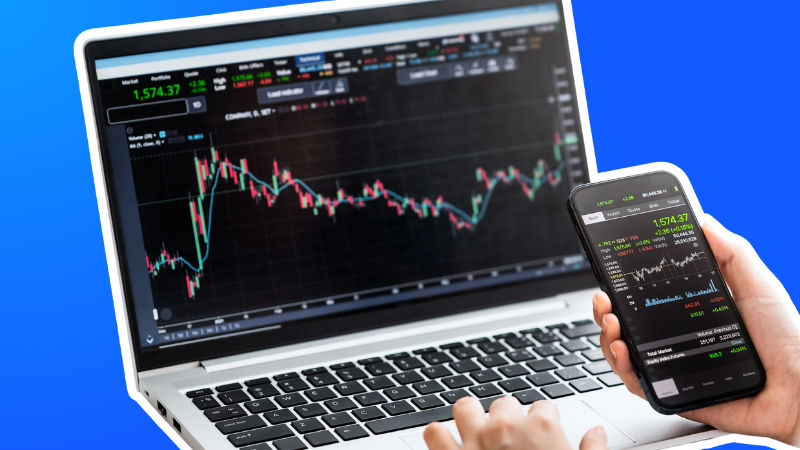
Your quant stack is getting rewritten, and AI is doing most of the loudest damage. It’s not replacing the whole desk, but it is changing how ideas get found, tested, deployed, and killed.
Real talk: the old quant playbook was already under pressure, and now AI is making it harder to hide weak process behind fancy math. Recent quant finance coverage says the biggest shifts are happening in signal generation, research workflows, and risk management, not just in alpha models themselves.
What AI is actually doing in quant trading
Here’s the thing nobody says cleanly enough: AI isn’t one thing in quant trading. It’s a pile of tools that attack different bottlenecks, from messy data to model tuning to execution logic.
At the research level, LLMs are speeding up literature search, summarization, code generation, and data exploration. One 2026 quant workflow writeup says tasks that took hours in 2022 can now take minutes, which is wild if you’ve ever burned a morning reading papers nobody asked for.
At the strategy level, machine learning and deep learning are being used for signal generation, pattern detection, and factor creation from unstructured data like news, filings, earnings calls, and social chatter.
At the operations level, AI is helping with backtesting, stress testing, portfolio optimization, documentation, and even trade scheduling.
Why signal generation changed first
Honestly? Signal generation was always the obvious target. Quants have spent decades trying to squeeze meaning out of noisy markets, and AI is good at chewing through ugly, high-dimensional data where humans get tired fast.
The big shift is that AI can work with both structured and unstructured inputs. That means price series still matter, but so do earnings-call transcripts, SEC filings, satellite imagery, multilingual news, and social posts.
That matters because a lot of modern edge lives outside the obvious chart. If you’re only looking at OHLCV and a few factors, you’re leaving a ton on the table while somebody else’s model is parsing text you’d never read manually.
Here’s the catch, though: more data doesn’t equal more edge. It often equals more junk, more leakage, and more false confidence if your validation is sloppy.
The real upgrade is workflow, not wizardry
Look, this is where most people get it wrong. They obsess over “AI trading bots” and ignore the boring stuff that actually changes throughput.
LLMs are helping researchers move faster through the grind. They can summarize papers, draft strategy docs, generate boilerplate code, and query financial data in plain language, which sounds small until you realize how much time that eats every week.
That doesn’t mean the model is smarter than your team. It means your team can spend less time copy-pasting and more time testing ideas that might actually matter.
I’ve seen this pattern in other technical teams too. The first win is never the headline feature. It’s the boring 30% of work nobody wanted to do in the first place.
AI in the middle of the stack
The annoying part is that AI also changes the middle layer, where a lot of quant firms actually make money or lose it. That includes feature engineering, model selection, anomaly detection, and risk checks.
A useful way to think about it is this: traditional quant systems are often narrow and explicit, while AI systems are better at pattern recognition across messy inputs. That’s why hybrid setups are winning more often than pure-AI fantasies.
A pure LLM strategy in live markets is usually a bad idea. The latency is wrong, the interpretability is weak, and the market doesn’t care about your demo.
Hybrid systems, on the other hand, let AI do the expensive thinking while classical quant methods handle the parts that need discipline. That split is a lot less sexy, but it’s far more durable.

Comparison table: old quant habits vs AI-heavy workflows
| Area | Traditional workflow | AI-heavy workflow | Real Talk |
|---|---|---|---|
| Research | Manual paper reading and hand-built features | LLMs summarize research and propose features | AI saves time, but it also tempts you into lazy thinking |
| Data handling | Mostly structured market data | Structured data plus text, news, filings, images | More inputs mean more edge cases and more noise |
| Signal building | Explicit factors and statistical models | Deep learning, transformers, LLM-generated factors | Stronger on messy patterns, weaker on transparency |
| Risk management | Rule-based checks and human review | Anomaly detection and dynamic monitoring | Better at spotting weirdness, not perfect at explaining it |
| Execution | Predefined logic and manual tuning | AI-assisted routing and optimization | Useful, but latency and costs still bite |
| Best use | Stable, known patterns | Fast research and broader information processing | I’d pick hybrid, every time |
Risk management is where the hype gets real
Yeah, I know, everyone wants to talk about alpha. But the smarter firms care just as much about not blowing up, and AI is useful there too.
Unsupervised learning can flag unusual behavior, regime changes, and weird correlations before a human notices something is off. That matters because markets don’t usually kill you with one giant mistake; they kill you with a hundred tiny ones that nobody sees early enough.
AI also helps stress testing and portfolio monitoring by making it easier to scan for outliers and hidden dependencies. That’s not glamorous, but it’s the kind of thing that keeps you alive when volatility shows up and ruins everyone’s week.
The trap is thinking AI risk tools are automatically trustworthy. They’re not. If your model is wrong, confidently wrong is worse.
Execution is getting smarter, but not magical
Here’s where people oversell it: AI does not give you free speed in execution. Markets are still full of friction, slippage, cost impact, and latency issues that don’t care how cool your model looks in a notebook.
For high-frequency trading and market making, ultra-fast reaction times still matter more than fancy language models. That’s why traditional statistical methods and faster systems often remain the right tool there.
Where AI helps is in optimization and decision support. It can improve routing, detect bad fills, and help tune execution logic, especially when the market is messy rather than microscopic.
So no, AI isn’t turning every trader into a genius. It’s just making the stack less dumb in a few places that used to waste a lot of human time.
The big upside: smaller teams can do more
Your competitors are already feeling this. AI is lowering the amount of manual labor needed to do serious research, which means smaller teams can cover more ground and move faster.
That’s a real shift. You don’t necessarily need a giant room full of PhDs to scan every document, summarize every paper, and draft every first-pass idea anymore.
But don’t confuse access with edge. Democratization means more people can do the basics, which usually means the easy edges disappear faster.
That’s the part people hate hearing. AI doesn’t just help you. It helps everyone else too.
Where AI still breaks
Honestly? This is where the fantasy dies. AI in quant trading still struggles with interpretability, overfitting, real-time performance, and market frictions.
Overfitting is the silent killer. If your model learns the noise from last quarter and you mistake that for a strategy, you’re not smart. You’re just expensive.
Interpretability matters because risk teams and traders need to know why a model fired, not just that it fired. If nobody can explain the signal, nobody should trust it with real money.
And then there’s the simple problem of regime change. Markets evolve, fast. A model that worked in one environment can get crushed the second conditions shift.
What good firms are doing instead
Here’s the thing: the strongest firms aren’t using AI to replace quant judgment. They’re using it to sharpen it.
They’re combining classical research methods with AI-assisted workflows, then validating everything with strict testing. They’re also keeping humans in the loop where the cost of being wrong is ugly.
That usually means three things:
- Faster research with LLMs and code assistants
- Better feature discovery from messy data
- More aggressive validation before anything hits production
That’s not flashy. It’s just what works.
The skillset is changing fast
Look, if you’re a quant and you’re still pretending AI is a side quest, you’re behind. The skillset is shifting toward data science, model evaluation, workflow design, and tool orchestration on top of classic statistics.
You still need math. A lot of it. But you also need to know when a model is lying, when a backtest is garbage, and when a shiny result is really just overfitted nonsense.
That means the best people in quant trading now look a little different. They’re part researcher, part engineer, part skeptic. That’s not a buzzword thing. That’s survival.
So is AI changing quant trading or just speeding it up?
Both. And that’s why the conversation keeps getting muddled.
AI is changing quantitative trading by expanding what data counts, speeding up research, improving anomaly detection, and making smaller teams more dangerous. But it’s also just speeding up the old work in ways that expose weak systems faster.
If your process is bad, AI makes it obvious. If your process is solid, AI gives you more shots on goal.
That’s the real story. Not “AI replaces quants.” Not “AI does nothing.” Just a much harsher, faster version of the same game.
Real talk: this only works if you respect the friction. Markets are still brutal, models still break, and the fastest team doesn’t always win.
What’s your bigger problem right now: finding better signals, or keeping your models from fooling you?
You may also like
- Why AI Startups Are Getting Funded Faster Than Ever in 2026
- AI Coding Tools Compared: GitHub Copilot vs Cursor vs Claude Code in 2026
- AI-Powered Document Intelligence Platforms: The Ultimate Guide for Modern Businesses in 2026
- Galaxy Z Fold 7 Gemini AI: The Future of Foldable Smartphones is Here
- Why Argentina is the Greatest Football Team Ever: The Messi Era and Historic Dominance