

- Published on
How Crypto Tax-Loss Harvesting Software Works
Listen to the full article:
- Authors

- Name
- Jagadish V Gaikwad
Your crypto P&L can look fine and still wreck your taxes
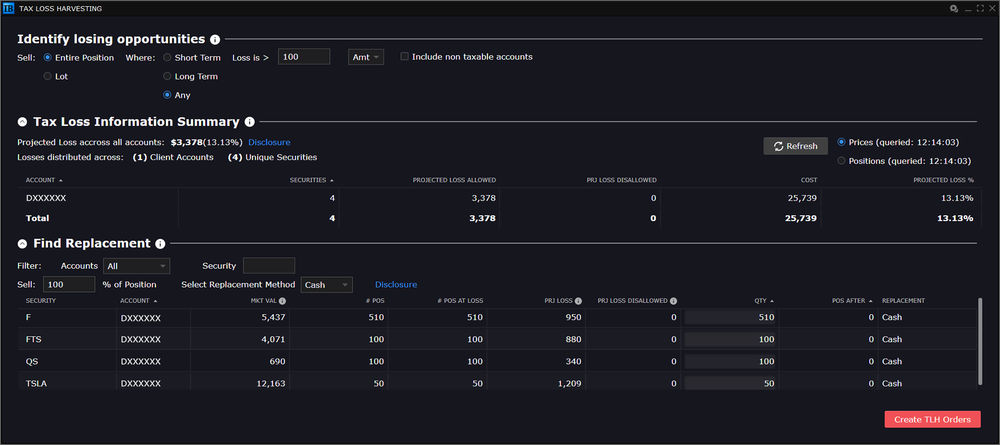
Look, here’s the thing: your portfolio can be down, your taxes can still be up, and that’s where people get burned. Crypto tax-loss harvesting software exists to find those losses, turn them into realized losses, and use them to offset gains you already booked.
That sounds simple because the math is simple. The mess is everything around it: wallets, exchanges, cost basis, transfers, and the part where you think a paper loss counts before you sell it. It doesn’t.
What tax-loss harvesting actually means
Real talk: this isn’t some magic tax hack. It’s just selling a crypto asset for less than your cost basis, so the loss becomes real for tax purposes.
The software’s job is to spot which assets are below your purchase price, estimate the unrealized loss, and show you which sales would matter most before year-end. In plain English, it helps you find the tokens that are bleeding and tells you which ones are worth dumping before the tax window closes.

How the software works behind the scenes
Here’s the thing nobody says out loud: the software is only as smart as the data you feed it. Most tools start by pulling in CSV exports from exchanges and then syncing wallets so they can rebuild your transaction history in one place.
After that, it calculates cost basis, tracks gains and losses, and flags positions that are sitting below purchase price. Some tools then generate a harvest report that shows the biggest losses first, which is basically the software saying, “these are the trades that matter if you want to cut your bill.”
A decent workflow usually looks like this:
- Import exchange and wallet data.
- Reconstruct every buy, sell, transfer, and swap.
- Calculate realized and unrealized gains and losses.
- Sort positions by tax impact.
- Show you what to sell before the cutoff.
The annoying part is that transfers between wallets can look like sales if the tool can’t match them correctly. That’s why clean records matter more than fancy dashboards.
Why the software matters more at year-end
Honestly? This is where people mess up. They wait until tax season, then realize the loss had to be realized before December 31, not whenever they finally got around to cleaning up their files.
That deadline matters because unrealized losses don’t count, no matter how ugly the chart looks. So the software is most useful when you’re staring at open positions in late Q4 and need to decide what to sell now, not later.
The core mechanics: cost basis, gains, and realized losses
Okay so the catch is that the whole system runs on a few boring numbers. The key ones are your cost basis and your fair market value at sale, and the difference tells you whether you’re sitting on a gain or a loss.
If you sell below your cost basis, you realize a loss. That realized loss can offset realized gains from other trades, and if you still have leftover losses, some tax systems let you carry them forward; in the U.S., net capital losses can offset ordinary income up to $3,000 per year, with the rest carried forward.
That’s why the software isn’t just tracking prices. It’s tracking tax outcomes, which is a very different game.
A simple example of how it plays out
Here’s a real-world style example. Say you bought 2 ETH at a higher price, then the market dumped, and now that position is sitting below cost basis.
If the software shows that selling would realize a loss, you can sell it, book the loss, and use that loss against gains from BTC, SOL, or whatever else you sold profitably earlier in the year. If you want to stay exposed, you can potentially buy back a different asset or even re-enter later, but the timing and tax rules matter, so you don’t want to freestyle this part.
The software helps because it surfaces that opportunity fast. Without it, you’re basically doing tax math across five exchanges and a wallet graveyard.
Comparing the big workflow styles
| Approach | What it feels like | Where it breaks | Real Talk |
|---|---|---|---|
| Manual spreadsheet grind | Cheap at first, painful by the third exchange | Missed transfers, wrong cost basis, human error | Fine if your activity is tiny. A nightmare if you trade often. |
| Basic portfolio tracker | Better visibility, less chaos | Often weak on tax-specific logic | Good for watching your stack. Not enough for serious harvesting. |
| Crypto tax-loss harvesting software | Tracks losses, sorts opportunities, builds reports | Only works if your data is clean | This is the one you want if you’re active and your trades are messy. |
If you’re barely trading, you probably don’t need a monster setup. If you’re moving across multiple wallets and exchanges, manual tracking turns into a clown show fast.
What the better tools actually do for you
Look, the good software doesn’t just tell you “you’re down.” It shows you which positions have the biggest unrealized losses, often grouped by token and tax impact, so you can decide what to sell first.
Some tools also generate tax reports that map harvested losses into the forms your tax filing needs, like the U.S. Form 8949 and Schedule D. Others reconstruct full transaction histories so you can spot missing lots, broken transfers, or random data that doesn’t add up.
That’s the part people underestimate. The real value isn’t the dashboard. It’s not getting ambushed by garbage records in April.
The biggest trap: thinking the software makes the decision for you
Yeah, I know, another AI-ish “smart” tool. But this one still needs a human brain because the software can’t know your intent, your risk tolerance, or whether a sale is even worth the friction.
You still have to decide whether you want to realize the loss now, whether you care about staying exposed to the same asset, and whether the timing works with your tax year. The tool can surface the trade. You own the consequence.
And no, it’s not some free money button. If you sell junk positions just to harvest losses, you can end up paying trading fees, creating more taxable events, and making your portfolio more annoying to manage.
What to check before you trust a tool
Here’s the thing: not all crypto tax-loss harvesting software is equally useful. Some tools are fine for simple portfolios and totally flaky once you add DeFi, multiple exchanges, or weird token transfers.
Before you trust one, check whether it can:
- Import data from your exchanges and wallets cleanly.
- Rebuild transfers without inventing fake sales.
- Show unrealized losses by token and lot.
- Export usable tax reports for filing.
- Handle your local tax rules, not just generic U.S. logic.
If it can’t do those things, it’s not really solving the problem. It’s just making the problem look prettier.
Why compliance still matters
The annoying truth is that tax-loss harvesting only works if the transaction is real and documented. That means actual sales, actual records, and no sketchy “I sold it and bought it back 30 seconds later because vibes” nonsense.
Different countries treat crypto differently, and the rules can be specific about how losses are recognized and reported. So the software is a support tool, not a substitute for knowing whether your jurisdiction actually likes what you’re doing.
If you’re using it in Spain or anywhere else with strict reporting, you need software that can build a clean report and flag missing data, not just chase gains and losses in a vacuum.
Who actually benefits from this
Real talk: if you made three trades this year, you probably don’t need to overbuild this. If you’re active across exchanges, wallets, staking, and a few too many forgotten altcoins, this software becomes worth its weight fast.
The people who benefit most are the ones with messy history and real gains to offset. That’s where crypto tax-loss harvesting software stops being a nice-to-have and starts saving you from a brutal filing season.
It also helps if you’re the kind of person who doesn’t want to spend a weekend matching CSV files like a miserable accountant. Which, honestly, is most of us.
The part everyone ignores: data cleanup
Here’s what nobody talks about: the software can’t rescue trash data forever. If your exchange history is incomplete, your wallet labels are wrong, or transfers are missing, the output gets shaky fast.
That means the first win is usually cleaning the data, not harvesting the loss. Once the records are sane, the software can actually do its job and show you where the tax savings live.
So how crypto tax-loss harvesting software works, in one sentence
It pulls your trades into one place, calculates what you’re down on, turns eligible paper losses into realized losses when you sell, and helps you use those losses to reduce the tax hit on your gains.
That’s it. No magic. No financial wizardry. Just brutal, useful math wrapped in software that keeps you from doing it by hand.
What you should take seriously
Look, the software is useful because crypto taxes are a data problem first and a tax problem second. If your records are messy, the tool will expose that immediately.
If your records are clean, the same tool can save you a ton of time and maybe a decent chunk of money. That’s the real trade.
What’s your bigger headache right now: messy transaction data, or figuring out whether any of your losses are actually worth harvesting?
You may also like
- How AI Is Used for Blockchain Transaction Monitoring
- AI Trading Risk Management: Strategies Every Trader Should Know
- Best AI-Powered Social Media Management SaaS Platforms in 2025
- AI-Powered SaaS for Lead Generation Automation: The 2025 Competitive Edge
- How AI Speeds Up SaaS Product A/B Testing (2025 Guide)