

- Published on
How Hedge Funds Use AI and Machine Learning for Trading
Listen to the full article:
- Authors

- Name
- Jagadish V Gaikwad

Stop pretending this is experimental
Your hedge fund isn’t competing against another spreadsheet anymore. It’s competing against firms that are training models on earnings calls, macro data, news flow, and weird alternative datasets most people never even think to buy.
That’s the real shift. How hedge funds use AI and machine learning for trading is less about flashy demos and more about getting an edge in research, execution, and risk control.
Here’s what AI is actually doing inside the fund
Real talk: most people think hedge funds use AI to magically predict stock prices. That’s the wrong mental model.
In practice, AI and machine learning help funds sift through huge amounts of structured and unstructured data, spot subtle patterns, and turn messy information into trade ideas. Systematic and quant shops also use generative AI to help identify market patterns, generate synthetic datasets, and stress-test strategies before real money goes live.
For fundamental managers, the use case is different but still sharp. AI can help with position sizing, scenario analysis, document summarization, and backtesting ideas against alternative inputs. That means fewer hours spent digging through clutter and more time spent on actual decisions.
The pipeline is where the money gets made
Look, the hype is always about prediction. The money is usually in the pipeline.
Hedge funds use machine learning to ingest market data, text, price history, order flow, and alternative data, then turn all of that into signals or execution rules. The models can process more inputs than a human team ever could, and they do it without getting tired, bored, or emotionally attached to a broken thesis.
This is why funds care so much about data quality. Bad data gives you confident garbage, which is still garbage. Better models don’t fix trash inputs.
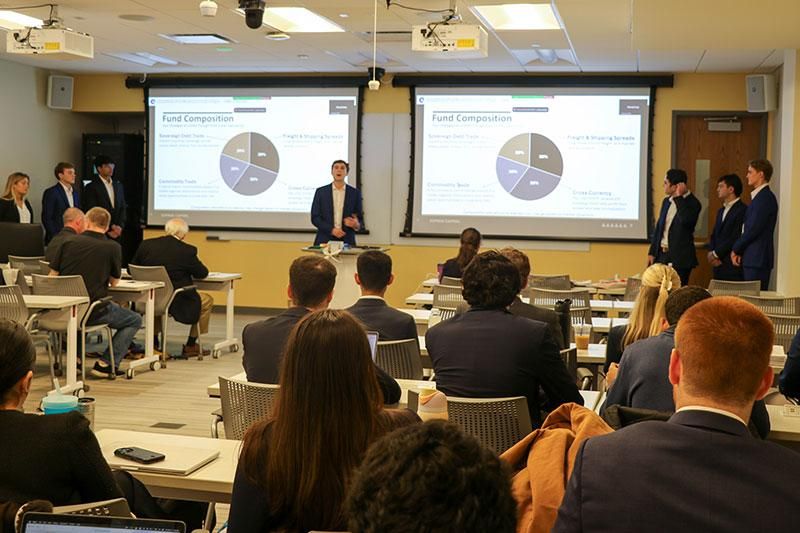
Where AI shows up in real trading workflows
Here’s the thing: AI doesn’t live in one box. It shows up all over the workflow.
It helps researchers find signals faster. It helps traders execute with less slippage and market impact. It helps risk teams monitor exposures and run stress tests before something ugly happens.
And yes, some funds use internal AI tools that generate, code, and backtest trading ideas. Man Group’s quant equity unit has publicly described an internal tool called AlphaGPT for exactly that kind of workflow. That’s not science fiction. That’s just a team trying to move faster than its competitors.
The main use cases that actually matter
Honestly? This is where people mess up. They talk about AI like it’s one thing, when it’s really a stack of very different jobs.
Here are the big ones:
- Signal discovery: models scan structured and unstructured data for patterns humans would miss.
- NLP on text: funds analyze earnings calls, news, filings, and social sentiment to extract trading clues.
- Execution: algorithms optimize order placement and reduce slippage on large trades.
- Risk management: real-time monitoring, kill switches, and stress tests keep bad days from becoming catastrophic.
- Strategy testing: synthetic data and scenario simulations help test ideas before they touch capital.
The catch is that none of these are magic on their own. AI only matters when it plugs into a disciplined trading process. If your research stack is chaos, the model just helps you scale the chaos.
AI vs old-school quant: not the same game
Here’s a clean way to think about it.
| Approach | How it works | Strength | Catch |
|---|---|---|---|
| Traditional quant | Uses defined statistical rules and prebuilt factors | Clear, repeatable, easier to explain | Can get stale when markets change |
| Machine learning | Learns patterns from data and adapts to changing conditions | Better at messy, nonlinear relationships | Can overfit if you’re sloppy |
| GenAI / LLM workflows | Summarizes text, surfaces ideas, drafts code, supports research | Fast exploration and workflow speed | Needs guardrails or it hallucinates nonsense |
JPMorgan’s asset management team says machine learning strategies are meant to adapt to changing market conditions while seeking persistent, uncorrelated alpha. That’s the appeal. Markets mutate, and static models get old fast.
Why hedge funds care so much about alternative data
The annoying part is that public price data alone is mostly crowded. Everyone sees the same candles. Everyone knows the same earnings date.
So funds go hunting for different inputs. That includes satellite imagery, transaction-level data, social posts, shipping patterns, and macro datasets that can reveal something before it hits the tape. Machine learning is useful here because it can combine noisy sources and look for weak signals that conventional models might ignore.
This is also why NLP matters so much. Earnings calls, filings, and regulatory documents are rich, but they’re also tedious. AI turns that pile of text into something you can actually trade on.

The biggest win is speed, not magic
Your competitors are already doing this. Not because AI is perfect, but because it makes the whole research loop faster.
AI can shorten the time from idea to test. It can draft code, summarize research, rank signals, and help analysts move through huge datasets without spending three days doing the most boring parts by hand. That speed matters when small edges get arbitraged away in weeks.
There’s a reason fund managers keep pouring resources into this. In one industry survey cited by IG, 56% of respondents said they used AI or machine learning to help inform investment decisions, about two-thirds used it for investment ideas and portfolio optimization, and a quarter used it for trade execution. That’s not fringe behavior anymore.
But the hype is still lying to you
Yeah, AI is useful. No, it’s not a free lunch.
The biggest risk is overtrust. Machine learning can look brilliant in backtests and then fall apart once the market regime changes. If your model is trained on a narrow slice of history, it may just be memorizing the past with expensive math.
There’s also the disclosure issue. A 2024 Senate report said hedge funds’ use of AI and machine learning raises concerns around inadequate disclosures and possible market stability risks, while also noting that funds use these tools to inform data analysis and research in trading decisions. Translation: the regulators are watching, and they’re not exactly thrilled about black-box behavior.
Where the edge really comes from
Look, the winning funds aren’t just buying AI tools and calling it a day.
They’re building systems around them. That means clean data, good labeling, model validation, human review, execution controls, and people who know when the model is lying. If you don’t have those pieces, AI becomes a very expensive way to make mistakes faster.
And this is where the real difference shows up. Top shops don’t treat AI as a replacement for judgment. They use it to multiply judgment, then they still put humans in charge of the final call.
The teams using AI the best do three things differently
Here’s the thing nobody says out loud. AI helps most when the team already has discipline.
They start with a real research question, not a vague “let’s use AI” memo. They test against out-of-sample data so they don’t fall in love with fake performance. And they keep risk controls tight enough to stop one broken model from torching the book.
That’s why funds using GenAI for research still care about synthetic stress tests and scenario analysis. They’re not trying to make the model sound smart. They’re trying to see what breaks.

What this means if you’re running a fund
Honestly, if you’re still treating AI like a side project, you’re late.
You don’t need a giant moonshot. You need a practical workflow: faster research, better signal discovery, sharper execution, and stronger risk checks. That’s where how hedge funds use AI and machine learning for trading turns into real P&L instead of conference-stage nonsense.
If you’re a smaller fund, the move is even clearer. You probably can’t outspend the big firms, but you can move faster, build narrower models, and focus on one edge without a bloated tech stack. That’s often enough to matter.
The part most people get wrong
The trap most teams fall into is thinking AI is the strategy. It isn’t.
AI is infrastructure for decision-making. The actual edge still comes from what data you trust, what hypotheses you test, and how fast you can kill the ideas that don’t work. If your process is weak, the model just exposes that weakness at higher speed.
That’s why some of the smartest funds use AI for research support, portfolio optimization, and execution rather than trying to hand over the whole book to a black box. They want compounding advantages, not a robot gambler.
Real talk: the firms winning with this aren’t the loudest ones. They’re the ones wiring AI into the boring parts that actually move returns.
What part of your trading workflow is still too slow for human-only analysis?
You may also like
- AI-Powered SaaS for Lead Generation Automation: The 2025 Competitive Edge
- How AI is Used in Cloud Cost Management: Smarter Spending in 2025
- The Rise of On-Device AI and Why It Matters for Privacy in 2026
- Grand Theft Autorickshaw: Bengaluru Techies’ Hilarious AI Racing Game Revolutionizing Urban Gaming
- AI Forecasting Tools for SaaS Revenue and Growth: The 2025 Guide