

- Published on
The Future of AI-Powered CRM Platforms for Sales Teams: 2026 Trends
Listen to the full article:
- Authors

- Name
- Jagadish V Gaikwad
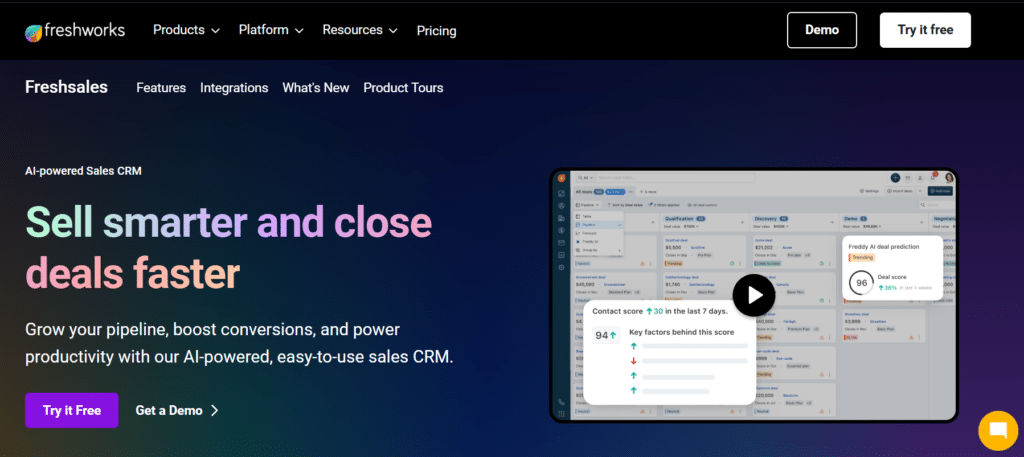
The future of AI-powered CRM platforms for sales teams is no longer a distant concept; it is the operational backbone of modern revenue generation in 2026. Today, these systems have evolved from passive record-keeping tools into proactive, intelligent engines that automate data entry, score leads with precision, and guide reps toward closing deals faster by eliminating administrative friction.
If you are a sales leader or an operator building a SaaS startup, you know that the shift from reactive to predictive selling is the single most critical trend defining the industry. Instead of working every lead equally, AI now surfaces which accounts show buying intent right now and recommends the specific actions most likely to advance those deals. This intelligence layer transforms the CRM from a database into a strategic sales tool that actively drives revenue, allowing teams to spend less time on manual follow-ups and more time on conversations with buyers ready to purchase.
The impact is already measurable and staggering. According to research by McKinsey, AI implementation in CRM has the potential to increase leads by more than 50%, reduce costs by up to 60%, and cut call time by up to 70%. Furthermore, Forbes reports that businesses implementing AI sales agents can automate up to 90% of prospecting tasks, dramatically reducing manual workload and accelerating pipeline generation. These statistics aren't just numbers; they represent a fundamental restructuring of how sales teams allocate their energy and resources.
From Record-Keeping to Revenue Guidance: The Core Shift
The most profound change in the future of AI-powered CRM platforms for sales teams is the transition from static data storage to dynamic revenue guidance. Traditional CRMs were designed to capture what happened yesterday. In contrast, modern AI-driven platforms analyze massive volumes of data to provide real-time insights into customer behavior, preferences, and needs, enabling personalized engagement at scale.
This convergence of AI in CRM is reshaping how businesses interact with customers, offering unprecedented levels of customization that were previously impossible. An AI-enabled CRM turns raw consumer data into clear sales actions, replacing manual work with automated logic that lowers operating costs. Leaders use these systems to build predictable revenue paths and stop client churn, moving away from guesswork to data-driven certainty.
One of the most well-known use cases driving this shift is Salesforce’s Einstein GPT, which leverages powerful AI to provide deep insights, predictive analytics, and automation across sales, marketing, and customer service. This technology allows AI to take over dozens of different roles, from composing emails to generating meaningful insights that influence high-level sales decisions.
The market for generative AI in CRM is expected to grow to $119.9 million by 2032, signaling that this is not a temporary trend but a permanent evolution of the software landscape. As expectations for speed, personalization, and efficiency continue to rise, traditional CRM systems are simply not enough, forcing the industry to evolve into systems that actively drive decisions and execution.
Hyper-Personalization: The New Norm for Customer Engagement
In the future of AI-powered CRM platforms for sales teams, hyper-personalization will not just be a trendy term; it will be the standard. AI will be able to create content completely autonomously and in real-time, such as email campaigns and communications, tailored specifically to a customer’s preferences and search history.
This capability allows sales teams to deliver crafted offers to customers based on their shopping patterns, making every interaction feel custom-made. By analyzing user behavior, intent signals, and historical data, AI-powered CRM identifies the most promising potential customers and recommends, or even executes, the next best action.
AI agents can act on these insights in real time, initiating outreach or prioritizing leads automatically, helping teams increase win rates and campaign performance without increasing headcount. In marketing, McKinsey reports that AI-driven personalization can lower customer acquisition costs by up to 50%, increase ROI by 10–30%, and drive revenue growth of 5–15%.
The future holds even more advanced capabilities where CRMs will study customer behavior, likes, and even emotions in real-time to offer solutions that seem custom-made. Few years down the line, this level of personalization will be the norm, allowing teams to put all their energy into planning while their CRM does the legwork.

The Rise of Multi-Agent Systems and Digital Workforces
The architecture of the future of AI-powered CRM platforms for sales teams is shifting from single-purpose AI assistants to interconnected systems of specialized agents. AI CRM is rapidly evolving from role-based AI to multi-agent systems, where multiple AI agents collaborate to execute complex, cross-functional processes.
Instead of operating in isolation, these agents will communicate, share context, and coordinate actions, enabling CRM systems to handle multi-step workflows, industry-specific scenarios, and more sophisticated customer interactions. Forrester predicts a shift from role-based AI to these multi-agent systems, where agents collaborate to execute complex tasks.
Soon, we will start to see CRMs with built-in AI-powered digital workers who can help train and guide employees with relevant research, onboarding help, project analysis, and platform assistance. These digital workforces will act as virtual sales assistants, optimizing various aspects of the sales process from lead scoring to pipeline management.
Looking ahead, future trends may include even more advanced AI-driven analytics, virtual sales assistants, and AI-enhanced customer journey mapping. Sales leaders who stay ahead of these trends will be well-positioned to capitalize on new opportunities and continue driving success in their organizations.
The future of sales leadership lies in the effective integration of AI, leveraging it for sales forecasting, process optimization, personalized customer interactions, and data-driven decision-making. As the AI landscape continues to evolve, those who embrace these tools and strategies will be best equipped to lead their organizations into the future with confidence.
Omnichannel Integration and the Seamless Customer Experience
Another critical pillar in the future of AI-powered CRM platforms for sales teams is omnichannel integration. AI will integrate even more channels and devices, whether it’s IoT devices or social media platforms, to create a seamless customer experience that spans different channels.
This integration ensures that every interaction, from a social media comment to an IoT sensor alert, is captured and analyzed to provide a holistic view of the customer. AI enhances customer satisfaction and experiences by providing quick, personalized interactions across all these touchpoints.
The shift to omnichannel integration allows sales teams to track and organize leads and customer interactions across the entire ecosystem, making CRMs the preferred tool of sales and service teams across industries. By unifying data from multiple sources, AI-enabled CRMs turn raw consumer data into clear sales actions, ensuring that no opportunity is missed due to fragmented information.
This seamless experience is vital for modern buyers who expect consistency and relevance regardless of how they engage with a brand. AI-driven CRMs help sales teams forecast better, automate follow-ups, and surface real-time insights across all channels, ensuring that reps are always equipped with the most up-to-date information.
Data Privacy and Ethical AI Adoption
As the future of AI-powered CRM platforms for sales teams advances, better data privacy becomes a non-negotiable requirement. Using AI, companies will be able to make sure their customer data is well-protected by creating systems that alert teams instantly when there’s suspicious behavior and continuously monitoring CRMs for compliance.
Ethical AI adoption requires transparency, privacy, and fairness, ensuring that the technology is used responsibly to build trust with customers. AI-powered CRM systems can analyze massive volumes of data to provide real-time insights, but this must be done within strict ethical boundaries to avoid misuse.
The ability to monitor CRMs for compliance and alert teams to suspicious behavior is crucial in an era where data breaches can destroy brand reputation. AI will play a central role in maintaining these security standards, ensuring that customer data is protected while still being utilized for sales insights.
Leaders must ensure that their AI strategies align with ethical guidelines, prioritizing transparency and fairness in all automated interactions. This approach not only protects the company but also builds long-term trust with customers, who are increasingly aware of how their data is used.
Comparison: Traditional CRM vs. AI-Powered CRM
To understand the magnitude of this shift, let’s compare traditional CRM systems with the future of AI-powered CRM platforms for sales teams.
| Feature | Traditional CRM | AI-Powered CRM (2026+) |
|---|---|---|
| Primary Function | Record-keeping & data storage | Proactive revenue guidance & automation |
| Lead Scoring | Manual or basic rules-based | Predictive, intent-based scoring |
| Personalization | Generic templates | Hyper-personalized, real-time content |
| Workflow | Reactive, human-driven | Automated, multi-agent execution |
| Forecasting | Historical data analysis | Predictive modeling & AI-driven insights |
| Efficiency | High manual workload | Automates 90% of prospecting tasks |
| Cost Impact | High operational costs | Reduces costs by up to 60% |
The table above highlights the stark differences in functionality and efficiency. Traditional CRMs are reactive, requiring humans to drive every step of the process. In contrast, AI-powered CRMs are proactive, using predictive modeling and multi-agent systems to automate complex workflows and guide reps toward revenue.
The shift from reactive to predictive selling changes how resources are allocated, allowing teams to focus on high-value opportunities rather than administrative tasks. This intelligence layer transforms the CRM from a record-keeping system into a sales tool that guides reps toward revenue, directly impacting pipeline generation and deal velocity.

The Global Market Trajectory and Future Growth
The global AI in CRM market is expected to be worth around USD 48.4 billion by 2033, growing from USD 4.1 billion in 2023 at a CAGR of 28% during the forecast period from 2024 to 2033. This explosive growth indicates that AI-powered CRMs are becoming the standard for businesses looking to scale their sales operations.
The market for generative AI in CRM is projected to reach $119.9 million by 2032, further emphasizing the rapid adoption of these technologies. As businesses recognize the value of AI in driving efficiency and revenue, the demand for advanced CRM solutions will continue to surge.
This growth is driven by the measurable impact AI has on sales efforts. According to McKinsey, AI implementation in CRM can increase leads by more than 50%, reduce costs by up to 60%, and cut call time by up to 70%. These figures make a compelling case for organizations to invest in AI-powered platforms.
The future of sales leadership lies in the effective integration of AI, with those who embrace these tools best equipped to lead their organizations into the future with confidence. As the AI landscape continues to evolve, the gap between traditional and AI-powered CRMs will widen, making it essential for sales teams to adapt quickly.
Conclusion: Embracing the Future of Sales Technology
The future of AI-powered CRM platforms for sales teams is defined by a shift from passive data storage to active revenue generation. With capabilities like hyper-personalization, predictive selling, and multi-agent systems, these platforms are transforming how sales teams operate, making them faster, smarter, and more efficient.
The measurable impact is clear: AI can automate up to 90% of prospecting tasks, reduce costs by 60%, and increase leads by 50%. As the market grows to $48.4 billion by 2033, the adoption of AI-powered CRMs will become a necessity for any sales team looking to stay competitive.
Sales leaders who stay ahead of these trends will be well-positioned to capitalize on new opportunities and drive sustained growth. The future of sales leadership lies in the effective integration of AI, leveraging it for forecasting, optimization, and personalized interactions.
As we move forward, the question is not whether to adopt AI-powered CRMs, but how quickly your team can integrate them to maximize their potential. The tools are ready, the data is clear, and the future is here.
How is your sales team preparing for the shift to predictive, AI-driven selling in 2026? Share your thoughts on the most critical AI features you need in your CRM today.
You may also like
- Top PaaS Platforms for Building AI SaaS Products in 2025: Your Ultimate Guide
- Best Cloud Platforms for Hosting SaaS Applications in 2025
- How SaaS Uses AI for Predictive Analytics to Boost Growth
- AI Forecasting Tools for SaaS Revenue and Growth: The 2025 Guide
- The Future of Finance: How Smart SaaS Invoice Automation Using AI is Killing Manual Data Entry