

- Published on
The Rise of Autonomous SaaS Applications: How AI-Native Apps Are Rewriting Software in 2026
Listen to the full article:
- Authors

- Name
- Jagadish V Gaikwad
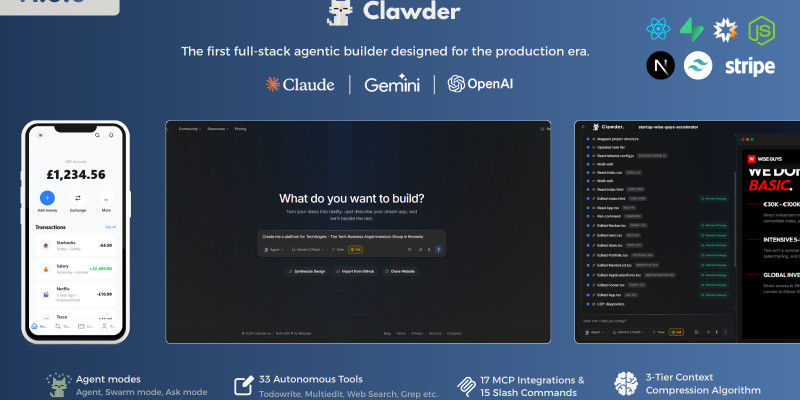
We’ve officially crossed the automation cliff. If 2025 was the year of autonomous agents and task execution, 2026 is the year those agents mature into self-driving operations that don’t just suggest actions—they own the outcomes. The rise of autonomous SaaS applications isn’t just a trend; it’s a structural rewrite of the software industry. We’re moving from static tools that wait for human clicks to dynamic platforms that learn, adapt, and execute complex workflows with minimal intervention.
For builders, founders, and operators, this shift changes everything. The barrier to creating “intelligent” software has collapsed. What once required years of custom development can now be built in weeks using existing AI building blocks from OpenAI, Google, AWS, and Microsoft . But the real question isn’t whether you can build it—it’s whether your current stack can survive the transition.
From Bolt-On Features to AI-Native Logic
The biggest misconception about this era is that AI is just a feature add-on. In 2026, AI-enabled apps are table stakes, not a differentiator . Most SaaS vendors already offer AI capabilities, but the depth of integration and real business impact vary wildly. The winners aren’t the ones with the best chatbot; they’re the ones where AI is the foundational logic driving product architecture .
This is the difference between AI-enabled and AI-native software:
| Feature | AI-Enabled SaaS | AI-Native (Autonomous) SaaS |
|---|---|---|
| Role of AI | Enhances specific features (e.g., better search) | Core engine executing entire workflows |
| Human Interaction | Required for every step | Minimal; users express needs in natural language |
| Learning | Static models, no adaptation | Continuously learns from usage patterns |
| Outcome Ownership | Suggests actions, human executes | Executes work and owns outcomes |
| Architecture | Predefined functions | Multi-agent orchestration with dynamic tool selection |
In AI-native systems, users express their needs in natural language, the platform identifies the best tool to solve them, and the system continuously improves through usage patterns . This reverses the old dynamic where humans had to map their problems to rigid software interfaces.
The 2026 Standard: Multi-Agent Orchestration and Agent Rails
The 2026 SaaS Development Framework has a new non-negotiable: support for Autonomous Agents. Beyond simple APIs, the standard now requires “Agent Rails” to manage multi-step workflows and prevent agents from going off-track . This is critical because single-task bots are dead; the breakthrough is Multi-Agent Orchestration, where multiple specialized agents collaborate to solve complex problems .
Think of it like a startup team inside your software:
- One agent handles data ingestion
- Another analyzes patterns
- A third executes the action
- A fourth monitors for errors
These agents don’t just run in parallel; they orchestrate each other, learning from their experiences to refine future performance . Deloitte predicts that by 2026, SaaS applications will evolve into a federation of real-time workflow services that can learn from their own experiences .
This isn’t theoretical. IDC forecasts that the global population of actively deployed AI agents will surpass 1 billion by 2029—a staggering 40x increase over 2025 levels . Deloitte’s Compound Annual Growth Rate (CAGR) for this market is around 53%, growing from $8.5 billion in 2026 to $45 billion by 2030 .

Why Adoption Is Outpacing Infrastructure
Gartner expects that in 2026, 80% of enterprises will have deployed GenAI-enabled applications, up from less than 5% just a few years ago . Meanwhile, the Stanford AI Index 2026 found that 88% of organizations now use AI for at least one business function, with generative AI deployed in 70% of companies .
This velocity is forcing IT teams to govern tools that are evolving faster than their infrastructure can handle. The problem isn’t lack of interest; it’s that adoption outpaces infrastructure . Companies are deploying autonomous agents without the observability, guardrails, or security frameworks needed to manage them safely.
Before embarking on an autonomous SaaS project, you need to ask:
- Which specific user pain points would benefit most from an AI-powered solution?
- Do you have the right observability infrastructure to monitor AI performance?
To build platforms that truly learn and adapt, you must:
- Start with focused use cases—identify scenarios where autonomous capabilities deliver clear value
- Design for resilience from day one—build systems that handle unexpected inputs and implement proper guardrails
- Implement comprehensive observability—use tools like Datadog, New Relic, or Grafana to track performance across the entire stack
- Plan for regular architectural reviews—schedule upgrades before they become urgent migrations
- Security first—large language models can be tricked into leaking data if not properly protected
The Pricing and Procurement Shift
As agentic AI capabilities mature, how organizations purchase and use software could shift dramatically . We’re seeing a move from traditional subscription models to token/credit systems where billing is based on data units, similar to OpenAI’s LLM tokens . This reflects the reality that autonomous agents consume resources dynamically based on workload, not just seat count.
Deloitte predicts that up to half of organizations will put more than 50% of their digital transformation budgets toward AI automation in 2026, with agentic AI reaching 75% of companies investing . This isn’t just experimentation; it’s a slow restructuring of the SaaS market where AI-first companies compete directly with legacy vendors .
The pricing variety will be wild. Some vendors will charge per agent execution, others per token consumed, and some will offer hybrid models. Organizations will be seeking process efficiency, cost savings, greater flexibility, and personalized capabilities for workers . The vendors that win will be those that can prove real business impact, not just AI buzz.

Real-World Examples: Autonomous SaaS in Action
The shift is already visible in production. Lumos stands out as the industry’s first autonomous identity platform that continuously monitors, reviews, and enforces access policies across your entire SaaS stack . It’s an AI-native identity governance platform that eliminates spreadsheet-based access reviews by automatically discovering applications, mapping user access, and using AI to maintain least-privilege controls without constant manual intervention .
Sastrify combines AI-powered discovery with hands-on procurement support, helping organizations manage and purchase software more efficiently . The platform has analyzed over $6 billion in SaaS spend, delivering average savings of 30% for customers . It connects to identity providers, browsers, and ERP systems to discover every application in use, then maps ownership, usage, renewals, and spend into a single inventory .
These aren’t just “AI features”; they’re autonomous SaaS management platforms that execute work and own outcomes. They don’t wait for humans to click “approve”; they continuously optimize licenses, detect anomalies, and enforce policies in real time.
The Developer’s New Reality: Build in Weeks, Not Years
The barriers to creating intelligent software have fallen dramatically. What once required extensive custom development can now be built in weeks instead of years using existing building blocks . This is the automation cliff in action: the point where the cost of building autonomous systems drops below the cost of maintaining legacy tools.
For startups, this is a massive opportunity. You can now build capabilities that were previously impractical while dramatically reducing development time . But it also means the competitive bar is higher. If your competitor can build an autonomous agent in weeks that executes your entire workflow, your moat isn’t features—it’s data, trust, and domain expertise.
The key steps to develop a SaaS application in 2026 remain similar, but the architecture changes:
- Validate your idea
- Design an intuitive UX
- Build an MVP using a scalable tech stack with AI-native components
- Launch and iterate based on user feedback
But now, your tech stack must support real-time data ingestion, agent orchestration, and parallel processing with specialized data stores . You’re not just building a database; you’re building an orchestration layer for autonomous agents.
The Risks: Guardrails, Security, and Governance
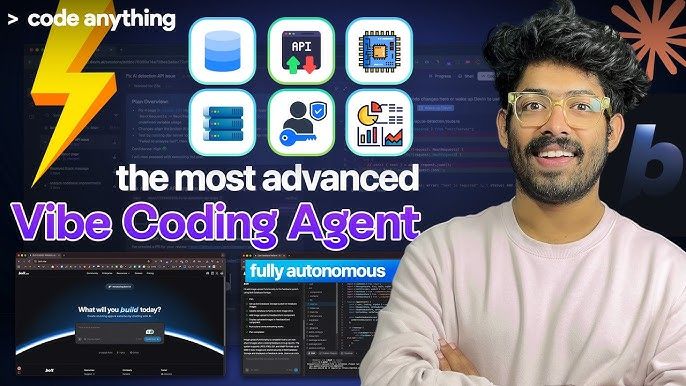
Autonomous systems that can build, deploy, and manage entire applications from a single prompt are powerful—but they’re also risky. Large language models can be tricked into leaking data if not properly protected . Without guardrails, agents can execute unintended actions, access sensitive data, or create security vulnerabilities.
This is why governance and orchestration layers are essential. They serve as the control mechanism that ensures agents stay within defined boundaries while still delivering autonomy . Platforms like Lumos and Sastrify are already solving this by automating identity governance and spend optimization without constant manual intervention .
The velocity of adoption is forcing IT to govern tools that are quickly evolving . If you’re building autonomous SaaS, you need to prioritize platforms that automate workflows and simplify governance . Otherwise, you’ll create more problems than you solve.
What This Means for Your Business Strategy
For business leaders, the opportunity is clear: autonomous SaaS can deliver capabilities that were previously impractical while dramatically reducing development time . But it also means your software strategy needs to evolve.
You’re no longer buying tools; you’re buying outcomes. The question isn’t “What software do we need?” It’s “What work should our software execute for us?”
If you’re a founder, this is your moment to build AI-native products that don’t just assist humans but replace entire workflows. If you’re an enterprise operator, you need to prioritize platforms that automate workflows and simplify governance before your competitors do.
The rise of autonomous SaaS applications isn’t coming—it’s here. The 2026 standard requires support for autonomous agents, self-driving operations, and multi-agent orchestration . The question is: will you be building the future, or trying to adapt to it?
What’s the first workflow you’d automate with an autonomous agent? Share your thoughts in the comments.
You may also like
- AI-Driven Knowledge Bases for Tech Companies: Benefits, Use Cases & Top Tools
- How to Automate Your Daily Tasks Using Zapier and Notion: A Step-by-Step Guide
- Why Every Modern App Is Becoming a SaaS Platform: Trends and Benefits Explained
- AI Observability Tools for Monitoring LLM Applications: The 2026 Guide
- Argentina vs Cabo Verde FIFA World Cup 2026: Preview, Predictions & Match Details