

- Published on
AI Crypto Investing: What Investors Should Know Before Starting
Listen to the full article:
- Authors

- Name
- Jagadish V Gaikwad
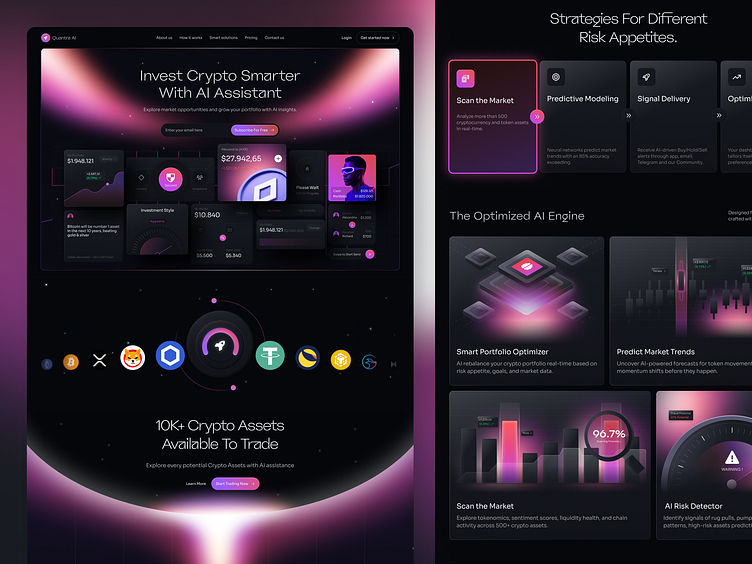
AI Crypto Investing Isn’t Magic. It’s a Risk Filter.
Stop pretending this is some clean, futuristic jackpot. AI crypto investing is a messy corner of the market where real infrastructure, dumb tokens, and pure speculation all sit in the same feed.
The market has clearly shifted in 2026. Investors are paying more attention to live utility like decentralized compute, AI agents, and verifiable infrastructure instead of just AI branding.
That’s the good news. The bad news is that the word “AI” is still being slapped onto projects that don’t need it at all.
If you’re starting now, you’re not late. But you are early enough to get wrecked if you don’t know what you’re looking at.
What AI Crypto Investing Actually Means
Here’s the thing: AI crypto investing is not just buying any token with “AI” in the name. It usually means betting on projects that connect artificial intelligence with blockchain rails, such as decentralized compute, model training, data indexing, AI agents, or privacy-preserving machine learning.
Some of the better-known 2026 names sit in that bucket: Bittensor, Render, NEAR, The Graph, and the ASI Alliance. Those aren’t guaranteed winners, but they at least point at actual infrastructure instead of pure narrative.
The real test is simple. Does the token do something inside the system, or is it just riding a trend?
If the answer is “mostly trend,” you’re not investing. You’re gambling with better branding.

The Market Split: Infrastructure vs. Hype
Real talk: most people keep lumping every AI token together, and that’s how they get smoked. The category now splits into infrastructure, middleware, agents, and speculative garbage.
KuCoin’s 2026 deep dive frames the market around three useful buckets: large-cap AI infrastructure, agentic and middleware protocols, and high-risk early-stage plays like ZKML and FHE projects. That breakdown matters because the risk profile changes hard from one layer to the next.
| Segment | What You’re Really Buying | Risk Level | Who It Fits |
|---|---|---|---|
| Core infrastructure | Decentralized compute, data, model rails | Lower, but still volatile | Investors who want exposure without total chaos |
| Agent and middleware protocols | Tools that help AI systems act, coordinate, or transact | Medium | People comfortable with narrative-driven growth |
| Early-stage ZKML / FHE | Privacy, cryptographic ML, experimental systems | Very high | Degens with strong stomachs and small position sizes |
The catch is obvious. The closer a project is to real infrastructure, the more credible it tends to be. The farther it drifts into vague AI storytelling, the more likely you’re buying a bag of hopes.
That doesn’t mean every infrastructure token is safe. It just means the failure mode is slower and more understandable.
What You Should Check Before You Buy Anything
Honestly? This is where people mess up. They see a chart, hear a podcast, and ape in before asking a single boring question.
For AI crypto investing, boring questions are the whole game. You want to know whether the project is just a wrapper around an API, whether the token has actual utility, and whether the team can explain how the system works without hiding behind buzzwords.
Use this filter:
- Is it a wrapper for ChatGPT or another closed model?
- Does the token need to exist for the product to function?
- Can the team explain the system in plain English?
- Are there audit reports, model proofs, or some kind of verifiable logic?
- Does the project survive if the hype cycle dies?
KuCoin’s 2026 checklist is blunt on this point: if the project dies the moment OpenAI cuts access, it’s not a durable business. That’s not a niche concern. That’s the whole concern.
And if somebody claims to run a “secret AI trading bot” but won’t show anything verifiable, you should run. Fast.

AI Crypto Investing Risk Is Way Bigger Than the Pitch Deck Says
Look, the marketing is going to tell you this is the future. It might even be right. But the actual path from story to returns is brutal.
Crypto is already volatile. Add AI narrative heat, thin liquidity, and inexperienced investors chasing the same tickers, and you get violent price swings that have nothing to do with fundamentals. One day the project is “the next big thing.” The next day it’s down hard because attention moved somewhere else.
That’s why position sizing matters more than genius. Several 2026 portfolio guides suggest keeping speculative AI token exposure to a minority slice of your overall crypto stack, with numbers like 5-15% or 15-25% depending on risk tolerance. That’s not because upside is impossible. It’s because blowups are normal.
If you can’t watch a token drop 50% without doing something stupid, your position is too big. Full stop.
AI crypto investing punishes emotional traders harder than almost anything else because the story feels smart enough to justify bad decisions. That’s the trap.
A Smarter Way to Structure Exposure
Your competitors are already doing this the wrong way. They’re overbuying hype, underdiversifying, and pretending one token will save them.
A more grounded model is the Core/Satellite setup. KuCoin’s 2026 framework suggests a core allocation to large-cap AI infrastructure, a growth sleeve for agentic protocols, and a smaller speculative sleeve for frontier bets. That’s not sexy, but sexy usually dies first.
Here’s a cleaner way to think about it:
- Core: Bigger, more established names with actual utility.
- Satellite: Smaller bets on protocols with a real use case.
- Speculation: Tiny positions in experimental stuff you expect to swing hard.
The reason this works is simple. You’re not trying to be right on every token. You’re trying to survive long enough to be right on a few.
Some analysts also pair AI tokens with broader crypto anchors like Bitcoin and Ethereum, then treat AI as the growth sleeve rather than the whole portfolio. That’s probably the sanest route if you’re not trying to cosplay as a full-time quant.
What Good AI Crypto Projects Usually Have
Here’s the thing nobody wants to hear: good projects are usually kind of boring.
They often have clear product-market fit, actual developer activity, visible usage, and a token that does something more than exist for trading. If a project talks endlessly about “the future of intelligence” but can’t show users, revenue, or network demand, it’s probably smoke.
The better 2026 projects tend to fall into a few buckets:
- Decentralized compute for training or inference
- Data indexing and retrieval for AI systems
- Agent frameworks that can transact or coordinate
- Privacy layers for machine learning
- Infrastructure that supports verifiable execution
That’s not a guarantee of success. It’s just a sign the project is solving something real.
If you’re choosing between a flashy token with no users and a less exciting infrastructure play with actual adoption, pick the boring one. Boring is often where the money is.
How to Research Without Getting Played
The annoying part is that most people confuse research with scrolling.
Real research means checking the white paper, the contract, the developer activity, the token utility, and whether the project’s story holds up if you remove the marketing gloss. One 2026 research guide even recommends using external data hubs and contract checks so you don’t buy the wrong asset by accident.
You don’t need to become a blockchain archaeologist. You do need a process.
Use this order:
- Read the project summary.
- Find the token’s actual role.
- Check whether the product works without the token.
- Look for real adoption signals.
- Compare it against competing projects.
- Decide if the upside is worth the downside.
That’s it. No magic. No secret sauce. Just fewer dumb decisions.
The Best Entry Strategy Is Usually Boring Too
Real talk: if you’re starting now, you probably shouldn’t try to time the perfect entry. AI crypto moves fast, and narrative shifts can make your “perfect” buy look stupid a week later.
A lot of 2026 crypto guidance still favors dollar-cost averaging, especially in volatile markets. That means buying in chunks instead of dumping your whole budget in at once. It won’t make you feel brilliant, but it can keep you from making one giant emotional mistake.
If you’re building a position, think in tranches.
- Start small.
- Add only when the thesis still holds.
- Reassess when the token outruns its fundamentals.
- Take profits instead of getting married to a chart.
That last one matters more than people admit. A lot of investors can pick winners. They just can’t sell them.
Where AI Crypto Investing Goes Wrong
Stop pretending this is about intelligence alone. Most losses come from basic mistakes, not some sophisticated market conspiracy.
People buy wrappers and call it innovation. They buy tiny caps with fake utility. They ignore liquidity, governance, token unlocks, and the fact that a good narrative can still go to zero.
The biggest mistake is treating AI crypto investing like a lottery ticket with a white paper. It’s not. It’s a high-variance sector where only the disciplined survive long enough to benefit from the upside.
That means you need rules before you need conviction.
If you don’t already know your max allocation, your exit plan, and your thesis for why the token matters, you’re not ready. You’re just enthusiastic.
The Questions You Should Answer First
Here’s what nobody talks about enough: your personal setup matters just as much as the project.
Forbes’ 2026 guide pushes investors to ask why they want crypto, how long they plan to hold, how much they want to buy, and how much security responsibility they’re actually willing to take on. That’s not soft advice. That’s the foundation.
Before you start, answer these honestly:
- Why am I buying AI crypto at all?
- Am I trying to trade, or am I trying to invest?
- How much can I lose without making life worse?
- Do I understand the token, or just the story?
- What would make me sell?
If you can’t answer those without lying to yourself, wait.
That’s not fear. That’s discipline. And in a sector this noisy, discipline is the edge.
Final Reality Check
AI crypto investing can be interesting, and some of it will probably matter a lot over the next few years. But the winners won’t be chosen by buzzwords.
They’ll be the projects with real utility, real users, and token designs that make sense even after the hype cools off. If you start with that filter, size your bets like an adult, and stop chasing every shiny chart, you’ve already beaten most people.
Real talk: the market is full of loud promises and weak projects. The edge is knowing which is which.
What’s your biggest blocker right now — finding real AI crypto projects, or figuring out how much risk you can actually stomach?
You may also like
- AI-Driven Personalization Engines for SaaS Apps: The Future of User Experience
- How AI Optimizes SaaS Subscription Management: The 2025 Playbook
- AI-Powered CRM Tools Revolutionizing Sales in 2025: Transforming Strategies and Success
- Ubisoft
- Open-Source AI Models Challenging Proprietary LLMs in 2026: The Gap Has Closed