

- Published on
Best AI KYC Solutions for Financial Services in 2026
Listen to the full article:
- Authors

- Name
- Jagadish V Gaikwad

Your compliance team is already tired, and the fraudsters are getting smarter. That’s the whole game in 2026, and Best AI KYC Solutions for Financial Services is where the fight happens.
The problem nobody wants to say out loud
Look, most financial services teams don’t have a KYC problem. They have a workflow problem.
The real pain is messy handoffs, slow manual reviews, and too many tools pretending to be one answer. AI identity verification helps by analyzing documents, biometrics, devices, behavior, phone intelligence, fraud patterns, and ongoing account risk instead of just checking a box at onboarding.
Here’s the other part people miss. AI KYC isn’t just about faster approval times. It’s about making sure your team doesn’t drown every time volume spikes or regulators ask for proof.
And yes, regulators still care about explainability, audit trails, and control. For banking and insurance teams, the most critical features include private or on-prem deployment, deterministic execution, and immutable audit logging.
What AI KYC actually does
Real talk: if you still think KYC is just ID upload and selfie matching, you’re behind.
Modern AI KYC stacks handle identity verification, AML and sanctions screening, liveness checks, document fraud detection, and ongoing monitoring. That matters because fraud doesn’t stop after signup, and your risk team knows it.
The best systems also reduce the back-and-forth that kills conversions. Some platforms are built for orchestration, others for verification depth, and others for global coverage across many countries.
That’s why picking the Best AI KYC Solutions for Financial Services isn’t about choosing the flashiest product. It’s about matching the tool to the bottleneck that’s actually ruining your process.
The shortlist that actually matters
Here’s the thing: not every platform solves the same problem.
Some are built for global banks with heavy compliance needs. Others are made for fintechs that need clean onboarding without making customers hate the experience.
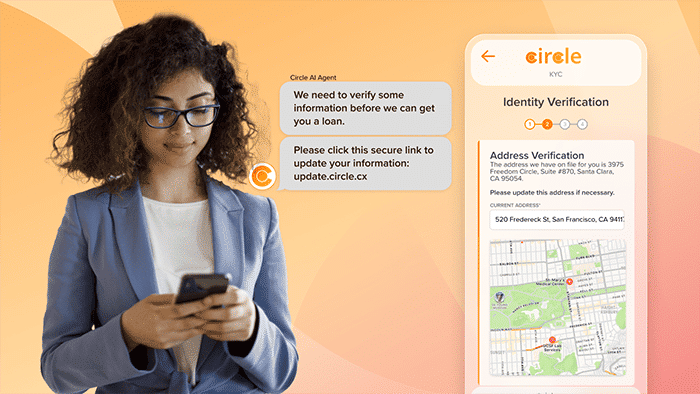
Best AI KYC solutions by use case
| Solution | Best for | Real talk |
|---|---|---|
| Fenergo | Enterprise client lifecycle management | Great if your bank lives and dies by process control. |
| Trulioo | Global ID verification and cross-border onboarding | Strong when country coverage matters more than fancy UX. |
| Sumsub | Fast, user-friendly onboarding for fintechs | Solid if speed and conversion are the priority. |
| Jumio | Biometric verification and liveness checks | Good when identity fraud is your daily headache. |
| ComplyAdvantage | Real-time AML and sanctions screening | Best when screening quality matters more than pretty dashboards. |
| Alloy | Pulling third-party KYC signals into one decision layer | Smart pick if your stack is already fragmented. |
| Entrust | Secure digital identity issuance | Useful when identity proofing needs to go beyond basic verification. |
| Moody’s | Entity risk data and broader risk context | Better for firms that want more than pure ID checks. |
| AgentFlow | End-to-end KYC orchestration in regulated environments | Best when you need the whole workflow to behave like one system. |
If I had to narrow it fast, I’d split the market into three camps. There’s the identity engine, the screening engine, and the orchestration layer.
That’s not just semantics. If you buy the wrong layer, you’ll end up paying twice.
The tools worth your time
Here’s what stands out in 2026.
AgentFlow is listed as the best for end-to-end KYC orchestration in regulated environments. That makes sense if your team needs the process itself fixed, not just the verification step.
Fenergo is the obvious choice for global banks needing prebuilt compliance libraries. Banks don’t want a cute demo. They want something that fits existing compliance muscle and doesn’t force everyone to reinvent the wheel.
Trulioo gets picked for international ID verification via API. If you’re expanding across markets, coverage is the difference between growth and nonsense.
Sumsub is the fintech-friendly option for onboarding that doesn’t feel like punishment. You care about conversion, and your customers definitely do.
Jumio is strong for biometric verification and liveness checks. That’s a big deal when synthetic identity fraud and deepfake-style attacks are making basic checks look silly.
ComplyAdvantage is the clean answer for real-time AML and sanctions screening. If screening delay is your pain point, this is where you look first.
Alloy shines when you need to connect third-party KYC data into one decisioning layer. That’s a grown-up problem, and it usually means your stack already has too many moving parts.
Moody’s fits teams that need entity risk data folded into the decision. If you want context around who you’re onboarding, not just whether the ID matches, that matters.
smartKYC is positioned as an AI-powered enterprise KYC and AML screening solution. It’s the kind of tool you look at when due diligence depth matters more than speed-first consumer onboarding.
How these tools compare in the real world
Okay so the catch is that “best” depends on what’s broken.
If your onboarding is slow, you need tools that reduce drop-off and automate document checks. If your fraud problem is ugly, you need stronger identity signals and liveness. If your compliance team is buried, you need orchestration and auditability.
The annoying part is that a lot of vendors blur these lines. They’ll sell you identity verification, risk scoring, and workflow automation like it’s all the same thing. It’s not.
Where each category wins and loses
| Category | Wins | Catch |
|---|---|---|
| Orchestration-first | Fixes broken handoffs and review chaos | Doesn’t solve weak verification alone |
| Verification-first | Fast onboarding and cleaner identity checks | Still needs a screening and review layer |
| Screening-first | Better AML, sanctions, and ongoing risk control | Can slow ops if workflow is messy |
| Full-stack platforms | Less vendor sprawl and fewer integrations | Often heavier to set up and harder to tune |
Honestly? I’d pick orchestration-first if your team is already drowning.
Why? Because adding another verification engine on top of a broken process just gives you faster chaos. That’s not progress.

What financial services teams should care about
Here’s what nobody talks about: the product demo is the easy part.
The hard part is whether the system fits your risk appetite, your regulatory burden, and your ops reality. For enterprise banking and insurance teams, private deployment, explainable execution, and immutable logs matter a lot.
You should also care about global coverage if you’re operating across borders. Trulioo and similar providers are attractive because coverage and API access make expansion less painful.
And if you’re dealing with fraud-heavy onboarding, biometric verification and document checks matter more than clever marketing. Vendors like Jumio, Microblink, and AU10TIX keep showing up because they focus on the ugly part: catching bad identities before they become expensive.
The best fit by financial services type
Look, different teams need different answers.
A retail bank doesn’t need the same setup as a crypto exchange. A lending platform doesn’t need the same KYC logic as an international payments company.
- Global bank: Fenergo or Alloy, because process control and decisioning matter most.
- Fintech startup: Sumsub or Trulioo, because you need speed without wrecking onboarding.
- High-fraud environment: Jumio, AU10TIX, or Microblink, because identity fraud is the main enemy.
- Compliance-heavy enterprise: ComplyAdvantage or smartKYC, because screening and due diligence depth matter.
- Data-rich risk team: Moody’s or Quantexa, because context is the whole point.
That said, don’t get cute and overbuy. If your team isn’t ready to manage complexity, the “enterprise” option will just become expensive shelfware.
What a sane selection process looks like
Real talk: the best stack is the one your team will actually run.
Start with your biggest bottleneck. If reviews are slow, fix orchestration. If fraud is slipping through, fix verification. If screening is noisy, fix the AML layer.
Then ask the boring questions that actually decide success. How good is the audit trail? How much manual review is still needed? Does it work across your geographies? Can your team tune the rules without begging the vendor for help?
Also, don’t ignore developer experience. A great KYC engine with a painful API is still a pain in the neck.
The hidden cost nobody budgets for
The trap most teams fall into is thinking KYC software replaces effort.
It doesn’t. It moves the effort around. You’ll still need policy tuning, exception handling, analyst review, and governance.
I’ve seen teams celebrate a faster onboarding flow, then realize their review queue got smarter, not smaller. That’s not failure. That’s just what happens when you automate the front door but don’t fix the back office.
If you want the Best AI KYC Solutions for Financial Services to pay off, you need one person who owns the process. Not just the tool. The process.

Final take: what I’d buy first
Here’s the blunt version.
If you’re a fintech, start with Sumsub, Trulioo, or Jumio depending on whether your pain is conversion, coverage, or fraud. If you’re a regulated bank, Fenergo, ComplyAdvantage, or Alloy are more believable starting points.
And if your workflow is the real mess, don’t pretend it isn’t. Fix the orchestration layer first, because stacking more AI on top of chaos is how teams waste six months and call it innovation.
The market in 2026 is crowded, but the decision is still simple. Pick the tool that solves your biggest failure point, not the one with the slickest homepage.
What’s the real bottleneck in your KYC process right now: onboarding speed, fraud, or compliance review?
You may also like
- How AI Is Used in Crypto Options Trading: The Real Playbook
- Thank You Ronaldo Portugal Out of World Cup: A Farewell to the 2026 Final Chapter
- Best Analytics SaaS Tools with AI-Powered Dashboards in 2025
- AI Time Management Software Worth Using in 2026: Top Tools to Master Your Schedule
- How Messi Can Lift the FIFA World Cup Once Again in 2026: Argentina’s Title Defense