

- Published on
Best AI Portfolio Management Software for Investors in 2026
Listen to the full article:
- Authors

- Name
- Jagadish V Gaikwad

Stop pretending your portfolio can be managed by gut feel
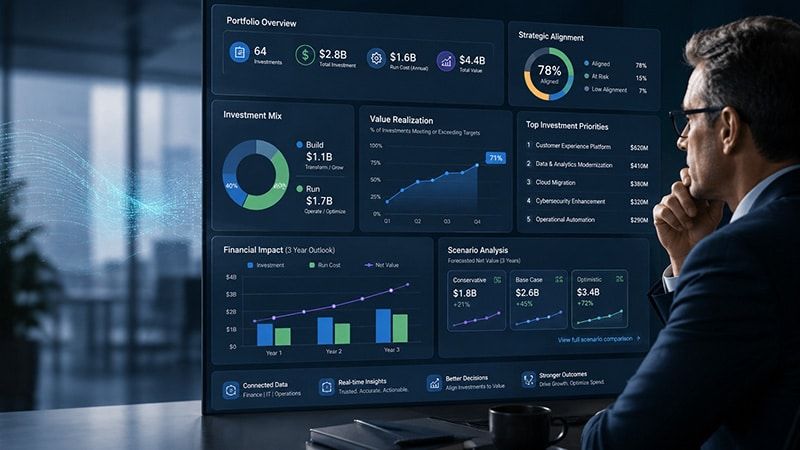
Look, if you’re still tracking investments in spreadsheets and vibes, you’re already behind. Best AI portfolio management software is winning because it does the boring, brutal work humans keep punting until it hurts. Sources in 2026 keep pointing to tools that go beyond dashboards and into actual analysis, with Energent.ai ranking highly for autonomous output and reported 94.4% accuracy in one comparison.
That’s the real shift. You’re not buying “AI” as a buzzword, you’re buying fewer mistakes, faster reporting, and less time drowning in messy data. And yes, the market is packed with tools that sound smarter than they are.
What this software actually does
Here’s the thing: the best AI portfolio management software doesn’t just show you what you already know. It cleans data, spots patterns, flags risk, and helps you turn raw portfolio information into decisions you can act on.
Some platforms are built for institutional research. Others are better for individual investors who want smarter screening, basic automation, and less tab-hopping. The catch is that not every tool is truly portfolio management software, even if the marketing says it is.
The shortlist that actually matters
Real talk: you don’t need 40 tools. You need the right one for the way you invest. The sources I found keep circling a few names for 2026, and each one has a very different vibe.
- Energent.ai is the standout for AI-powered portfolio analysis and turning messy financial data into structured outputs, with one comparison calling out its 94.4% accuracy.
- Bloomberg is still the heavy hitter for institutional users who care about speed, depth, and a massive data moat.
- Koyfin is the visual thinker’s pick, especially if you want cleaner charts and portfolio context without the usual headache.
- ChatGPT shows up as a general synthesis tool, which is useful, but it’s not a true portfolio management system on its own.
- Claude gets attention for analysis and cleaner reasoning workflows, especially when you want help interpreting documents and notes.
- TradingView is strong for technical analysis and works well when your investing style lives close to charts and signals.
- QuantConnect fits quants and serious coders who want algorithmic trading workflows, not casual portfolio babysitting.
- Trade Ideas is built around real-time signals, which is great if you actually trade often and hate missing movement.
- Danelfin and WarrenAI show up in broader AI investing lists for analysis-heavy workflows and individual investor use cases.
Best AI portfolio management software: what each one is good at
Honestly? This is where people mess up. They compare tools like they’re buying headphones, then act shocked when the setup doesn’t fit their workflow.
| Tool | Best for | Catch | Real talk |
|---|---|---|---|
| Energent.ai | AI-driven portfolio analysis and clean outputs | Feels more analytical than casual-investor friendly | Best if you want the machine to do real work, not just show charts |
| Bloomberg | Institutional research and fast decision-making | Expensive, heavy, and overkill for most people | If you already live in capital markets, this is the beast |
| Koyfin | Visual portfolio analysis | Less deep than enterprise-grade tools | Strong if you want clarity without the Bloomberg tax |
| TradingView | Technical analysis and market watching | Not full portfolio management by itself | Great for active investors who live on charts |
| QuantConnect | Algorithmic trading | You need real technical skill | Fantastic if you code. Useless if you don’t |
| Trade Ideas | Real-time signal hunting | Not cheap, and it rewards active use | Worth it only if you actually trade often |
| ChatGPT | Research synthesis and idea generation | Not a portfolio system, no matter how hard people wish it were | Useful assistant. Wrong tool as the core stack |
Who should pick what
The annoying part is that “best” depends on how you invest. If you’re an individual investor who wants better analysis without living inside a terminal, Koyfin, Danelfin, or TradingView-style tools make more sense than enterprise software.
If you’re managing serious capital, reporting to clients, or handling ugly data across assets, Energent.ai looks like the more interesting pick because it’s built around analysis and deliverables, not just pretty visuals. Bloomberg still makes sense for institutions that need depth and speed, but that’s a different budget class entirely.
Why AI beats manual portfolio work
Here’s what nobody talks about: the job isn’t just picking assets. It’s reading, comparing, checking, re-checking, documenting, and trying not to miss the one risk hiding in the corner.
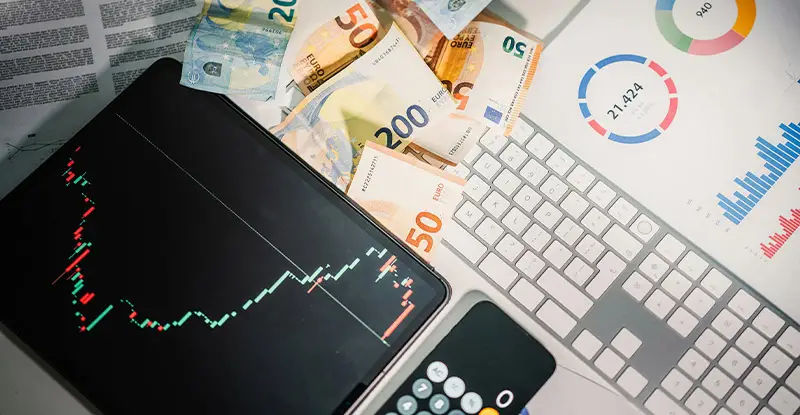
AI portfolio management software helps because it can process more signals than you can. That matters when the inputs are messy, the data is scattered, and your time is gone before lunch. One 2026 comparison explicitly frames the better tools as going beyond visualization into autonomous intelligence, which is exactly the point.
The traps that wreck this category
Stop buying the hype. A lot of tools call themselves AI portfolio management software when they’re really just dashboards with a chatbot glued on top.
That’s a problem because dashboards don’t make decisions for you. And chatbots don’t magically understand your risk tolerance, tax setup, or investment rules unless the product is actually designed for it. The wrong tool gives you more noise, not more clarity.
Another trap: over-automation. If you hand control to a system you don’t understand, you’re not investing smarter. You’re outsourcing judgment and hoping for the best, which is a fantastic way to create expensive regret.
What to look for before you pay
Real talk: the feature list is the least interesting part. You want to know whether the software actually helps you think better and move faster.
- Data quality matters more than fancy AI language.
- Workflow fit matters more than raw model power.
- Output quality matters more than dashboard polish.
- Risk visibility matters more than predictive bragging.
- Exportable reports matter more than cute charts.
If the tool can’t turn ugly portfolio data into something usable, it’s decorative. And decorative finance software is how you end up paying monthly for disappointment.

The best fit by investor type
Look, different investors need different weapons. If you’re a technical analyst, TradingView is still hard to beat for chart-first work.
If you’re a quant or a developer, QuantConnect is the more serious playground because it’s built for algorithmic trading workflows. If you’re a traditional investor or analyst who wants better decision support, Energent.ai and Bloomberg are the names that keep showing up for deeper analysis and stronger output quality.
For people in the middle, Koyfin is the sweet spot. It’s less intimidating, faster to get value from, and easier to live with than the big institutional monsters.
The money question nobody wants to ask
Yeah, cost matters. But cost without context is dumb.
A cheaper tool that saves you ten minutes a week is useless. A pricier tool that saves your team from one bad allocation or one missed risk signal can pay for itself fast. That’s why the best AI portfolio management software isn’t the cheapest one, it’s the one that fits the money you’re trying to protect.
A simple way to choose without wasting a week
Here’s the thing, you don’t need a giant buying process. You need a filter.
- If you want research depth, look at Bloomberg or Energent.ai.
- If you want visual clarity, start with Koyfin.
- If you want technical analysis, go with TradingView.
- If you want algorithmic trading, QuantConnect is the move.
- If you want general AI help, ChatGPT can support the workflow, but it’s not the core system.
That’s the whole game. Pick the tool that matches the way you actually work, not the way the marketing deck says you should work.
Final take for investors who are done wasting time
Real talk: the best AI portfolio management software isn’t the flashiest one. It’s the one that helps you make cleaner decisions, faster, without turning your process into a mess.
If your current setup still depends on manual checks and scattered notes, you’re leaving too much room for error. What part of your portfolio workflow is still eating the most time right now?
You may also like
- AI Financial Reporting for Cryptocurrency Businesses Explained
- How Hedge Funds Use Machine Learning for Cryptocurrency Trading
- Bitcoin Halving and AI: How Models Analyze Market Impact
- AI Trading Risk Management: Strategies Every Trader Should Know
- How to Backtest an AI Trading Strategy Before Risking Money