

- Published on
Best On-Chain Analytics Tools for Crypto Research in 2026
Listen to the full article:
- Authors

- Name
- Jagadish V Gaikwad
Your crypto research is probably too messy
Look, most people call it “research” when they’re really just bouncing between charts, X posts, and a wallet tracker that barely helps. That’s not research. That’s expensive guessing.
The best on-chain analytics tools for crypto research fix that by turning blockchain noise into questions you can actually answer. Who’s buying, who’s selling, what’s happening on-chain, and whether the story is real or just marketing smoke.
What you actually need from an on-chain tool
Here’s the thing: not every tool is built for the same job. Some are great for macro cycle work, some are for wallet behavior, and some are basically SQL playgrounds for people who don’t mind getting their hands dirty.
CoinMarketCap’s 2026 roundup says the best tool depends on the question: Glassnode for market cycles, Nansen for labeled wallet behavior, Arkham for entity-level intelligence, and Dune for custom SQL research. That’s the right mental model. Stop asking for a single winner when the job is different every time.

The tools that actually deserve your attention
Real talk: if you’re serious about crypto research, your stack should be built around a few categories, not one magic platform. The tools below keep showing up across 2026 reviews and rankings because they solve real problems, not because they have slick marketing.
| Tool | Best for | Real talk |
|---|---|---|
| Glassnode | Bitcoin and Ethereum cycle analysis | Great if you care about market structure. Less useful if you want to build weird custom queries. |
| Nansen | Smart money and wallet tracking | This is where you go when you need labeled wallet behavior fast. |
| Arkham | Entity intelligence | Good when you care about who is behind a wallet, not just the wallet itself. |
| Dune | Custom research and dashboards | Powerful, but only if you’re okay writing SQL or copying smart people’s dashboards. |
| DeFiLlama | DeFi TVL and protocol benchmarks | The strongest free starting point for DeFi protocol data. |
| Token Terminal | Protocol fundamentals | Best for revenue, fees, and “is this thing actually a business?” questions. |
| CryptoQuant | Exchange flows and trading signals | Strong for traders watching flows, miner activity, and market pressure. |
| Messari | Broader crypto research | Useful when you want structured project research instead of scattered tabs. |
Glassnode is where cycle people live
Honestly? Glassnode is the one you pick when you’re tired of vibes and want market structure. It’s consistently described as a top on-chain platform for Bitcoin and Ethereum cycle research, holder cohorts, and cost-basis analysis.
CryptoQuant also positions itself as a provider of on-chain and market data for institutions and professional investors, which tells you exactly where it sits in the stack. If you care about exchange flows, miner behavior, and trading signals, CryptoQuant is a serious option. If you care about longer-horizon cycle work, Glassnode is usually the cleaner fit.
Nansen and Arkham are for wallet obsession
Here’s what nobody talks about: most “alpha” in crypto research still comes from following the money, not staring at candlesticks like it’s a religion. That’s where Nansen and Arkham earn their keep.
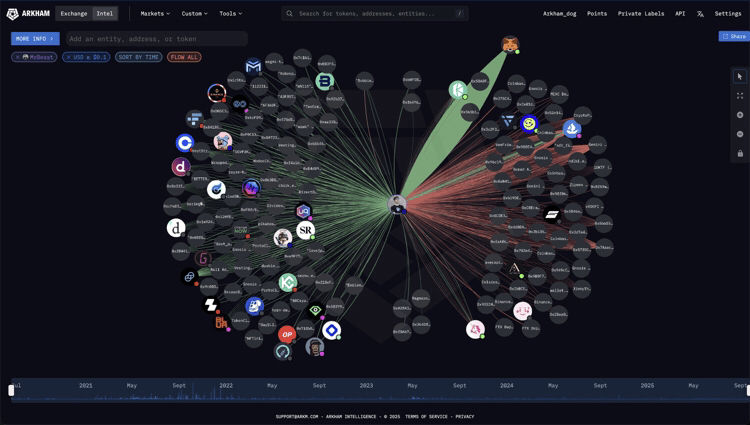
Nansen is the tool for smart money tracking and labeled wallets, while Arkham is built around entity intelligence and asking who controls a specific address. That difference matters. Nansen tells you what labeled wallets are doing. Arkham helps you connect the wallet to a person, org, or cluster of activity.
For most research teams, that means Nansen is better for pattern spotting and Arkham is better for attribution. If you’re trying to understand capital flow before a narrative hits the timeline, you’ll probably want both.
Dune is powerful, but it will bully lazy researchers
Yeah, I know, another SQL platform. But Dune keeps getting recommended because it’s one of the best places to run custom on-chain queries and build dashboards across raw chain data.
That’s the catch. Dune is amazing if you know what you’re asking. It’s annoying if you don’t. The public dashboard library makes it easier to start, but the real value shows up when you need a question no one has already packaged into a pretty chart.
If you’re on a crypto product team, Dune is often the first stop for exploration, while DeFiLlama handles public benchmarks and Nansen handles cohort analysis. That combo is hard to beat.
DeFiLlama is the free tool everybody underestimates
Look, if you’re not using DeFiLlama yet, you’re probably overpaying for simple answers. Multiple 2026 rankings call it the strongest free starting point for DeFi protocol data and TVL tracking across chains.
That doesn’t mean it does everything. It means it does the basics extremely well. For protocol size, TVL, chain comparisons, and quick DeFi context, it’s often enough on its own.
If your workflow starts with “how big is this protocol?” or “is this chain actually growing?”, DeFiLlama should already be in your browser. No drama. No excuses.
Token Terminal changes the question from hype to business
The annoying part is that most crypto projects love talking like they’re special and avoid basic financial reality. Token Terminal cuts through that by focusing on protocol fundamentals like revenue, fees, and business-like metrics.
That’s why it shows up in so many research stacks. It’s the tool you use when you want to ask whether a project is creating value or just producing liquidity theater. That shift matters way more than the average trader wants to admit.
If you’re comparing protocols, Token Terminal gives you a more grounded view than raw social buzz. And if you’re building a research memo for investors, that matters a lot.
CryptoQuant is the trader’s flow machine
Here’s the thing: some people do crypto research to understand systems. Others do it because they want to know where price is under pressure next Tuesday. CryptoQuant is built for the second group, and that’s not an insult.
It’s strong on exchange flows, miner activity, derivatives, and institutional indicators. That makes it useful when you’re watching supply hit exchanges, fees spike, or market behavior start to shift. If your edge comes from timing, this tool belongs in your stack.
How the top tools compare in real life
Honestly, the best comparison isn’t “which tool has more features.” It’s “which tool saves you the most time for the question you’re asking right now.” That’s where a lot of teams blow it.
| Tool | Best use in a real workflow | Catch |
|---|---|---|
| Glassnode | Market-cycle research and holder behavior | Great depth, but not the most flexible if you want custom work. |
| Nansen | Wallet labels and smart money monitoring | Costs can climb fast once you need serious coverage. |
| Arkham | Address attribution and entity tracing | Useful when identity matters more than pretty dashboards. |
| Dune | Custom investigations and dashboard building | You need some SQL comfort, or you’ll waste time. |
| DeFiLlama | Fast DeFi benchmarks and TVL checks | Amazing for DeFi, less useful for deeper wallet intelligence. |
| Token Terminal | Revenue and fee analysis | Best when you want fundamentals, not trading noise. |
| CryptoQuant | Exchange flow and market pressure signals | Stronger on major assets than random long-tail tokens. |
If I had to pick a default stack for most researchers, I’d go Dune, DeFiLlama, and Nansen. That gives you raw queries, public benchmarks, and wallet behavior without overcomplicating your life.
The best stack depends on what kind of researcher you are
Stop pretending every crypto analyst has the same job. They don’t. A trader, a protocol PM, and a compliance team are basically solving different problems with the same blockchain data.
If you’re doing Bitcoin or Ethereum cycle work, Glassnode is usually the first serious choice. If you’re tracking DeFi protocols, DeFiLlama and Token Terminal are the clean starting point. If you’re chasing wallet behavior, Nansen and Arkham are the obvious pair.
And if you need open-ended exploration, Dune is the one that keeps coming back because it lets you ask questions no dashboard anticipated. That’s a big deal when the market changes faster than your templates do.

What most teams get wrong
The trap most teams fall into is buying a fancy platform before they know what questions they’re trying to answer. Then they drown in tabs, dashboards, and “interesting insights” that don’t change a single decision.
Another mistake is using the wrong tool for the wrong layer. Don’t use a market-cycle platform like it’s a wallet forensics suite. Don’t use a DeFi TVL tracker like it’s a complete research system. That’s how you waste time and miss the actual signal.
If you’re building a practical workflow
Here’s the simplest setup that works for most people. Start with DeFiLlama for protocol size, Token Terminal for business fundamentals, and Dune for custom digging.
Then add Nansen if you care about wallet behavior, or Arkham if attribution matters more. Add Glassnode or CryptoQuant if your work is more macro or trader-focused. That combo covers most serious crypto research without turning your desk into a command center for regret.
The reason this works is simple. Each tool answers a different question. That’s how you avoid paying for five dashboards that all tell you the same half-truth in different fonts.
Final take
Real talk: the best on-chain analytics tools for crypto research aren’t about collecting the most data. They’re about cutting through noise fast enough to make a better call than the next person.
If you had to build your stack today, would you start with wallet tracking, protocol fundamentals, or market-cycle data?
You may also like
- AI vs Traditional Crypto Research: Which Is More Effective in 2026?
- AI Tools That Save 20+ Hours Every Week: The Ultimate 2026 Guide
- How Machine Learning Is Being Used in Decentralized Finance
- Perplexity AI Caught Red-Handed: The Data Scraping Scandal
- Case Study: How a SaaS Startup Scaled Rapidly Using AI Tools