

- Published on
Best Algorithmic Trading Platforms for Crypto Traders in 2026
Listen to the full article:
- Authors

- Name
- Jagadish V Gaikwad
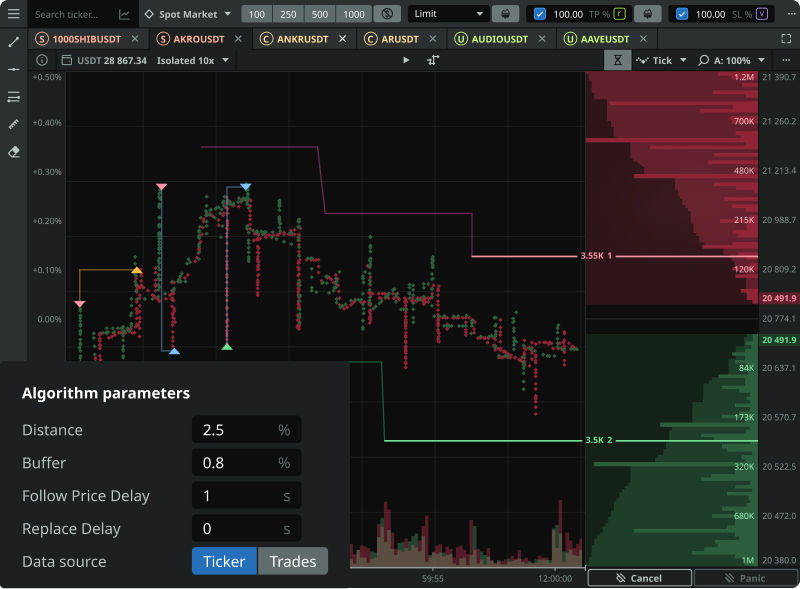
Your bot isn’t the edge. Your setup is.
Stop pretending this is about “finding the perfect bot.” It’s not. The real game is picking the best algorithmic trading platforms for crypto traders that actually fit your market, your stack, and your tolerance for pain.
A lot of traders burn months chasing shiny dashboards, then wonder why the PnL looks like a crime scene. The platform matters because crypto is messy, fast, and rude to lazy automation.
What actually makes a platform worth your time?
Look, here’s the thing: most platforms sound identical until you try to run real capital through them. Then the differences show up fast. Execution quality, API access, exchange support, and fee structure decide whether your strategy works or gets wrecked by friction.
For crypto, the important categories are pretty simple. You want either exchange-native automation, a bot platform that connects to exchanges, or a quant stack that lets you code and backtest properly.
Rankia’s comparison points traders toward crypto-focused options like 3Commas, freqtrade, Wunderbit, and TokenMetrics AI depending on whether you want no-code, Python, or AI-driven signals. Guru99 and Gate also highlight Pionex, Cryptohopper, and Bitsgap as common choices for automated crypto trading.
The platforms that keep coming up for crypto traders
Real talk: there are way too many “best bot” lists out there. Most of them are junk, but a few names keep showing up because they actually solve real problems.
Here’s the short version. If you want simple automation, platforms like Pionex, 3Commas, Cryptohopper, and Bitsgap are the usual suspects. If you want deeper control, freqtrade and QuantConnect give you more room to build serious logic.
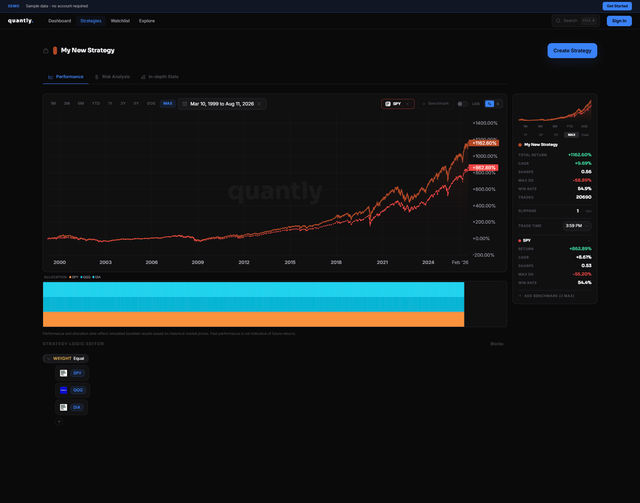
Best algorithmic trading platforms for crypto traders: the real comparison
Honestly? This is where people mess up. They compare features like they’re shopping for headphones, then realize later that “more features” just means “more ways to lose money faster.”
| Platform | Best for | Strength | Catch |
|---|---|---|---|
| Pionex | Beginners who want built-in bots | Free built-in strategies like grid and DCA are easy to start with | You give up some control |
| 3Commas | Active traders who want flexible bots | Popular for multi-exchange automation and strategy tools | Costs add up once you scale |
| Cryptohopper | Traders who want backtesting and copy trading | Good for strategy testing and marketplace-style automation | The learning curve isn’t tiny |
| Bitsgap | Traders who want grid and portfolio tools | Strong for multi-exchange automation and simple setup | Not the deepest option for coders |
| freqtrade | Python users who want full control | Open-source and built for custom strategies | You need technical chops |
| QuantConnect | Quant traders who want serious research tools | Great if you’re already coding systematic strategies | Overkill for casual crypto traders |
| Wunderbit | TradingView users who want webhook execution | Useful if your Pine Script triggers need real exchange execution | You’re still dependent on your signal quality |
| TokenMetrics AI | Traders chasing AI-assisted signals | AI-driven ideas and automation in one place | AI signals are not magic |
If I had to pick one general-purpose path for most crypto traders, I’d start with 3Commas or Pionex. If you already code, freqtrade is the smarter long-term move because you own the logic instead of renting somebody else’s idea.
Exchange-native automation is underrated
Here’s what nobody talks about: sometimes the best platform is the exchange itself. Why? Because fewer moving parts means fewer failures, fewer API headaches, and less nonsense when the market gets violent.
FXEmpire’s crypto algo coverage keeps pointing to exchanges with strong API support and prebuilt automation, including crypto.com, Bybit, OKX, Gate.io, and Binance depending on what you care about most. Binance’s own automation pages also show that exchange-native bot tools are a real part of the product now, not some side hobby.
That matters if you’re running grid, DCA, or futures automation. Every extra connector is another place where something can break at 3 a.m., and yes, it usually happens at 3 a.m.
If you want no-code, don’t overcomplicate it
The trap most teams fall into is thinking they need a PhD in Python before they can automate anything. You don’t. If your strategy is basic, don’t make it a science project.
Pionex is popular because it ships with built-in bots and low-friction setup. Gate’s 2026 roundup also puts Pionex, Bitsgap, and Coinrule in the same conversation for traders who want prebuilt strategy templates instead of coding from scratch.
That’s the appeal. You can get something live fast. The downside is obvious: you’re trusting a simplified framework, so don’t act surprised when your “smart” bot behaves like a glorified spreadsheet under stress.
If you already use TradingView, there’s an easier path
Yeah, I know, another tool. But if your whole workflow already lives in TradingView, then Wunderbit is actually useful because it turns Pine Script signals into live exchange execution through webhooks.
That means you don’t have to rebuild your signal stack just to get automation working. You write the signal in one place, trigger the trade somewhere else, and stop duct-taping random browser extensions together like it’s 2019.
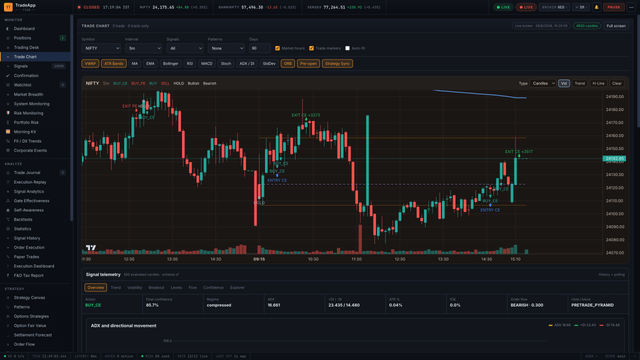
When Python wins, it really wins
Look, if you know Python, don’t waste time pretending a no-code bot is “good enough” forever. It won’t be. You’ll hit a wall the second you want custom logic, better backtesting, or a cleaner research loop.
Rankia specifically says that if you already know Python, you should jump straight to freqtrade or QuantConnect. That advice is solid because both platforms let you move from idea to code to test without being trapped in a template-based workflow.
The catch is that you’re now responsible for everything. Strategy logic, data hygiene, risk rules, and deployment. Fun? Not always. Worth it? Absolutely, if you’re serious.
AI trading platforms sound cooler than they are
Here’s the thing nobody wants to say out loud: “AI trading” is mostly marketing until you prove it. A model can generate a signal, but it can’t protect you from bad risk settings or a stupid market regime.
KuCoin’s 2026 AI apps review and BingX’s AI bot coverage both push AI-assisted crypto trading as a major trend, with tools like BingX AI and other prompt-driven systems getting attention. TokenMetrics AI also sits in that same bucket, mixing signals and automation for traders who want more guidance than raw scripting.
That said, AI isn’t useless. It can help you scan faster, manage noise, and surface ideas. It just can’t save a sloppy trader from themselves, which is annoying but true.
Fees, APIs, and slippage are the boring stuff that actually matters
The annoying part is that the least sexy details are usually the most important. If your platform has bad fees, weak API coverage, or slow execution, your strategy can look great in backtests and still fail live.
FXEmpire’s exchange comparisons show how fee structure and connectivity vary a lot across major crypto venues, with maker/taker pricing and API access being key parts of the decision. That’s why traders comparing crypto automation shouldn’t just ask “Which bot is smartest?” They should ask, “Which setup will survive real market conditions?”
If you trade often, even small fee differences chew through edge fast. If you run high-frequency logic, slippage will eat you alive faster than you think.
A practical way to choose without wasting a month
Real talk: you don’t need twelve tools. You need one platform that matches how you actually trade.
Start with this rule set. If you want easy automation, pick Pionex, Bitsgap, or 3Commas. If you want Python control, go with freqtrade or QuantConnect. If you live in TradingView, use Wunderbit. If you want AI-assisted ideas, test TokenMetrics AI or exchange-native AI tools like BingX AI.
Don’t mix six tools just because they all look smart in screenshots. That’s how you turn a trading system into a maintenance hobby.
Who each platform is really for
The trap most people fall into is choosing based on status, not workflow. “Everyone uses X” is a terrible reason to bet money.
- Pionex is for you if you want fast setup and built-in bots without coding.
- 3Commas is for you if you want flexible automation across exchanges and don’t mind paying for convenience.
- Cryptohopper is for you if backtesting and copy trading matter more than simplicity.
- Bitsgap is for you if you want multi-exchange management and clean bot basics.
- freqtrade is for you if you want full control and can handle Python.
- QuantConnect is for you if you’re building systematic strategies like a quant, not a casual bot trader.
- Wunderbit is for you if your edge already lives in TradingView signals.
That’s the real filter. Not “best overall.” Best for your setup.
The exchange side matters just as much as the bot
Honestly? A lot of traders obsess over the bot and ignore the exchange. That’s backwards.
FXEmpire’s 2026 crypto algo roundups keep putting exchange capabilities front and center, especially for APIs, fee levels, and automation-friendly infrastructure. Binance, OKX, Bybit, and Crypto.com all show why exchange quality can matter as much as the bot layer itself.
If your exchange support is weak, your bot becomes decorative. Pretty dashboard, ugly results.
The version nobody wants to hear
Real talk: the best algorithmic trading platforms for crypto traders are the ones you’ll actually use consistently. The smartest stack in the world is useless if you abandon it after two losses and a bad night of overthinking.
Most traders need something boring, reliable, and easy to monitor. A few need full-code control. Almost nobody needs the giant “AI-powered” promise they saw in an ad at midnight.
The right choice depends on whether you want speed, control, or automation with the least pain. If you’re not sure yet, that’s already a signal. What’s the one thing breaking your current setup right now: strategy, execution, or discipline?
You may also like
- AI in Crypto Asset Management: Institutional Use Cases That Actually Matter
- Boost Remote Team Productivity with SaaS Time Tracking and AI Insights in 2025
- AI-Powered SaaS for Lead Generation Automation: The 2025 Competitive Edge
- Crypto Portfolio Rebalancing With AI: How It Works
- Best AI APIs for SaaS Developers in 2026: The Ultimate Guide