

- Published on
Best Crypto Accounting Software for Businesses in 2026
Listen to the full article:
- Authors

- Name
- Jagadish V Gaikwad

Your books are probably a mess
Look, crypto accounting gets ugly fast. One wallet turns into ten, then you’ve got exchanges, staking rewards, stablecoins, and random transfers nobody documented properly.
If your finance team is still wrestling this in spreadsheets, you’re not “being scrappy.” You’re setting money on fire and calling it process.
What the best crypto accounting software actually does
Here’s the thing: the best crypto accounting software for businesses doesn’t just track transactions. It turns blockchain chaos into something your accountant can actually reconcile, audit, and file without a panic attack.
G2 describes crypto accounting software as a way to track digital assets and the transactions tied to them. ZenLedger also frames the real decision around cost, transparency, functionality, and support, which is exactly where most teams get burned.
That means you should care about a few boring-but-critical things.
- Wallet and exchange imports that don’t break every week
- Cost basis and gain or loss tracking that holds up
- Audit trails your team can defend
- Multi-entity and multi-user support if your business isn’t tiny
- Export formats that fit your ERP or accounting stack
The tools worth your attention
Honestly? Most of the market is split into two camps. One group is built for consumers filing taxes. The other group is built for businesses that need actual accounting.
SoftLedger says its crypto accounting software automates transactions across multiple blockchains and exchanges. Cryptio is positioned on G2 as enterprise-grade crypto accounting, tax, reporting, and audit prep for businesses, banks, exchanges, institutions, and funds. Bitwave, Ledgible, TRES Finance, and Cryptoworth also show up repeatedly in business-focused roundups for 2026.
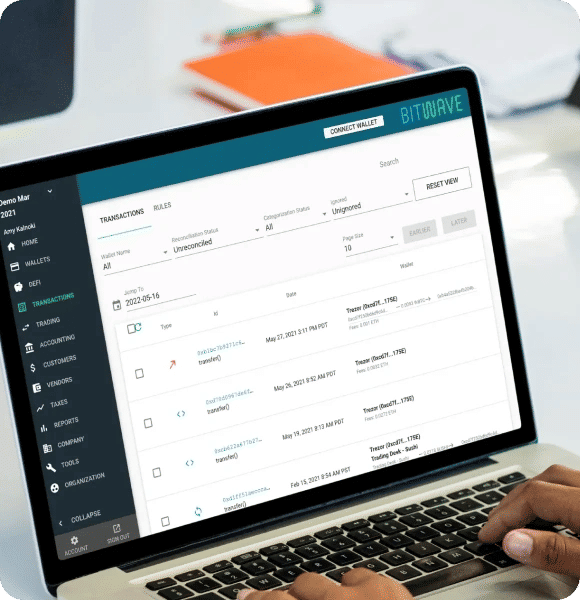
Best crypto accounting software: quick comparison
| Tool | Best for | Real talk | Catch |
|---|---|---|---|
| Cryptio | Enterprises, funds, and teams that care about audit prep | Strong pick if your books need to survive scrutiny | Probably more than you need if you’re small |
| Bitwave | Businesses with lots of wallet activity | Good for operations-heavy crypto finance teams | Setup can get serious fast |
| Ledgible | Tax and reporting workflows | Solid if your team needs clean reporting | Not every team wants a tax-first product |
| TRES Finance | Finance teams that want visibility across chains | Useful if you want broader accounting control | You’ll still need a real process |
| Cryptoworth | Companies that want structured crypto accounting | Often favored for business use cases | Not always the lightest option |
| SoftLedger | Firms that want crypto plus core accounting | Nice if you want accounting in one place | You’ll want to test fit carefully |
| Divly | European businesses and accounting teams | Good when your use case is lighter and region-specific | Better for certain markets than others |
If you want the blunt version, Cryptio and Bitwave are the names that keep showing up when the conversation gets serious. Divly is a credible pick for European accounting workflows and says it’s built to collect company crypto transactions in one place and generate accounting reports, while WhaleBooks is pitched as a free option with business use in mind.
Who each tool is really for
Real talk: the “best” tool depends on whether you’re a startup with a few wallets or a finance team cleaning up institutional-grade volume.
CryptaCount explicitly breaks its recommendations down by firm size and says large enterprises should look at CryptaCount for full integration and compliance. It also markets itself as a single platform for accounting firms to manage multiple client books and automate the ugly parts.
That’s the real divide.
- Small business: you want fast imports, simple reporting, and a setup your accountant won’t hate
- Mid-market company: you need entity handling, exports, and cleaner reconciliation
- Enterprise or fund: you need controls, audit support, and deeper reporting
- Accounting firm: you need multi-client handling and clean workflows at scale
Why crypto accounting breaks normal accounting software
Here’s what nobody talks about: most normal accounting tools weren’t built for on-chain mess. They can store numbers, sure, but crypto adds transfers, forks, staking, wrapping, bridges, and constant price changes.
Mural points out that stablecoin accounting depends on transaction scale, integration with traditional finance systems, and the level of dollar-digital functionality you actually need. That’s the kind of nuance most teams ignore until month-end closes turn into a disaster.
If your tool can’t deal with this stuff, you’re not getting accounting software. You’re getting a spreadsheet with branding.

What to look for before you buy
The annoying part is that vendors all say the same things. They all “support your workflow,” “simplify reporting,” and “help finance teams,” which is basically marketing soup.
Ignore the fluff. You want proof in five areas.
- Coverage: Does it support your wallets, exchanges, and chains?
- Reconciliation: Can it match transactions without manual babysitting?
- Reporting: Can it produce books your CPA or auditor will accept?
- Controls: Does it support roles, permissions, and review steps?
- Support: When something breaks, do you get help fast or a canned reply?
ZenLedger’s comparison guidance is useful here because it calls out total cost, transparency, functionality, and customer support as the real decision factors. That’s the stuff that matters after the sales demo glow wears off.
The biggest mistake teams make
Stop buying crypto accounting software like you’re buying a browser extension. That mindset is why finance teams end up with half-broken workflows and ugly cleanup projects six months later.
The trap most teams fall into is choosing based on price alone. A cheap tool that creates reconciliation errors will cost you way more than a better platform that actually works.
I’ve seen teams save a few hundred bucks a month and then burn hours every week fixing imported data. That’s not savings. That’s a recurring tax on your staff.
When a free or low-cost tool makes sense
Yeah, there’s a place for free tools. G2 even has a free crypto accounting category, which tells you there’s real demand for lighter options.
WhaleBooks is marketed as a crypto accounting platform with a free plan. Divly also says importing transactions and tracking a business crypto portfolio is free.
That said, free is only smart when your needs are simple.
- You have a low transaction count
- You don’t need deep audit support
- You’re not juggling multiple entities
- Your accountant is comfortable doing some manual work
If your company is already past that stage, free usually turns into expensive later.
The enterprise reality check
Here’s the thing: enterprise crypto accounting is not a software purchase. It’s an operating model.
Cryptio is repeatedly framed as enterprise-grade for crypto businesses, financial institutions, and funds. CryptaCount also leans hard into compliance and firm-wide integration for larger organizations.
That tells you something important. Big teams don’t just need bookkeeping. They need defensible processes, clean records, and people who can own the mess.
If your company has treasury activity, multiple subsidiaries, or heavy on-chain volume, don’t pretend a lightweight app will magically save you. It won’t.
Best crypto accounting software by business type
Real talk: this is the part that matters most. Pick based on your actual use case, not whatever ranking page sounds confident today.
| Business type | Best fit | Why it wins |
|---|---|---|
| Startup with basic crypto activity | Divly or WhaleBooks | Fast start, lower friction, less overkill |
| Growing company with regular transactions | SoftLedger or Ledgible | Better structure and reporting without going full enterprise |
| Finance-heavy business | Bitwave or Cryptoworth | Stronger control over complex activity |
| Enterprise, fund, or exchange | Cryptio or CryptaCount | Audit readiness and serious operational depth |
| Accounting firm | CryptaCount or Divly | Multi-client handling and cleaner client workflows |
If I had to pick one rule, it’s this: choose the tool that matches your reporting pain, not your crypto hype. Your treasury team and your auditors will care way more about clean books than chain culture.
How to avoid a terrible rollout
Look, this is where teams sabotage themselves. They buy the software, connect a few wallets, and then assume the rest will just work.
It won’t.
You need a real rollout plan.
- Map every wallet, exchange, and entity first
- Decide who owns transaction review
- Define your cost basis method before imports start
- Test exports against your current accounting system
- Run one month in parallel before trusting the numbers
That process sounds boring because it is. But boring is good when you’re dealing with money, taxes, and auditors.
My take on the market right now
Your team doesn’t need more crypto noise. It needs fewer surprises at month-end.
The best crypto accounting software for businesses is the one that reduces manual cleanup, gives your accountant confidence, and doesn’t collapse when your activity gets messy. That’s why enterprise names like Cryptio, Bitwave, Cryptoworth, and CryptaCount keep showing up in 2026 research and comparison lists.
If you’re small, don’t overbuy. If you’re growing, don’t cheap out. If you’re enterprise, don’t pretend a starter tool can carry the load.
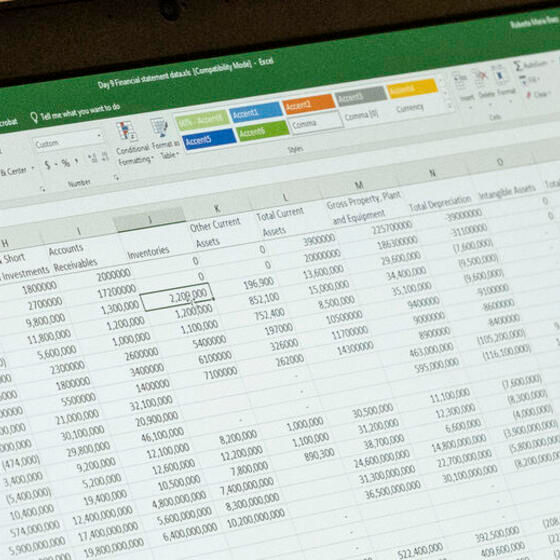
Real talk: crypto accounting is one of those boring decisions that gets expensive when you ignore it. The right platform saves time, but more importantly, it keeps your books from becoming a dumpster fire.
What’s your bigger problem right now: messy wallet data, bad reporting, or a team that still thinks spreadsheets are good enough?
You may also like
- Why Video Games Are Becoming Boring Nowadays: The 2026 Reality Check
- Boost Remote Team Productivity with SaaS Time Tracking and AI Insights in 2025
- FIFA Faces Renewed Calls to Improve Player Safety Amid Extreme World Cup Heat Conditions
- How AI Boosts Cloud SaaS Scalability in 2025
- SaaS SEO in 2025: How to Rank Your Software Organically and Boost Growth