

- Published on
How AI Boosts Cloud SaaS Scalability in 2025
Listen to the full article:
- Authors

- Name
- Jagadish V Gaikwad
The AI Revolution in Cloud SaaS Scalability
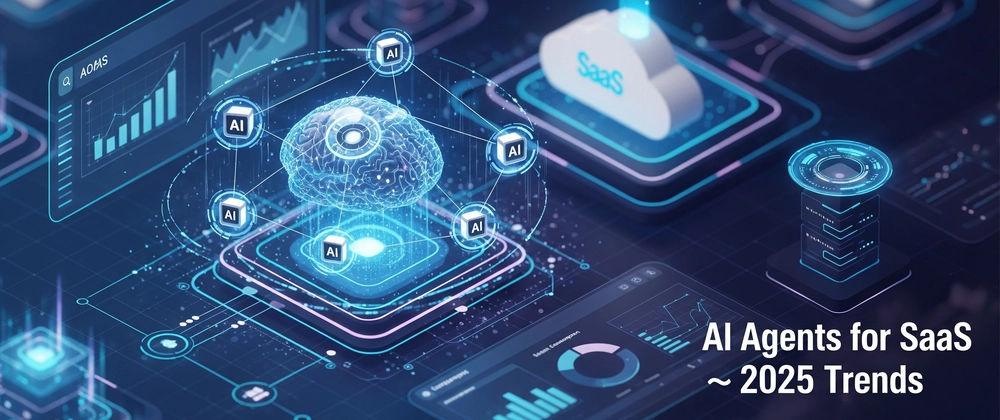
If you’re running a SaaS business in 2025, you’re not just selling software—you’re selling intelligence. The days of simply scaling servers to meet demand are fading fast. Today, AI is the engine behind scalable cloud SaaS, turning reactive infrastructure into proactive, self-optimizing systems that grow smarter as they grow bigger.
AI-driven scalability isn’t just about handling more users or data. It’s about doing so efficiently, securely, and with a level of personalization that was impossible just a few years ago. From intelligent load balancing to predictive resource allocation, AI is reshaping how SaaS platforms scale—and who wins in the race for growth.
Let’s break down exactly how AI is boosting cloud SaaS scalability in 2025, and what it means for founders, product teams, and IT leaders.
Why Scalability Matters More Than Ever
Scalability has always been a core promise of SaaS. But in 2025, the stakes are higher. User expectations are rising, competition is fiercer, and the cost of downtime or poor performance is steeper than ever.
Traditional scaling relied on manual provisioning or simple threshold-based autoscaling. But as SaaS apps add more AI features, real-time analytics, and multimodal capabilities, the old methods fall short. Scaling isn’t just about more servers—it’s about smarter infrastructure that can anticipate demand, optimize costs, and deliver seamless experiences at any scale.
AI is the missing piece. It turns static infrastructure into dynamic, self-learning systems that can:
- Predict traffic spikes before they happen
- Allocate resources in real time
- Personalize user experiences at scale
- Automate security and compliance
How AI Powers Scalable Cloud SaaS
1. Intelligent Infrastructure & Load Balancing
AI-driven load balancing is now the gold standard for scalable SaaS. Instead of waiting for CPU or memory thresholds to trigger scaling, AI models analyze historical usage patterns, real-time signals, and even external factors (like time zones or marketing campaigns) to predict demand and distribute workloads proactively.
Example: A UK fintech startup used AI-powered load balancing to reduce server costs by 34% while improving response times. By learning usage patterns across global time zones, their system could scale up before peak hours and scale down during lulls—without manual intervention.
AI also enables self-optimizing infrastructure. Systems can automatically adjust resource allocation based on workload, user behavior, and even business goals (like minimizing cost vs. maximizing performance).

2. Predictive Resource Allocation
One of the biggest challenges in SaaS is over-provisioning vs. under-provisioning. Over-provisioning wastes money; under-provisioning hurts performance.
AI solves this with predictive resource allocation. Machine learning models analyze usage trends, seasonal patterns, and even external events (like product launches or holidays) to forecast resource needs. This means you can provision just enough compute, storage, and bandwidth—no more, no less.
Benefits:
- Lower infrastructure costs
- Better performance during peak times
- Reduced risk of outages
3. Personalized User Experiences at Scale
Scalability isn’t just about infrastructure—it’s also about user experience. As SaaS apps grow, maintaining a personalized, engaging experience for every user becomes harder.
AI makes it possible to deliver hyper-personalized experiences at scale. From recommending features based on user behavior to tailoring onboarding flows, AI-driven personalization keeps users engaged and reduces churn.
Use cases:
- Healthcare: AI optimizes appointment scheduling and predicts patient no-shows.
- Education: AI personalizes learning paths based on student performance.
- Professional Services: AI chatbots handle Tier-One support autonomously.
The Business Impact of AI-Driven Scalability
Lower Costs, Higher ROI
Companies implementing AI features report:
- 28% reduction in customer churn
- 40% faster onboarding cycles
- 25% lower infrastructure costs
But the ROI goes beyond cost savings. AI-powered features enable premium pricing tiers, create defensible moats, and open new revenue streams.
Competitive Advantage
In 2025, AI isn’t just a nice-to-have—it’s a competitive necessity. SaaS platforms that leverage AI for scalability can:
- Launch new features faster
- Handle more users with less overhead
- Deliver better user experiences
This creates a virtuous cycle: better scalability leads to happier customers, which drives growth, which fuels further innovation.
Key Trends Shaping AI-Driven SaaS Scalability
1. Cloud-Native AI Services
Cloud platforms now offer native AI services that make it easier than ever to embed intelligence into SaaS apps. From AWS SageMaker to Google Vertex AI, these services reduce implementation friction and let developers focus on building value, not managing infrastructure.
2. Open-Source ML Frameworks
Open-source frameworks like TensorFlow, PyTorch, and Hugging Face have democratized access to sophisticated AI models. SaaS companies can now build custom AI features without relying on expensive proprietary tools.
3. Regulatory Clarity
As data privacy regulations mature, SaaS vendors can deploy AI with greater confidence. Clear guidelines around data usage, consent, and compliance make it easier to innovate while staying compliant.
4. Multimodal AI Models
The latest AI models can process text, audio, video, and images in a single query. This unlocks new SaaS experiences, like real-time video feedback, audio-driven analytics, and image-based onboarding flows.
Challenge: Multimodal inference is GPU-hungry, so optimization is critical. Teams are using batching, compression, and partial offline processing to keep costs under control.
Implementation Steps: A Phased Approach
Step 1: Start with Explainability
Build explainability into your AI systems from day one. Users and stakeholders need to understand how AI-driven decisions are made, especially in regulated industries.
Step 2: Human-in-the-Loop Workflows
For critical predictions or high-stakes decisions, implement human-in-the-loop workflows. This ensures oversight and maintains trust.
Step 3: Monitor and Optimize
AI-driven scalability isn’t “set and forget.” Continuously monitor performance, costs, and user feedback. Use this data to refine your models and workflows.
Step 4: Plan for Hybrid Deployments
With models like LLaMA 4, DeepSeek R1, and Qwen 3, more SaaS companies are running AI on their own infrastructure—either fully on-prem for compliance or in hybrid setups to balance latency, privacy, and cost.
The Future: AI-Native SaaS Platforms
The shift is accelerating. Developers are no longer treating AI as a bolted-on feature—they’re architecting new applications with ML capabilities at the core. These “AI-native” SaaS platforms are designed from the ground up to scale intelligently, adapt to changing demands, and deliver value at every stage of growth.
Comparison Table: Traditional vs. AI-Driven SaaS Scalability
| Feature | Traditional SaaS Scalability | AI-Driven SaaS Scalability |
|---|---|---|
| Resource Allocation | Manual or threshold-based | Predictive, automated |
| Load Balancing | Static, reactive | Dynamic, proactive |
| User Experience | Generic, one-size-fits-all | Personalized, adaptive |
| Cost Efficiency | Often over-provisioned | Optimized, just-in-time |
| Security & Compliance | Rule-based, manual | AI-powered, real-time monitoring |
| Time to Market for New Features | Slow, manual scaling | Fast, automated scaling |
Real-World Examples
Healthcare: Optimizing Appointment Scheduling
A healthcare SaaS platform used AI to predict patient no-shows and optimize appointment scheduling. By analyzing historical data, the system could proactively fill slots, reducing wait times and increasing revenue.
Education: Personalized Learning Paths
An edtech SaaS company leveraged AI to personalize learning paths for students. The system analyzed performance data and recommended tailored content, leading to higher engagement and better outcomes.
Professional Services: Autonomous Support
A professional services SaaS deployed AI chatbots for Tier-One support. The bots handled routine queries autonomously, freeing up human agents for complex issues and reducing response times.
Challenges and Considerations
Cost Management
AI-driven scalability can reduce infrastructure costs, but it introduces new expenses—like GPU, storage, and ops costs for self-hosted models. Cost attribution and resource utilization tracking are non-negotiable.
Data Privacy and Compliance
As AI processes more sensitive data, privacy and compliance become critical. SaaS vendors must ensure their AI systems adhere to regulations like GDPR, CCPA, and HIPAA.
Integration Complexity
Integrating AI into existing SaaS platforms can be complex. Vendors must prioritize platforms that support both horizontal scalability and vertical specialization, and verify integration with existing tools to avoid lock-in.
The Role of Unified SaaS Management Platforms
With AI driving costs and risks, unified SaaS management platforms are essential for maintaining control, optimizing spend, and ensuring compliance. These platforms provide visibility into AI usage, costs, and performance across the entire SaaS portfolio.
The Shift from Horizontal to Vertical SaaS
AI is changing the dynamic between horizontal and vertical SaaS:
- Vertical AI solutions can use deep, proprietary industry data to become domain “experts,” threatening to unbundle and replace the specialized functions of legacy vertical SaaS.
- Horizontal SaaS platforms are leveraging AI to add intelligence to their broad tools (e.g., AI-powered chatbots in a CRM) or positioning themselves as AI orchestration hubs that connect various specialized vertical tools.
The Bottom Line
AI is no longer a futuristic concept—it’s the backbone of scalable cloud SaaS in 2025. From intelligent infrastructure to personalized user experiences, AI is enabling SaaS platforms to grow faster, smarter, and more efficiently than ever before.
For SaaS founders, product managers, and IT leaders, the message is clear: embrace AI-driven scalability or risk falling behind.
What’s Next?
The future of SaaS is AI-native. As developers treat intelligence as infrastructure, we’ll see a new generation of SaaS platforms that are not just scalable—but self-optimizing, self-learning, and self-healing.

Final Thoughts
AI is transforming cloud SaaS scalability in 2025, making it possible to deliver better experiences, lower costs, and faster growth. The companies that win will be those that embrace AI as a core part of their architecture—not just a feature.
What’s your biggest challenge with scaling your SaaS platform? Have you started integrating AI into your infrastructure? Share your thoughts in the comments below!
You may also like
- AI-Driven Email Marketing SaaS Tools Compared: Which One Wins in 2025?
- 2025 Review: Best AI SaaS for Project Budgeting to Boost Your Workflow
- How to Reduce Customer Churn in Your SaaS Product: Proven Strategies for 2025
- AI Data Privacy and Compliance in Cloud Environments: Navigating 2025’s Complex Landscape
- AI-Driven HR Management Software Trends 2025: The Future of Workforce Intelligence