

- Published on
How AI Can Analyze Layer-1 vs Layer-2 Blockchain Networks
Listen to the full article:
- Authors

- Name
- Jagadish V Gaikwad

Stop guessing. The chain choice is the product choice.
Your blockchain stack isn’t just a technical decision. It’s a business bet, a user experience bet, and a fee problem waiting to happen. AI can analyze Layer-1 vs Layer-2 blockchain networks fast enough to make that bet less stupid.
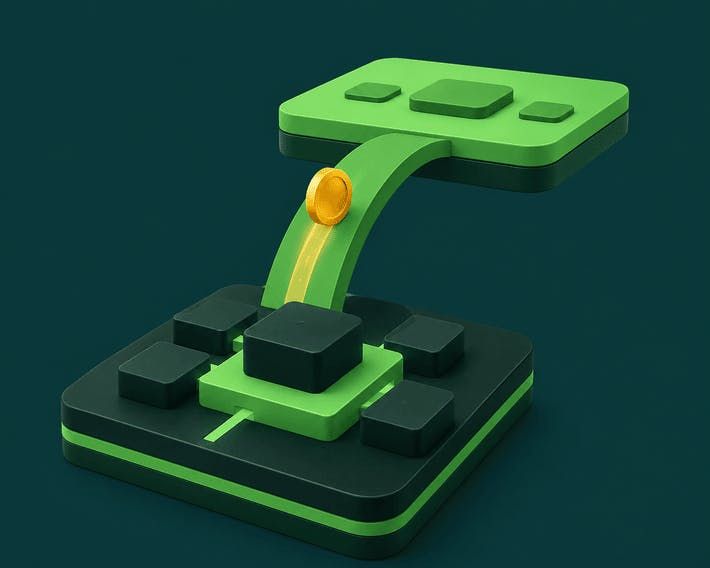
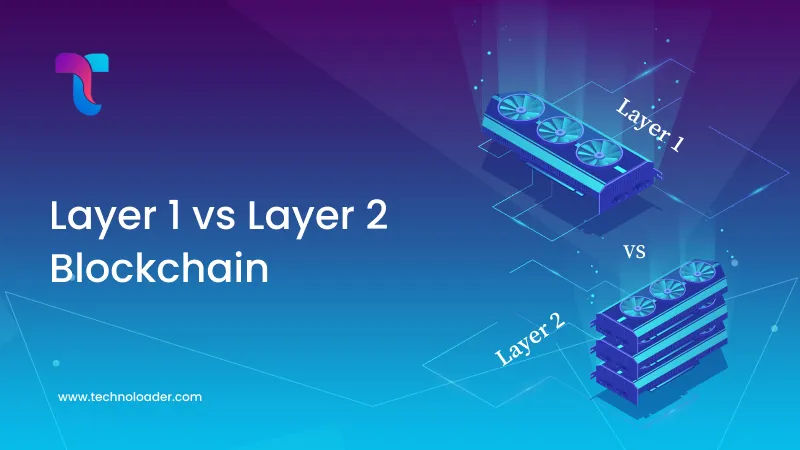
Here’s the big deal: Layer 1 is the base chain that settles transactions and owns security, while Layer 2 sits on top and pushes activity off the main chain to cut fees and increase throughput. That sounds clean on paper. In real life, the trade-offs are messier.
AI helps because humans are bad at holding all the variables in their heads at once. Cost, latency, decentralization, finality, congestion, bridge risk, sequencer risk, and usage patterns all pull in different directions. A decent model can digest that mess and tell you where the pain is actually coming from.
What AI is really doing here
Look, AI isn’t “understanding” blockchain in some mystical way. It’s processing network data, recognizing patterns, and flagging weirdness faster than your team can do it in a spreadsheet.
When AI analyzes Layer-1 vs Layer-2 blockchain networks, it can compare throughput, fees, settlement timing, and security assumptions across both layers. It can also spot whether an L2 is genuinely reducing load or just shifting the problem somewhere you haven’t looked yet.
That matters because L2s usually inherit security from the underlying L1, but they also bring extra assumptions like sequencer behavior and bridge design. AI is useful because those hidden assumptions are exactly where teams get burned.
The metrics that actually matter
Real talk: if you’re only looking at TPS, you’re already losing.
AI can analyze Layer-1 vs Layer-2 blockchain networks across a handful of metrics that actually tell the truth. That includes transaction throughput, average fee per transaction, confirmation latency, final settlement time, network congestion, and decentralization signals like validator distribution.
Here’s the thing. L1s usually give you native security and stronger decentralization, but fees are higher and scaling is harder without protocol changes like sharding or consensus tweaks. L2s usually give you much higher throughput and lower fees, but they depend on the L1 and often add their own trust and operational risks.
AI is good at turning those metrics into a ranked picture instead of a vague feeling. That means it can tell you whether your network is actually “faster,” or just cheaper in the short term while adding downstream risk.
Where AI gets its data
The annoying part is that blockchain data is everywhere and nowhere at the same time.
AI models pull from on-chain transaction traces, block times, gas price history, rollup proofs, bridge activity, mempool congestion, validator behavior, and historical chain upgrade data. For Layer 2s, they can also examine off-chain batching patterns, proof submission timing, and settlement delays back to Layer 1.
That’s useful because L2s don’t broadcast every transaction on the main chain. So if you only watch L1 data, you miss the whole point of the L2. AI helps stitch the two layers together so you’re not making decisions from half a dashboard.
The best use cases are boring and expensive
Honestly? This is where people mess up. They think AI is for “strategy.” It’s really for avoiding expensive mistakes.
AI can analyze Layer-1 vs Layer-2 blockchain networks to decide where a new app should live, how much a user will pay, and what happens under load. That’s huge for payments, gaming, DeFi, trading, and NFT-heavy apps, where fee spikes and slow confirmations wreck the experience fast.
It’s also useful for post-launch monitoring. If your app starts clogging an L1, AI can spot the pattern early. If an L2 starts behaving oddly because of a sequencer issue or bridge bottleneck, AI can flag that before your users start rage-posting.
L1 vs L2: what AI usually finds
Here’s the cleanest way to think about it: AI doesn’t pick a winner. It shows you the trade-off you’re trying to hide from yourself.
| Dimension | Layer 1 | Layer 2 | AI’s read |
|---|---|---|---|
| Speed | Moderate to high | Very high | L2 usually wins on user-facing speed |
| Fees | Higher | Much lower | L2 is usually better for frequent transactions |
| Security | Native to the chain | Inherits from L1, but adds assumptions | L1 is simpler and cleaner |
| Decentralization | Usually stronger | Can be weaker because of sequencers | AI should watch for centralization creep |
| Best fit | Settlement, DeFi, long-term trust | Payments, gaming, trading | AI should match the use case, not the hype |
The catch is that “better” changes depending on what you care about. A high-frequency app may love an L2 even if it gives up some simplicity. A settlement-heavy system may stick with an L1 because boring security beats shiny speed.
How AI spots real performance problems
Here’s the thing nobody wants to admit: most blockchain “scaling issues” are actually usage pattern issues.
AI can cluster transactions by type, detect traffic bursts, and separate normal demand from abnormal congestion. That helps you figure out whether your L1 is genuinely overloaded or whether your L2 is just absorbing cheap spam and pretending that’s success.
It can also compare historical chain upgrades. For L1s, AI can model whether protocol changes like sharding or block-size adjustments are worth the complexity. For L2s, it can estimate whether batching and proof submission are staying efficient or turning into a hidden bottleneck.
That’s where the value is. Not in some flashy “AI blockchain oracle” nonsense. In telling you when the chain is breaking and why.
Security analysis is where AI earns its keep
Yeah, this part is scary. Because Layer 2 security is not the same game as Layer 1 security.
Research on Layer 2 security assumptions makes it clear that L2s need extra assumptions beyond the underlying L1. That means AI can’t just say “this chain is secure” and call it a day. It has to inspect bridge contracts, fraud proof timing, sequencer behavior, and settlement guarantees.
That’s a big deal for teams shipping real money products. If AI sees abnormal bridge flows, suspicious sequencer concentration, or inconsistent proof posting, it can flag risk before it becomes a headline. And unlike a human analyst, it can do that continuously.

The mistake most teams make
The trap most teams fall into is treating L1 and L2 like rival sports teams. They’re not. They’re a stack.
The strongest sources here all point the same way: L1 is the base chain, and L2 is the layer that helps it scale by handling more work off-chain or outside the base protocol. AI is useful because it sees the stack as a system, not as a marketing slogan.
That means the model can answer questions like:
- Should this app settle on L1 and execute on L2?
- Is this L2 actually reducing user cost, or just moving complexity around?
- Is the L1 upgrade path cheaper than living with L2 dependency?
- Are you paying less per transaction but taking on more operational risk?
Those are the questions that matter. Not “which chain is cooler.”
What a smart AI workflow looks like
Here’s the practical setup.
First, feed AI the chain data that matters: fees, finality, throughput, validator concentration, bridge activity, and congestion history. Then ask it to compare behavior over time, not just in one snapshot.
Next, make it explain why it thinks one layer is better. If it says an L2 is the right move, it should show you the throughput gains, fee drop, and the security trade-off in plain language. If it says L1 is safer for your use case, it should point to settlement sensitivity, governance risk, or dependency concerns.
Finally, don’t let the model act like a fortune teller. AI should rank options, identify risks, and monitor shifts. It should not pretend it can magically eliminate blockchain trade-offs, because that’s not how any of this works.
Why this matters for 2026 and beyond
Your competitors are already doing this.
AI plus blockchain analysis is getting more practical because the chains themselves are getting more complex. L2s are growing fast because they solve real fee and throughput problems, while L1s keep evolving through consensus changes, sharding, and other protocol-level upgrades.
That creates a nasty reality: manual analysis gets outdated quickly. By the time a human team finishes comparing network conditions, the chain dynamics may already have changed. AI can keep up with the pace better, especially when it’s tracking live data instead of quarterly reports.
That doesn’t mean AI replaces blockchain experts. It means the experts who use AI will move faster, catch risk earlier, and make fewer dumb bets.
Real talk: the teams that win here won’t be the ones with the loudest opinions. They’ll be the ones who can read the data, accept the trade-offs, and ship without deluding themselves.
What’s your bigger problem right now: picking the right layer, or figuring out whether your team can actually monitor it properly?
You may also like
- Crypto Wallet Security: How AI Is Improving Fraud Detection
- AI Crypto Forecasting: How Models Analyze Market Data
- AI Fraud Detection in Cryptocurrency Exchanges Explained
- AI in Derivatives Trading: Use Cases in Cryptocurrency Markets
- AI Agents vs Traditional Automation Explained: The Ultimate Guide for 2026