

- Published on
How AI Helps Evaluate Cross-Chain Bridge Security in 2026
Listen to the full article:
- Authors

- Name
- Jagadish V Gaikwad

Your bridge is only one weird edge case away from a mess
Look, cross-chain bridges are still one of the easiest places to lose serious money. The research keeps saying the same thing: bridge hacks keep landing because the attack surface is huge, the logic is messy, and one bad assumption can blow up the whole design.
That’s exactly why AI helps evaluate cross-chain bridge security so well. It’s good at pattern hunting across noisy transaction data, contract behavior, validator activity, and off-chain signals that humans miss when they’re staring at a dashboard at 2 a.m.
Why bridge security is such a pain in the first place
Here’s the thing: bridges are not just smart contracts. They’re a pile of contracts, validators, relayers, message formats, liquidity rules, and chain-specific weirdness all glued together.
That complexity is the problem. Academic work on bridge attacks keeps showing that failures come from message verification flaws, validator compromise, finality mistakes, and implementation bugs that only show up when multiple chains interact badly.
And no, a normal audit doesn’t magically fix that. A static checklist catches obvious mistakes, but it struggles when the bug only appears across transaction sequences or when one chain’s state changes the meaning of another chain’s message.
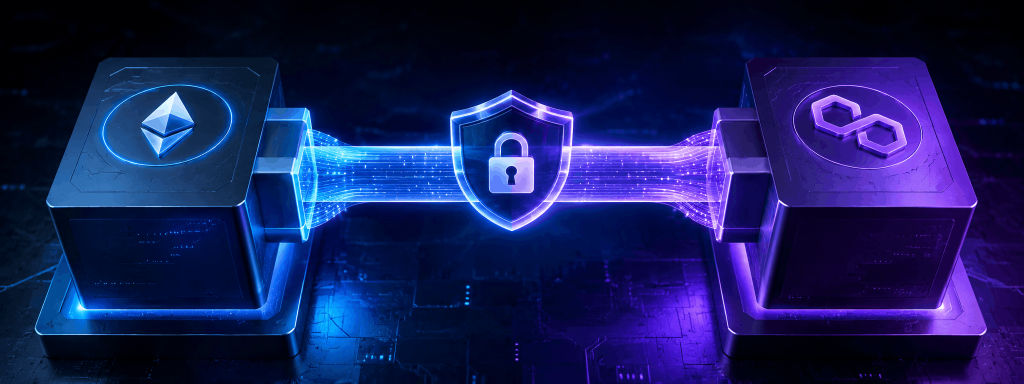
What AI actually does here
Real talk: AI is not some magical bridge guardian. It’s a very fast pattern detector that can score weirdness, connect signals, and surface risks before they become losses.
In practice, AI systems for bridge security pull in contract code, event logs, validator changes, liquidity shifts, admin actions, cross-chain messages, and alert feeds. Then they compare that behavior against known exploit shapes, expected protocol rules, and anomaly baselines.
That matters because bridge risk is multi-layered. Research and industry checklists break it into pieces like implementation security, economic security, and environment security, and AI is useful because it can watch all three without getting bored or distracted.
Where AI beats humans
Honestly? Humans are terrible at watching thousands of bridge events and staying consistent.
AI is better at spotting outliers across time, chains, and transaction graphs. One recent bridge-focused system, BridgeShield, reported an average F1-score of 92.58% across 51 real-world attack events, with a 24.39% improvement over its baseline tool Xscope.
Another system, SmartAxe, found 232 new cross-chain vulnerabilities across 129 bridge applications after large-scale analysis. That doesn’t mean the model is perfect. It does mean AI can catch compositional bugs that basic scanners miss when they’re only looking at one contract in isolation.
The main ways AI helps evaluate cross-chain bridge security
Here’s the thing people keep skipping: AI isn’t one tool. It’s a stack of jobs.
It can classify risk, detect anomalies, flag suspicious message flows, and prioritize which bridge needs a human review first. That’s huge when your team doesn’t have the time to deep-audit every bridge path every day.
| AI use case | What it watches | Why it matters | Catch |
|---|---|---|---|
| Transaction anomaly detection | Weird deposit, withdrawal, or relay patterns | Catches exploitation early | False positives happen when volume spikes |
| Cross-chain graph analysis | Message paths and state changes across chains | Finds bugs humans miss across chain boundaries | Needs good data from every chain |
| Contract code analysis | Bridge logic, auth checks, nonce handling | Surfaces obvious implementation flaws | Misses system-level failure modes |
| Risk scoring | Validator behavior, liquidity, admin changes, audit history | Helps rank bridges by danger | Scores are only as good as the inputs |
| Continuous monitoring | Live bridge activity | Spots attacks while they’re still unfolding | You need real alerting, not pretty charts |
AI is strongest in anomaly detection
The annoying part is that bridge attacks rarely look dramatic at the start. They start with slightly odd message timing, unusual finality assumptions, a validator change nobody noticed, or a liquidity move that doesn’t fit the normal pattern.
That’s where AI-driven anomaly detection is useful. XChainWatcher, for example, analyzes decoded events and transactions from multiple chains, builds logic relations, and checks them against rules to catch things like transfers accepted before finality or unexpected cross-chain inputs.
That kind of monitoring is boring in the best way. It gives you an early warning before the exploit becomes a headline and a postmortem.
AI also helps with static analysis, but don’t worship it
Look, static analysis still matters. It’s fast, repeatable, and great at finding obvious bridge issues like missing checks, bad access control, or sketchy assumptions around message validation.
But static tools alone are blunt. Bridge-specific research keeps showing that vulnerabilities are often compositional, meaning the real bug comes from how pieces interact, not from one line of code being obviously broken.
That’s why the smarter setup is hybrid. Use static analysis to catch the easy stuff, then use AI to reason over the messy behavior the static scanner can’t see.

What a serious AI bridge security workflow looks like
Stop pretending this is plug-and-play. If you want useful results, your pipeline needs structure.
A solid setup usually starts with data ingestion from on-chain events, contract upgrades, admin key changes, liquidity levels, and off-chain signals like audit reports or threat intel. Then the AI layer scores risk, looks for anomalies, and pushes the worst cases to a human reviewer.
That reviewer matters. AI can point at the smoke, but you still need someone who knows whether the bridge is actually on fire.
The best signals to feed the model
Here’s where teams mess up. They feed the model raw logs and call it intelligence.
Nope. You want signals that map to real bridge failure modes: validator set changes, nonce behavior, message replay attempts, mismatched finality, unusual mint/burn flows, governance changes, and sudden liquidity shifts.
If your AI can’t see those things, it’s mostly guessing. And guessing is how you miss the exact exploit path that drains the bridge while everyone’s staring at the wrong chart.
What AI still misses
Yeah, this sounds great until you remember AI can be confidently wrong.
It can miss novel attacks that don’t look like past exploits. It can also drown you in noise if your thresholds are trash or your chain data is incomplete. And if you train it on bad labels, congratulations, you built a faster way to be wrong.
That’s why the best teams treat AI as a triage layer, not a final judge. It narrows the hunt. Humans make the call.
AI vs. traditional security methods
Real talk: you don’t need a philosophy debate. You need a working security stack.
| Method | Strength | Weakness | Best use |
|---|---|---|---|
| Manual audit | Deep reasoning | Slow and expensive | Pre-launch review |
| Static analysis | Fast bug finding | Misses cross-chain interactions | Early code screening |
| AI anomaly detection | Spots weird live behavior | Can be noisy | Continuous monitoring |
| AI-assisted code review | Finds patterns at scale | Depends on prompt/data quality | Bridge contract review |
| Formal verification | Strong guarantees for narrow properties | Hard to scale | Critical message logic |
If I had to pick one, I wouldn’t. I’d stack them. The teams that stay alive are the ones that combine AI, audits, and monitoring instead of acting like one shiny tool saves them.
Why this matters more in 2026
The pressure is only getting worse. Cross-chain activity keeps growing, protocols keep shipping faster, and attackers keep getting better at chaining small flaws into catastrophic outcomes.
That’s why AI helps evaluate cross-chain bridge security in a very practical way: it gives teams a chance to see trouble before it becomes irreversible. It’s not about perfect protection. It’s about reducing the odds that one missed weird thing wipes out your TVL.

The real operating model
Honestly, the winning move is simple. Use AI to rank bridge risk continuously, watch for strange cross-chain behavior, and force human review on anything that touches validator changes, finality assumptions, or message integrity.
A serious team doesn’t wait for a hack to start caring. They monitor continuously, run multiple audits, keep a bug bounty active, and wire AI into the same security loop that handles alerts and incident response.
That’s the part the hype bros skip. AI doesn’t replace security work. It makes the work survivable.
Real talk: if your bridge team still depends on manual spot checks, you’re already behind. The question isn’t whether AI belongs in bridge security anymore. What’s stopping you from putting it in the loop right now?
You may also like
- AI Integration Strategies for Existing SaaS Businesses: A Practical Guide for 2025
- AI Compliance Solutions for SaaS & Cloud Businesses: What You Need in 2025
- AI-Powered CRM Tools Revolutionizing Sales in 2025: Transforming Strategies and Success
- AI-Powered SaaS for Healthcare Data Analytics: Transforming Patient Care and Operations in 2025
- Best AI SaaS Tools for Small Businesses in 2025: Boost Growth and Efficiency